According to experts, the artificial intelligence (AI) market will grow significantly in 2025. According to various estimates, its volume may reach up to 800 billion rubles, said Igor Bederov, an expert in the NTI SafeNet market. In 2024, this figure ranged from 130 to 305 billion rubles, depending on the calculation methods and metrics used.
This year, the share of artificial intelligence in Russia's GDP may reach 2%, Bederov noted. This will be possible due to the fact that the state will allocate 5% of the budget for scientific research in the field of neural networks and another 15% for other areas where artificial intelligence is used.
From inside the market, we see that the demand for neural networks is indeed actively growing, and the market shows double-digit growth rates annually, which indicates interest in the field.
Sergey Trostyansky, Deputy Director of the NTI Competence Center for "Big Data Storage and Analysis Technologies", believes that the absolute size of the market is less important than its dynamics in percentage terms from year to year.
According to his estimates, in 2024 the volume of the Russian artificial intelligence market will be approximately 130-160 billion rubles. This is almost twice as much as in 2021.
According to information from the Smart Ranking agency, in 2024 the volume of the artificial intelligence project market in Russia amounted to 305 billion rubles. This is 36% more than in the previous year. The top three market leaders included VKontakte, Yandex, and Gazprom Neft - Digital Solutions. Analysts predict that the growth trend will continue.

New Year Trends
In 2025, generative artificial intelligence will become a common tool for people, said Alexander Krainov, Director of Artificial Intelligence Technology Development at Yandex.
According to him, the architecture of neural networks will develop, and this will lead to changes in the use of knowledge accumulated in large generative models. Multimodality will be implemented - the possibility of interaction between various types of content: visual, audio, text, etc.
AI assistants, such as Alice or Marusya, will become full-fledged multi-agent systems that will expand their functionality for users.
People will more often turn to AI not only as a source of information, but also as a way to solve a variety of tasks. Users are beginning to form an understanding of the boundaries and capabilities of AI, their own ideas for its use are emerging, and demand for the use of AI is growing.
Another important trend will be the use of generative artificial intelligence in areas where other AI methods previously dominated, for example, in recommendation systems.

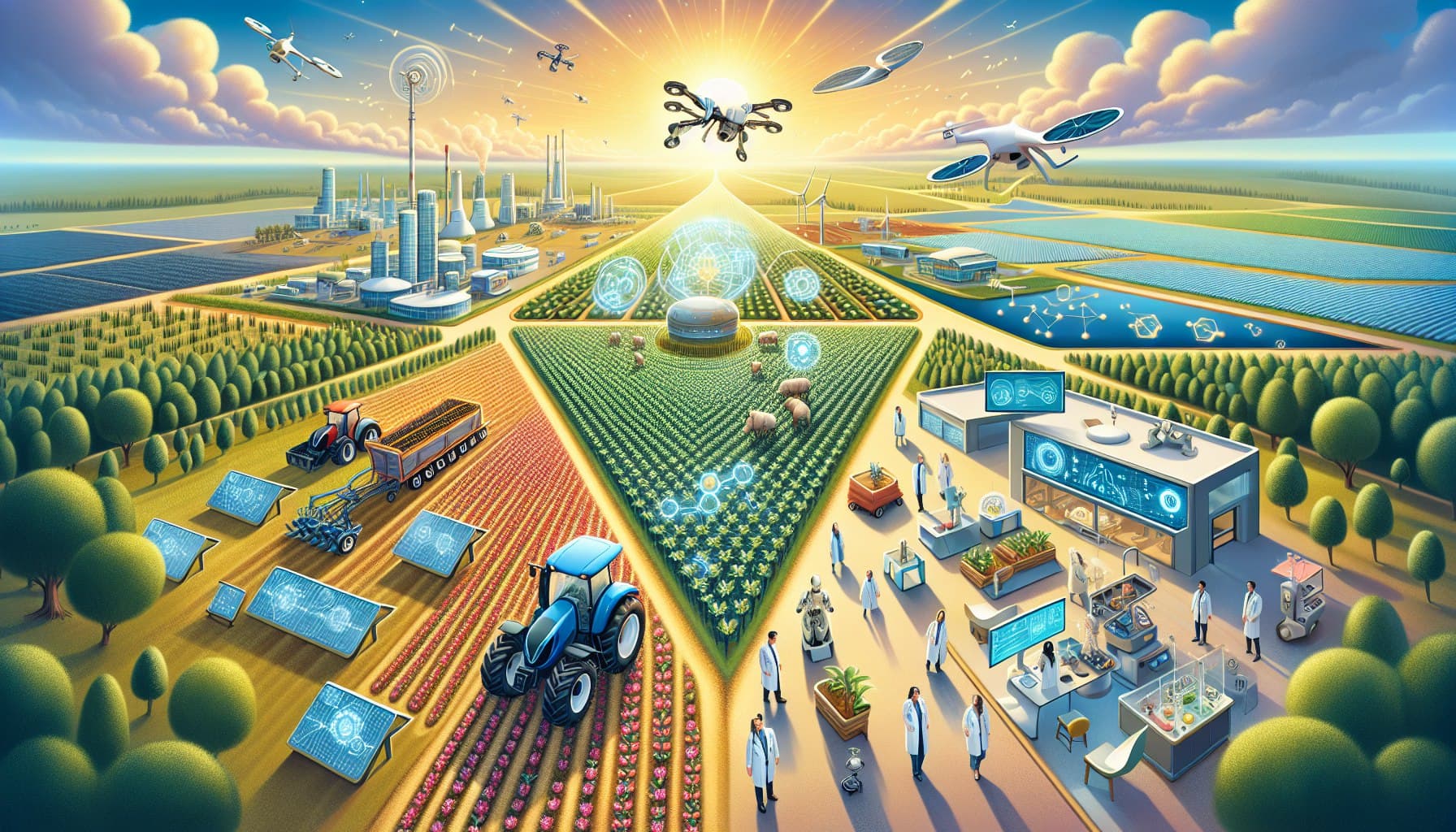
Also next year, active implementation of artificial intelligence is expected in agriculture and healthcare.
Firstly, agriculture is one of the key sectors of the global economy. The use of digital technologies and automation in this area will increase yields and reduce the risk of crop and livestock losses.
Secondly, Timofey Voronin, Deputy Director for Technology Transfer at the NTI Competence Center for "Big Data Storage and Analysis Technologies", noted the growth in the number of technology companies in the field of pharmacology that use artificial intelligence to develop new drugs.
Neural networks significantly speed up the process of creating new formulas and compositions, which reduces the time from the start of work on creating a new drug to its release on the market. The introduction of AI in the field of medicine will mitigate the consequences of the shortage of doctors and paramedical personnel, which many countries are currently facing.
Alexander Strelnikov, an artificial intelligence specialist from Axenix, identified four key factors contributing to development:
- Personalized recommendations.
- Precise adjustment of routine processes.
- Simplified access to information.
- Active implementation of GPT solutions instead of standard search engines.

The main incentive for development will be innovative open virtual environment technology, which will significantly speed up the process of contextual learning of artificial intelligence.
According to Alexey Parfun, Vice President of AKAR and Co-Chairman of the Artificial Intelligence Committee, this technology takes us back to the concept of metaverses, which was popular some time ago.
Earlier, Kaspersky Labreleased a guide to help organizations create and safely implement artificial intelligence-based systems. The purpose of the document is to prevent cyber risks associated with the use of artificial intelligence technologies. First of all, the guide is intended for developers, system administrators and DevOps teams.
Earlier, Russian President Vladimir Putin instructed the government to provide support to Russian regions in the use of safe artificial intelligence technologies in public administration. The task is to provide methodological assistance in the use of safe and reliable artificial intelligence technologies in state and municipal administration based on unified industry digital platforms.
Read materials on the topic:
AI in Russia should not be allowed to govern the state - what Russians think
Putin instructed to develop cooperation with China in the field of artificial intelligence
Russian scientists have created a universal machine vision system for object recognition











