Translated with AI from the Russian original.
On the night of April 23, the Lyrid meteor shower will reach its peak activity. As the press service of the Moscow Planetarium told TASS, the rate will be up to 18 meteors per hour, and they can be observed with the naked eye. The best time is the second half of the night and the pre-dawn hours, when the constellation Lyra rises high above the eastern horizon.
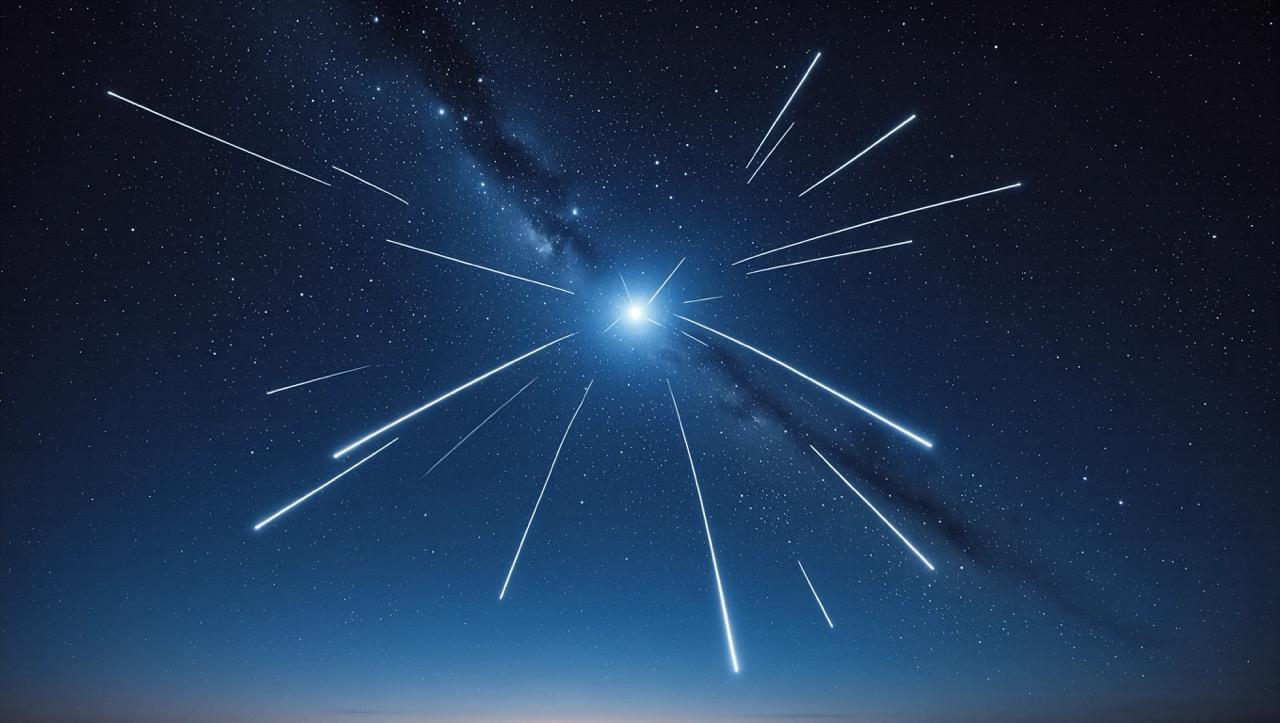
The Moon is out of its bright phase, and Comet Thatcher provides a clear shower without light interference. On the night of April 23, the Lyrid meteor shower will reach its peak activity. As the press service of the Moscow Planetarium told TASS, the rate will be up to 18 meteors per hour, and they can be observed with the naked eye. The best time is the second half of the night and the pre-dawn hours, when the constellation Lyra rises high above the eastern horizon.
The shower is generated by Comet C/1861 G1 Thatcher and is active annually from April 15 to 30. The radiant, the point from which the meteors appear to emerge, is located near Vega, the brightest star in the constellation Lyra. In 2026, observation conditions are favorable: the Moon is far from the full phase and does not brighten the sky. Lyrid meteors are usually white, and neither a telescope nor binoculars are required to observe them.
Astronomers recommend traveling outside the city, to an area with minimal artificial light pollution, and looking toward the region between the eastern horizon and Vega. The Lyrids are one of the oldest documented meteor showers: the earliest description dates back to 687 BC. Peak activity is expected at 5:00 Moscow time, when the shower's radiant reaches its highest position in the Northern Hemisphere.
Read more on the topic:

Never miss our newsAdd this site to your preferred sources to see us more oftenAdd on Google

















