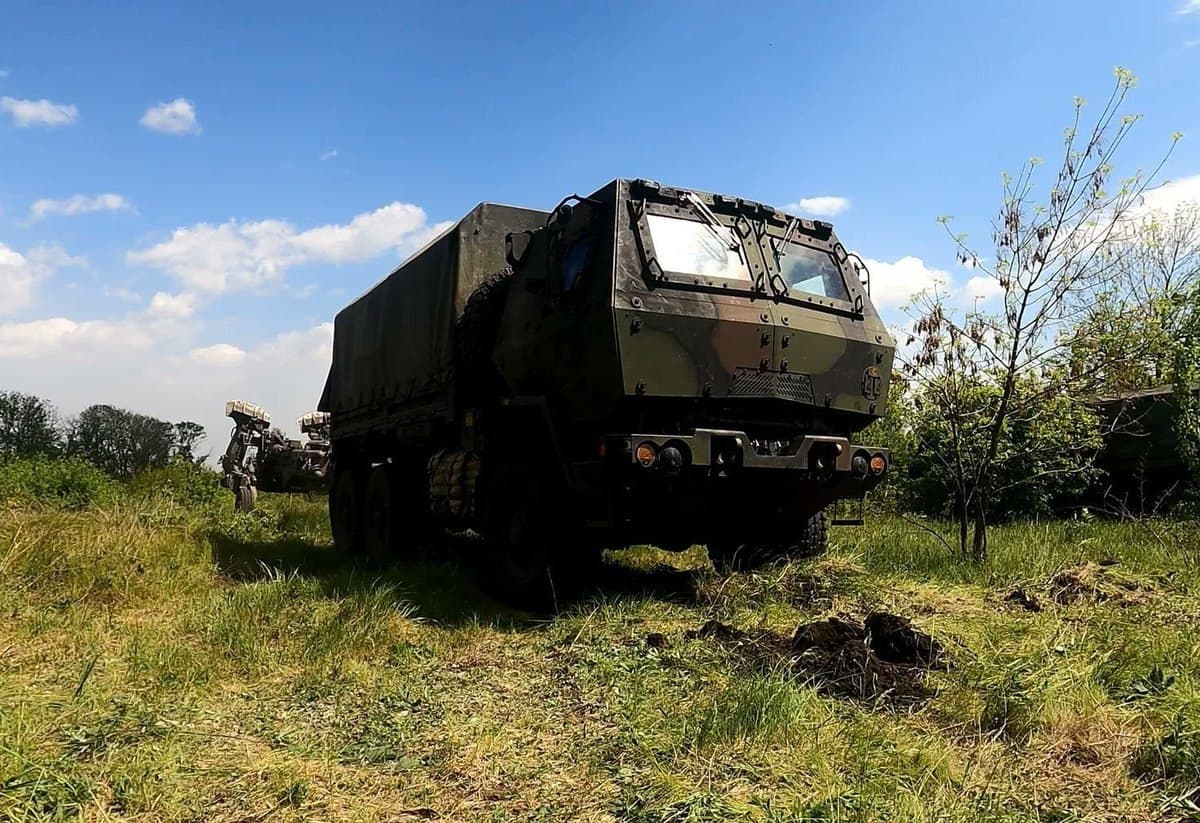
The American army truck Oshkosh FMTV M1083, developed back in the 1990s, has a number of serious shortcomings that make it less effective in real off-road conditions compared to Russian KamAZ and Ural trucks. This conclusion was reached by the authors of the Telegram channel "War Engineering."
Unlike Russian KamAZ or Ural trucks, the FMTV has a less flexible tire pressure adjustment system for extreme mud/
The 11-ton truck with a 330 hp engine is capable of carrying up to 5 tons of cargo and reaching speeds of up to 94 km/h. However, its main problem is low off-road capability on black soil and during the spring and autumn thaw. American equipment was designed for hard soils or sandy loam soils, and on soft ground, the M1083 quickly gets bogged down. The tire pressure adjustment system on the Oshkosh is less flexible than that of Russian trucks, which does not allow it to move effectively through extreme mud.
The design of the vehicle also raises questions. The absence of a long hood in the front (the cab is located directly above the engine) makes the crew more vulnerable. The Caterpillar C7 engine under the cab heats up a lot, and the lack of thermal shielding turns the truck into a bright target for night vision devices. In addition, the M1083 is prone to tipping over.
Maintenance of the American truck is a separate issue. The vehicle is extremely demanding on the quality of fuel, oils, and spare parts. Getting debris into the wiring harnesses or sensors often completely disables the truck - diagnostics require a dealer scanner and specific software, which is not available in the field. The parts are not interchangeable with either European or Soviet analogues.
Read more on the topic:
Never miss our newsAdd this site to your preferred sources to see us more oftenAdd on Google