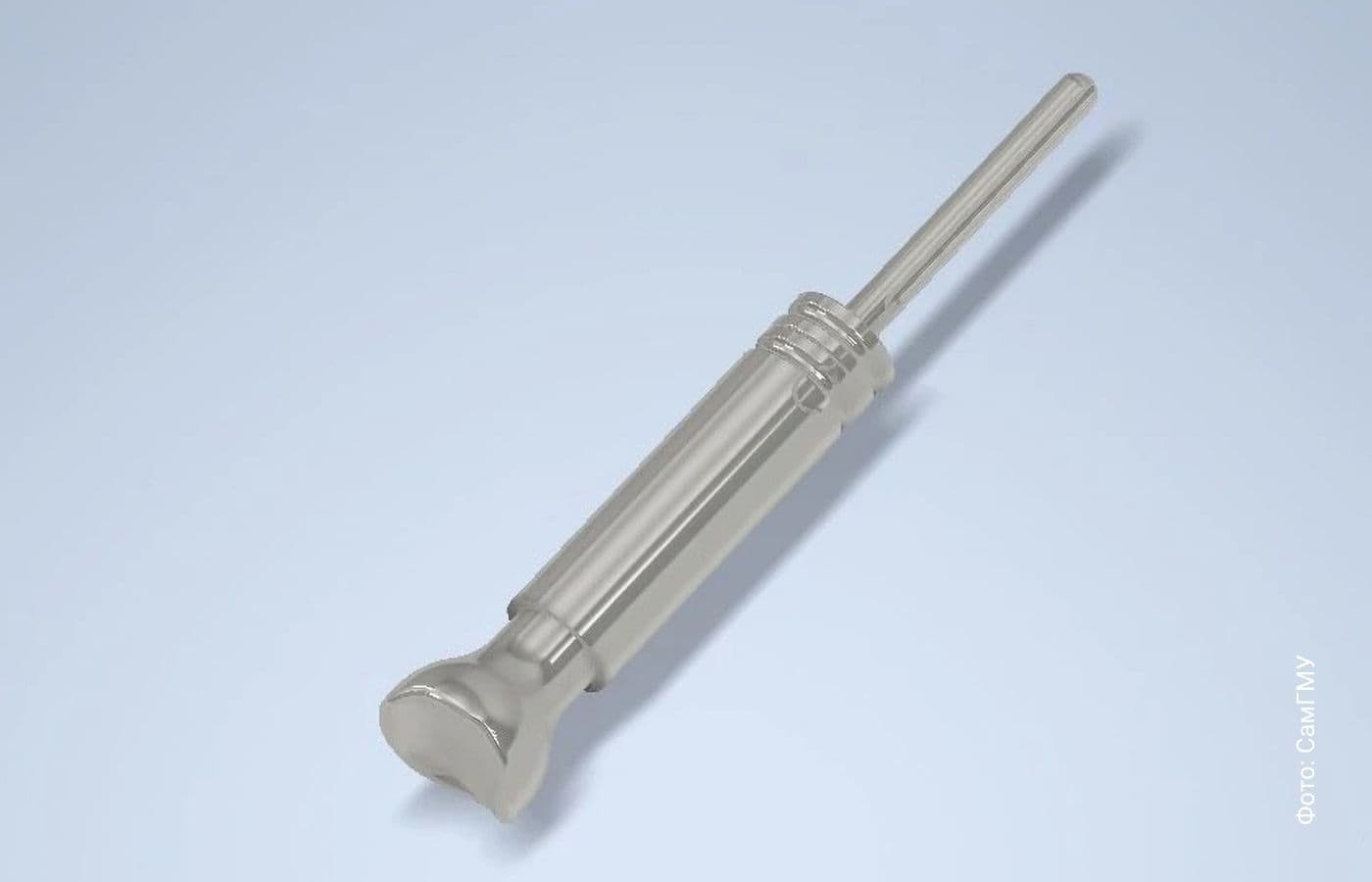
A five-year-old girl with a severe oncological disease managed to save her leg thanks to a new development by Russian scientists. For the first time in the world, she was fitted with a sliding ankle joint endoprosthesis that can "grow" with the body. The technology was developed by specialists from the Samara State Medical University of the Ministry of Health of Russia (SamSMU).
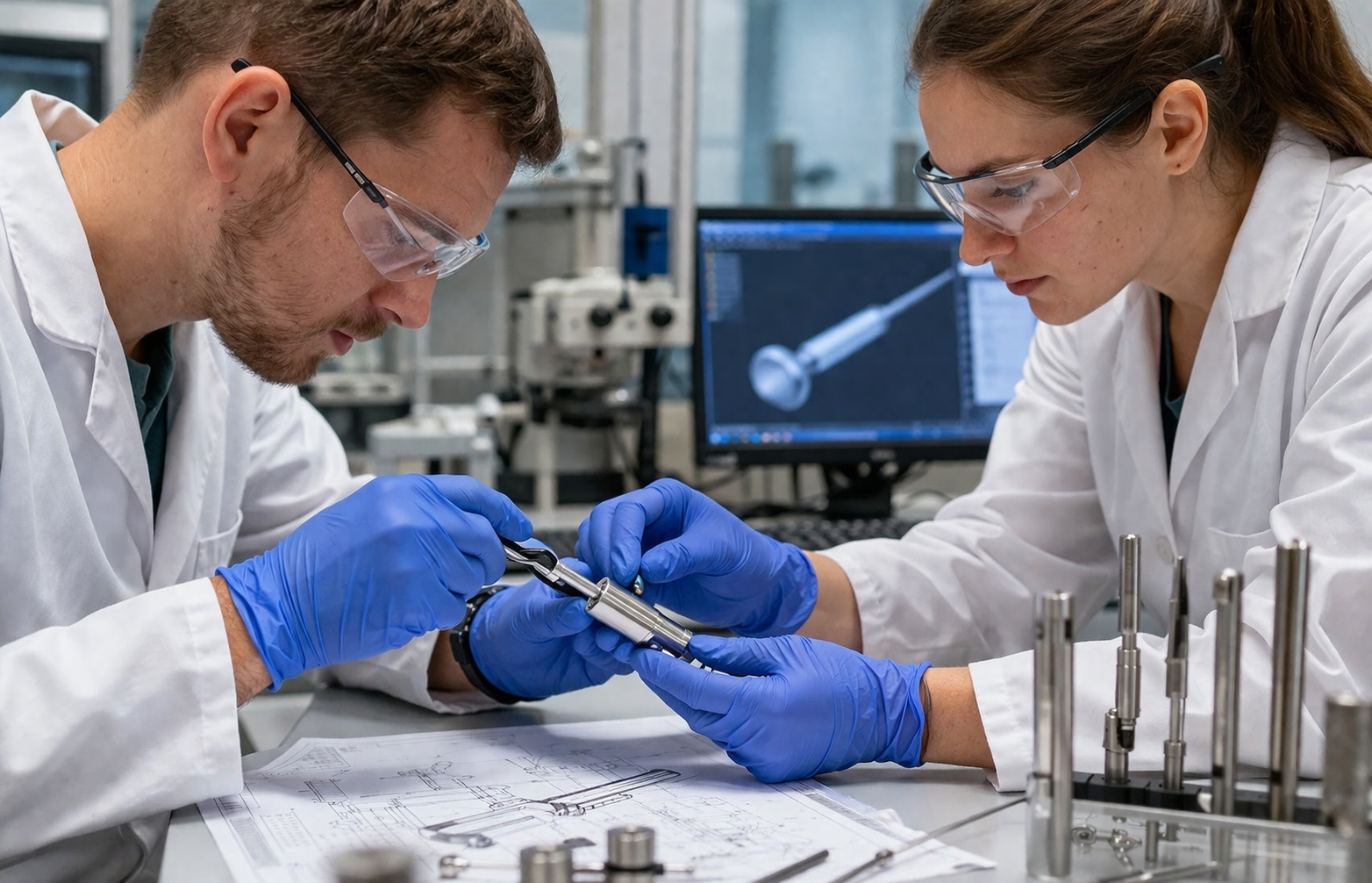
What problem did the scientists solve?
The device has already been successfully used in practice — the operation took place at the N.N. Blokhin National Medical Research Center of Oncology in Moscow, and the child is now recovering.
The main difficulty in the development was the anatomy. The lower part of the lower leg in children is significantly narrower than the upper part, and the sizes are extremely small. At the same time, the mechanism must remain powerful and reliable. Scientists at the Research Institute of Bionics and Personalized Medicine of SamSMU managed to solve this problem — to make the system compact, but to maintain the strength of the telescopic extension.
As the director of the institute, oncologist Andrey Nikolaenko, explained, maintaining power while reducing size has long been a problem for engineers around the world.
How was the treatment carried out?
The girl was diagnosed with osteosarcoma of the right tibia — a rare disease for this age. It usually occurs in adolescents aged 10 to 17 years. 10–15 years ago, in a similar situation, the child was almost inevitably threatened with amputation. Now, the new technology allows not only to save the limb, but also to ensure its growth along with the body.
The treatment took place in two stages. First, the surgeons removed the affected bone and installed a temporary cement spacer to stop the development of the disease. At the same time, a "growing" prosthesis was made at SamSMU according to individual parameters.
According to Polad Kerimov, Deputy Chief Physician of the Research Institute of Pediatric Oncology and Hematology of the N.N. Blokhin National Medical Research Center of Oncology, working with young patients is especially difficult due to the rapid growth of the body. Therefore, special prostheses with an extension mechanism are used. The ankle joint is one of the most difficult areas for prosthetics, and this operation was the first in Russia and unique in the world.
Thanks to this development, it was possible to avoid amputation and give the child a chance for a normal quality of life. According to forecasts, after rehabilitation, the gait will be almost impossible to distinguish from the gait of a healthy person.
Features of the new prosthesis
The key advantage of the technology is the absence of the need for repeated operations. The length of the implant can be adjusted as the child grows using an external magnetic system.
The postoperative period is proceeding without complications. The girl is already starting to stand on her foot and is learning to walk again under the supervision of doctors.
The new development is a continuation of previous SamSMU projects. Previously, scientists had already created sliding endoprostheses of the femur, with which they performed more than 25 operations in Russia and two abroad.
As the rector of SamSMU Alexander Kolsanov emphasized, the creation of the world's first growing ankle joint endoprosthesis for children is a serious step forward. Now the university is increasing production capacity to provide such solutions to patients in Russia and abroad.
Endoprostheses are produced at the Center for Serial Production of SamSMU. The project for the creation and implementation of domestic sliding endoprostheses is personally supervised by Mikhail Murashko.
Read more on the topic:
- The first laser complex in Russia for the production of endoprostheses was created at St. Petersburg Polytechnic University
- "Smart" hydraulic foot: Tekhmash has created a prosthesis with a microprocessor
- Smart Bluetooth-Enabled Eye Prosthesis Created at St. Petersburg Electrotechnical University "LETI"
Never miss our newsAdd this site to your preferred sources to see us more oftenAdd on Google

















