Translated with AI from the Russian original.
Young specialists of Tekhmash (part of Rostec) have developed a line of hydraulic foot prostheses with microprocessor control. The project won the corporate program «Vector» and received funding for implementation.
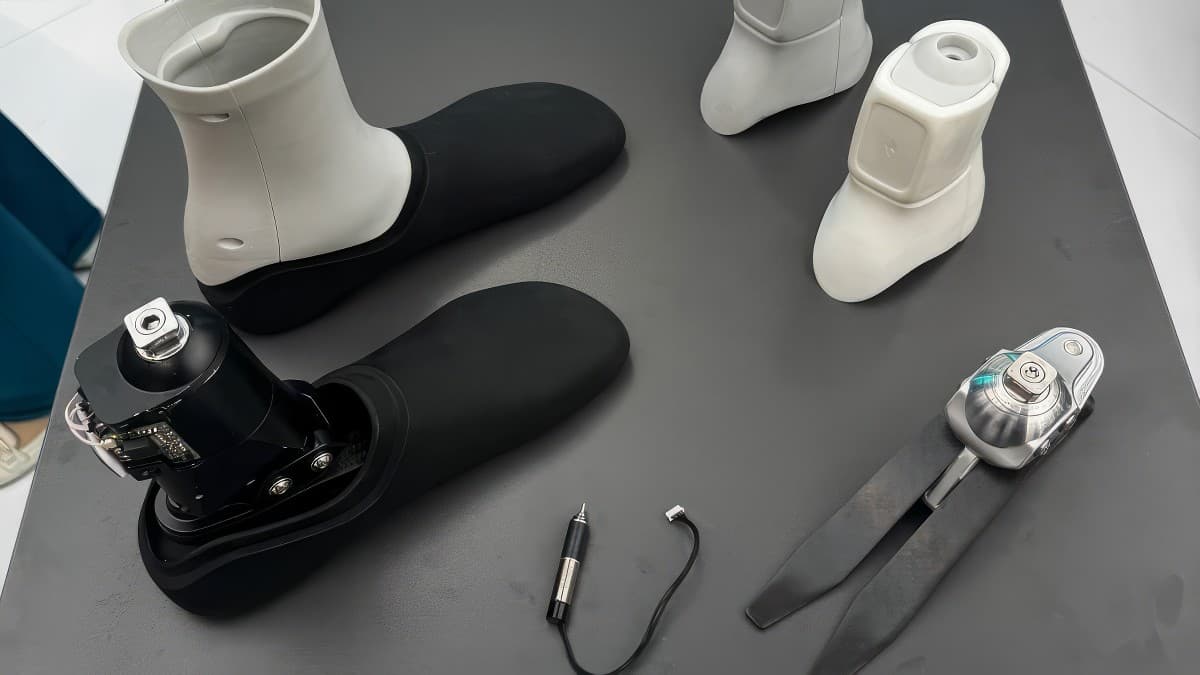
The hydraulic foot features a modular design and a more affordable price compared to foreign counterparts. The solution is adapted to the Russian climatic conditions and has reduced operating costs due to the localization of production.
The prosthesis is equipped with sensors that track the position of the foot, walking speed, and type of surface in real time. Based on this data, the microprocessor controls the hydraulic valves, adjusting the resistance in the ankle. Thanks to this, the prosthesis automatically adapts to different conditions: when climbing, it increases rigidity, creating support, when descending, it «brakes» the movement, providing stability, and when stopping, it fixes the ankle, reducing the load on the stump and allowing a person to stand without extra effort.
The next stage is pilot tests with the participation of specialized enterprises and users, the release of a pilot batch, certification, and preparation for entering the market. The development will allow Tekhmash to enter the market of bionic rehabilitation equipment.
Read more on the topic:
Never miss our newsAdd this site to your preferred sources to see us more oftenAdd on Google

















