Vice President of the Russian Academy of Sciences, Sergei Chernyshev, announced that Russian researchers intend to discover traces of life on Venus in the second half of the 2030s. To achieve this goal, the launch of the automatic interplanetary station "Venera-D" is planned for 2036.
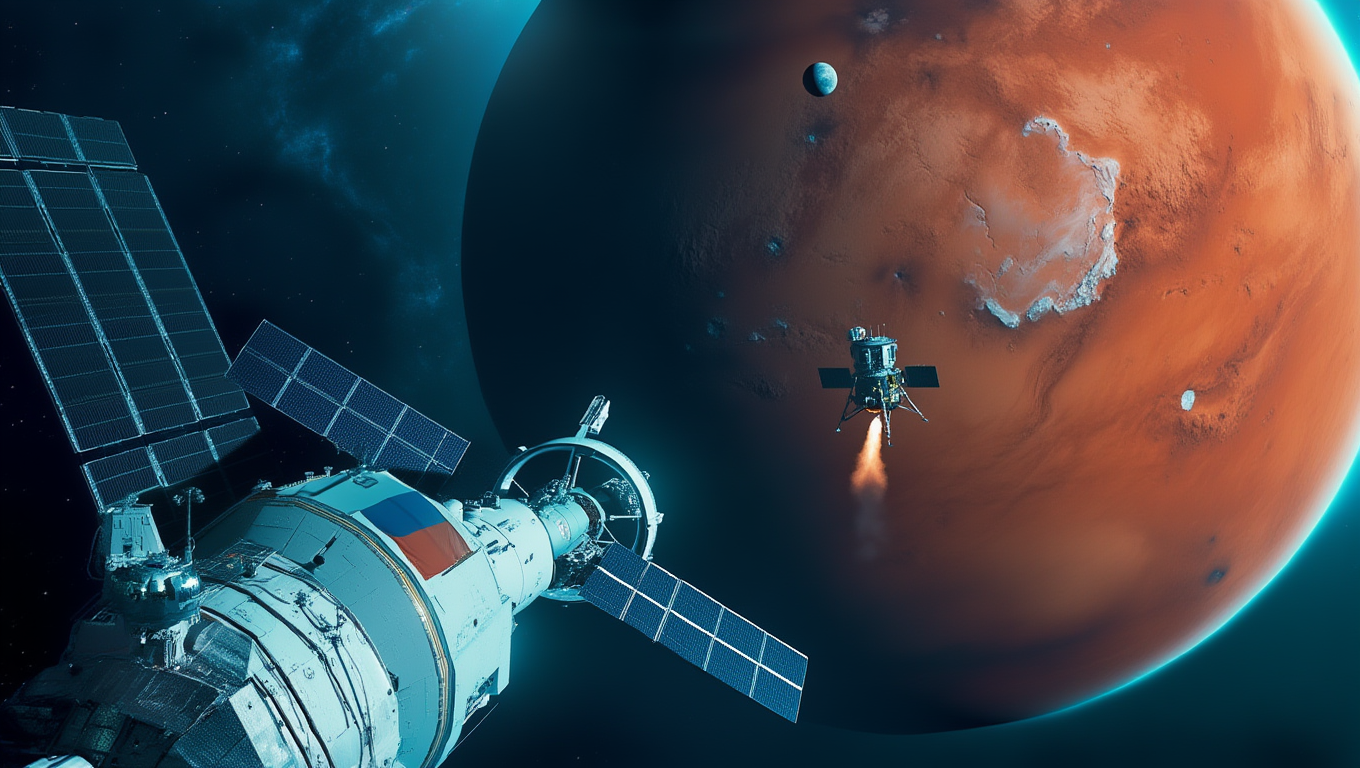
In the area of planetary research, the main focus will be on Venus. Scientific data suggest that about 3 billion years ago, there was water on the surface of Venus, and life even managed to appear. Currently, this is not the case, but some traces of this life, complex organic compounds, may be discovered. For this purpose, the "Venera D" project will be implemented in 2036, including an orbital and landing module, as well as probes that will float.
"Venera-D" ("Venera Dolgozhivuschaya" - "Long-Living Venus") is a future Russian automatic interplanetary station for studying Venus. The spacecraft is being created as an improved version of the Soviet probes of the "Venera" series. The mission will include an orbital spacecraft and a landing module. The possibility of adding atmospheric probes or small satellites is also being considered.
The landing module will have to function on the planet's surface for significantly longer than its predecessors. The environment there is extremely harsh: the temperature reaches +470 degrees Celsius, and the pressure is 90 atmospheres. It is in such conditions that scientists hope to discover biomarkers or other evidence of possible life.
Read more on the topic:
Never miss our newsAdd this site to your preferred sources to see us more oftenAdd on Google