Employees of the NRC "Kurchatov Institute" have patented a method for producing layered steel-aluminum joints by friction stir welding (FSW). The technology allows reliable joining of steel and aluminum workpieces in an overlap, which was previously a difficult task due to the formation of brittle intermetallic layers.
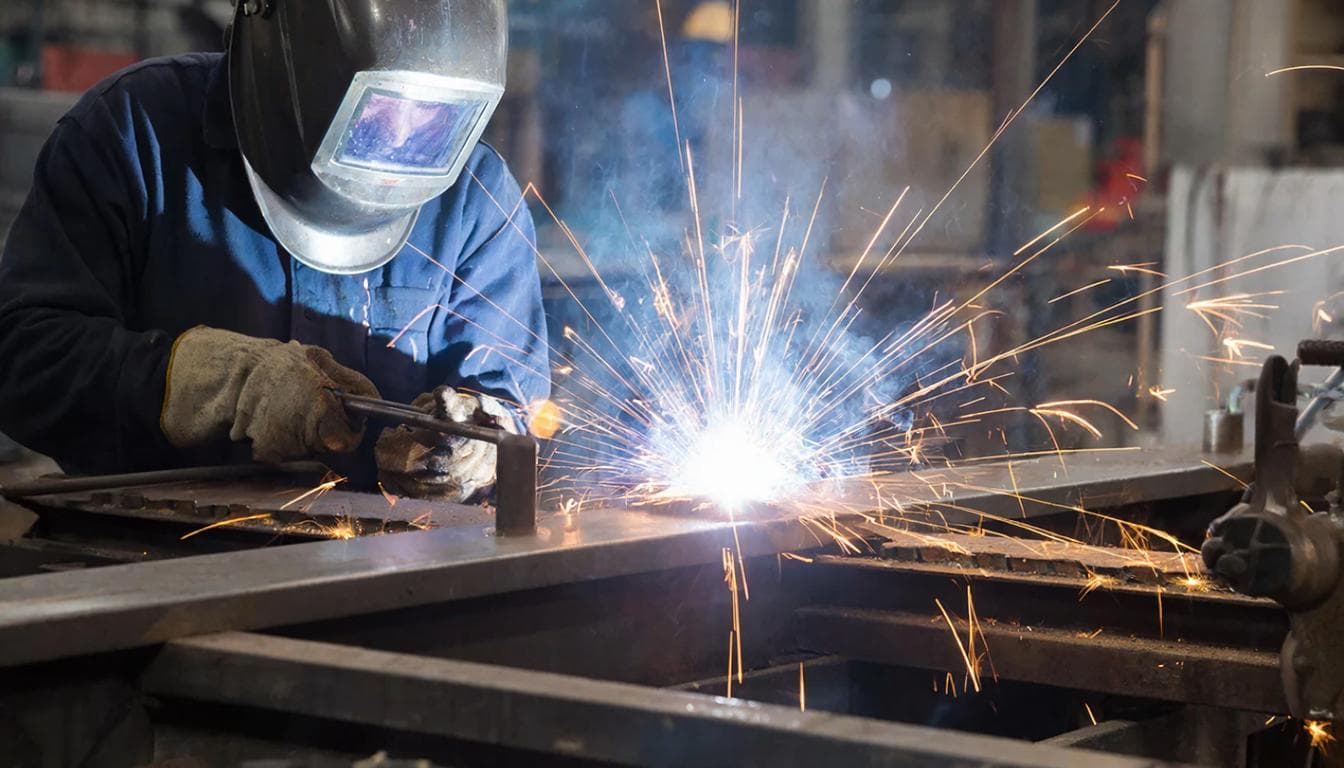
The process works as follows: the aluminum workpiece is pre-treated with a metal brush (scratching) on both sides, and the steel workpiece is treated only on the joint side. Then, a rotating welding tool with a tip is immersed in the aluminum and embedded in the steel to a depth of no more than 0.1 mm. The welding modes are strictly controlled: speed - from 300 to 700 mm/min, rotation frequency - from 400 to 900 rpm, force - from 1100 to 3200 kgf, angle of attack - 0.5–2.5 degrees. At the same time, the force on the tip does not exceed 40–50% of the total force on the tool.
The result is a joint with intermetallic inclusions not exceeding 0.01 μm, which do not cause delamination. The shear strength reaches at least 106 MPa. The technology is suitable for structural and high-strength steel, as well as for aluminum alloys based on aluminum-magnesium and aluminum-magnesium-silicon alloying systems with cladding of technically pure aluminum.
The development opens up new opportunities for aircraft construction, automotive industry, and shipbuilding, where it is often necessary to join lightweight aluminum with strong steel.
Read more on the topic:
Never miss our newsAdd this site to your preferred sources to see us more oftenAdd on Google