The Solar Astronomy Laboratory of the Institute for Space Research of the Russian Academy of Sciences reported a sharp increase in polar lights. The intensity of the event reached the maximum of 10 points on a 10-point scale. However, the peak occurred during daylight hours in most of Russia — the surge started almost half a day later than predicted, which expected activity on the night of March 21 to 22.
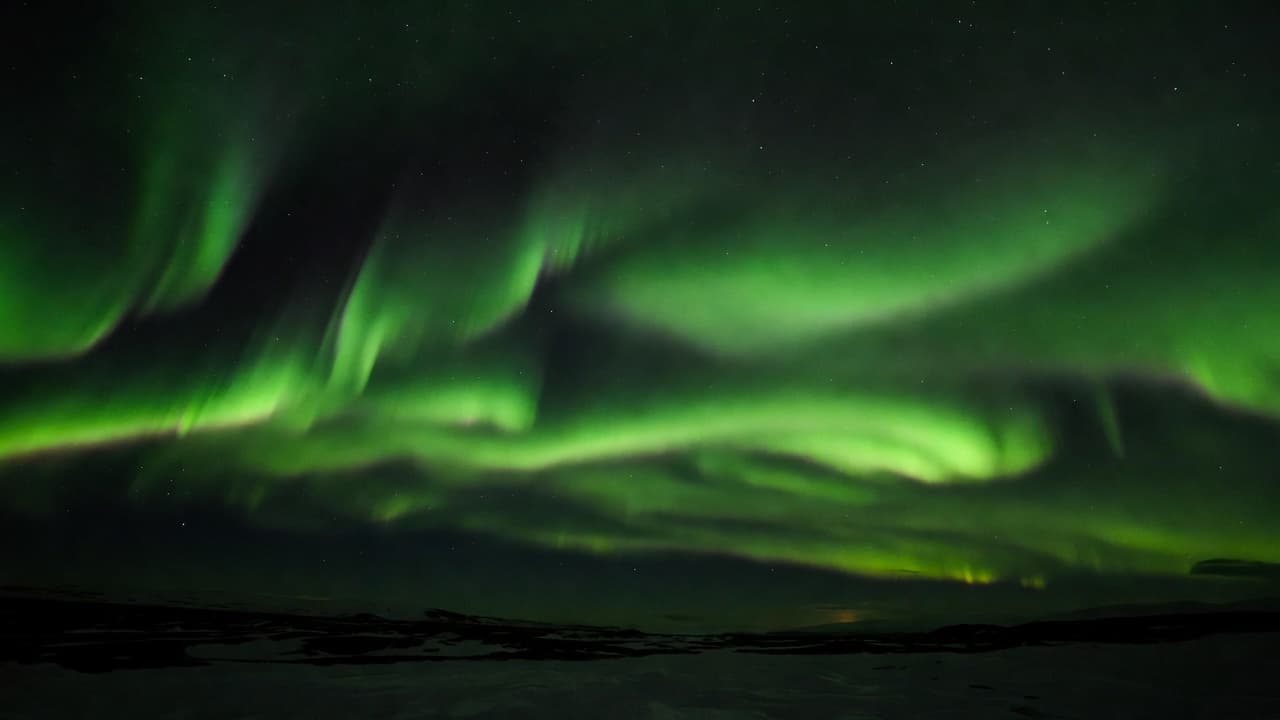
Scientists warn that there is no guarantee that the auroral oval will remain until dark. On the contrary, the probability of its disintegration before evening is estimated as high.
The observed increase in auroras is occurring according to a favorable scenario — without the development of a strong magnetic storm, although moderate disturbances of the geomagnetic field are still being recorded. However, researchers do not rule out that the situation may change to the opposite by evening: the auroras will fade, and geomagnetic disturbances will intensify.
Read more on the topic:
- The most powerful S4 level radiation storm in the last 22 years is observed near Earth
- Astronomers at Moscow State University recorded the "posthumous light" of a dead star in space
- Second Chelyabinsk meteorite could fall as early as tomorrow: astronomer calls for inclusion of protection system in the "Cosmos" national project
Never miss our newsAdd this site to your preferred sources to see us more oftenAdd on Google



![Growth Point: After 5G Launch, Mobile Internet in Russia Accelerated by 20%","subtitle":"TelecomDaily recorded an upload speed increase of 19.7%, and download speed of almost 14%","announce":""}[]}],](https://media.ixbt.site/fit-in/320x/ixbt-data/1727896/ai-image-nvgq0a0v5cjnyxwoc8xpelva.webp)