Researchers from Tomsk Polytechnic University, together with colleagues from the A.N. Frumkin Institute of Physical Chemistry and Electrochemistry of the Russian Academy of Sciences, have developed a new approach to creating heat-transferring surfaces for cooling microchips. The technology is aimed at power electronics and high-performance processors, where overheating limits the growth of power.
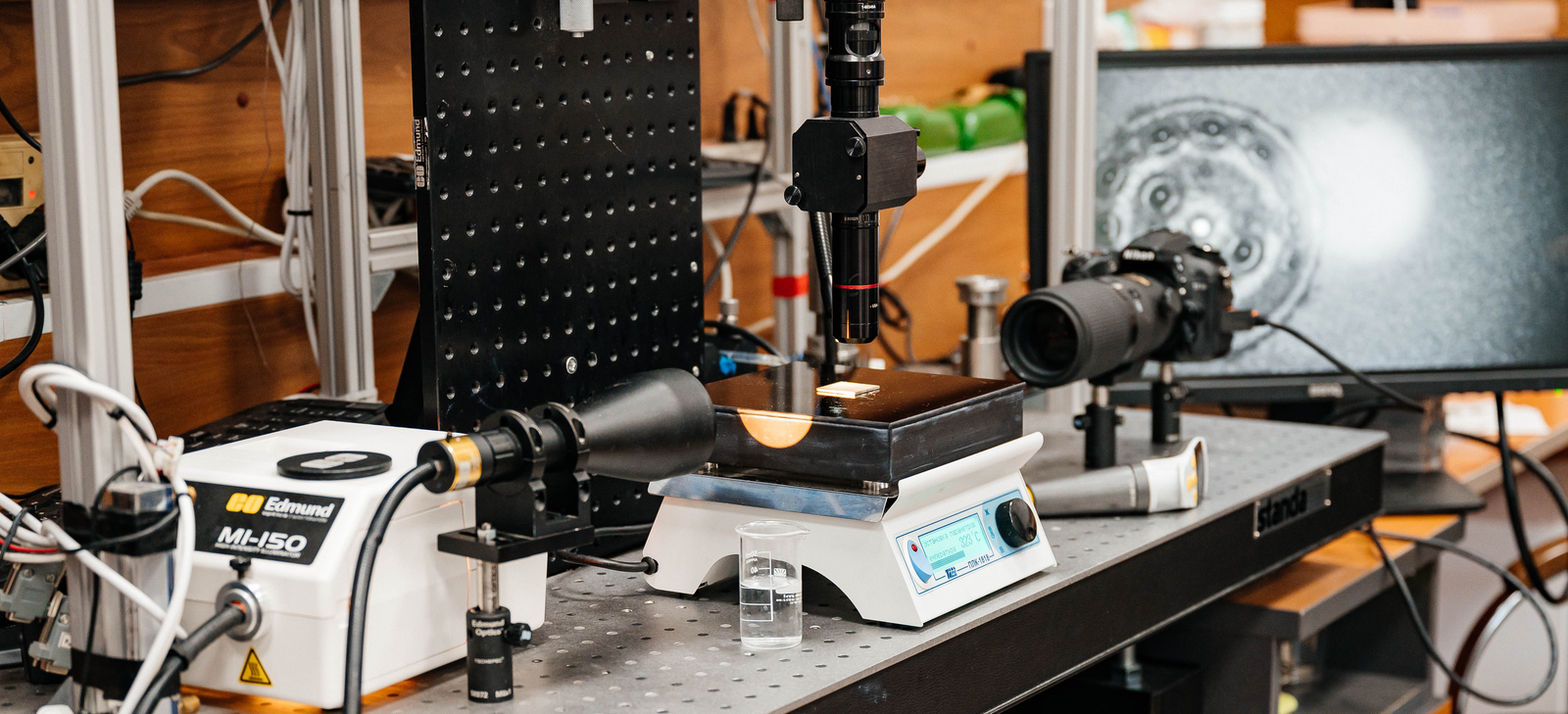
The team proposed forming surfaces with controlled wettability. According to the project manager, Dmitry Feoktistov, the development allows setting the desired balance of hydrophilic and hydrophobic areas.
We have proposed a new approach to creating heat-transferring surfaces with controlled wettability. It is based on a combination of laser texturing, laser chemical modification, and pyrolysis of multicomponent hydrocarbon-containing liquids.
The scientists worked with an aluminum-magnesium alloy. A nanosecond laser formed microtextures, after which the surface areas were given superhydrophilic and superhydrophobic properties.
Tests have shown that the optimal structure dissipates heat 6 times more efficiently than conventional solutions, and with moderate heating, the increase reaches 20 times.
Read more materials on the topic:
Never miss our newsAdd this site to your preferred sources to see us more oftenAdd on Google













![Growth Point: After 5G Launch, Mobile Internet in Russia Accelerated by 20%","subtitle":"TelecomDaily recorded an upload speed increase of 19.7%, and download speed of almost 14%","announce":""}[]}],](https://media.ixbt.site/fit-in/320x/ixbt-data/1727896/ai-image-nvgq0a0v5cjnyxwoc8xpelva.webp)