Translated with AI from the Russian original.
Scientists from St. Petersburg Electrotechnical University "LETI" have created a prototype of an unusual navigation sensor that does not need a battery. The device is capable of operating almost indefinitely, receiving energy from the outside and transmitting data remotely.
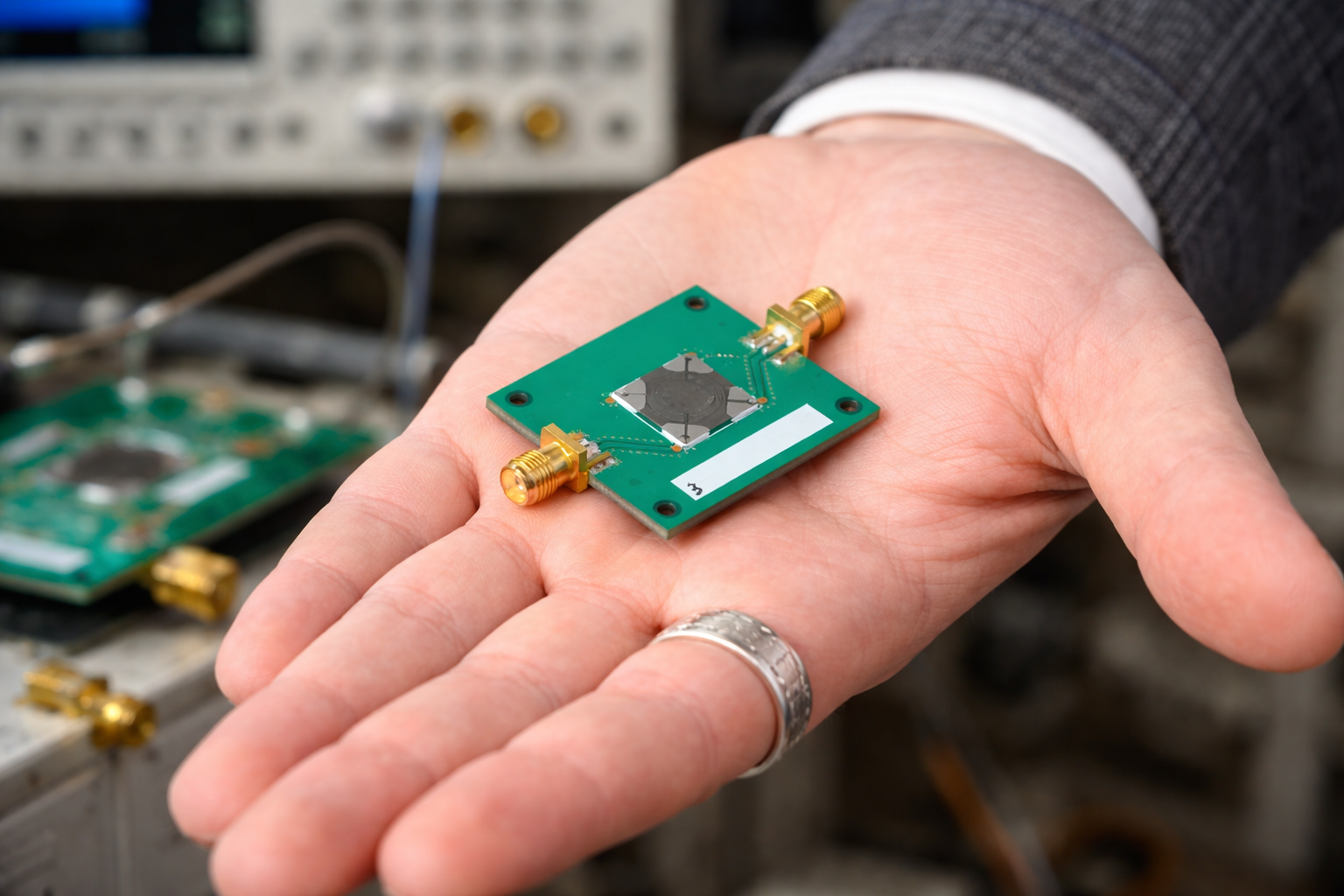
The development is based on surface acoustic wave technology. Inside the sensor is a special crystalline plate. When a radio signal arrives, it begins to vibrate and react to changes in the environment – temperature, pressure, acceleration, or vibration. All of this is converted into a signal that can be read remotely.
The main advantage of this technology is autonomy. The sensor can be installed where replacing the battery is almost impossible. For example, inside an aircraft engine, in the body of a drone, in industrial equipment, or in elements of navigation systems.
There is an even more interesting application scenario. Such sensors can be integrated directly into infrastructure – bridges, pipelines, turbines, or large mechanisms. They will be able to monitor load, temperature, and vibrations for years, warning of possible damage.
While the device exists as a prototype, the developers expect that in the future, such sensors will become the basis for entire networks of autonomous sensors that will operate without maintenance for decades.
Read more on the topic:
Never miss our newsAdd this site to your preferred sources to see us more oftenAdd on Google

















