Translated with AI from the Russian original.
The Russian Radon-O counter-drone system, developed by the Roselektronika holding of the Rostec state corporation, has proven its ability to counter unmanned aerial vehicles of various purposes.
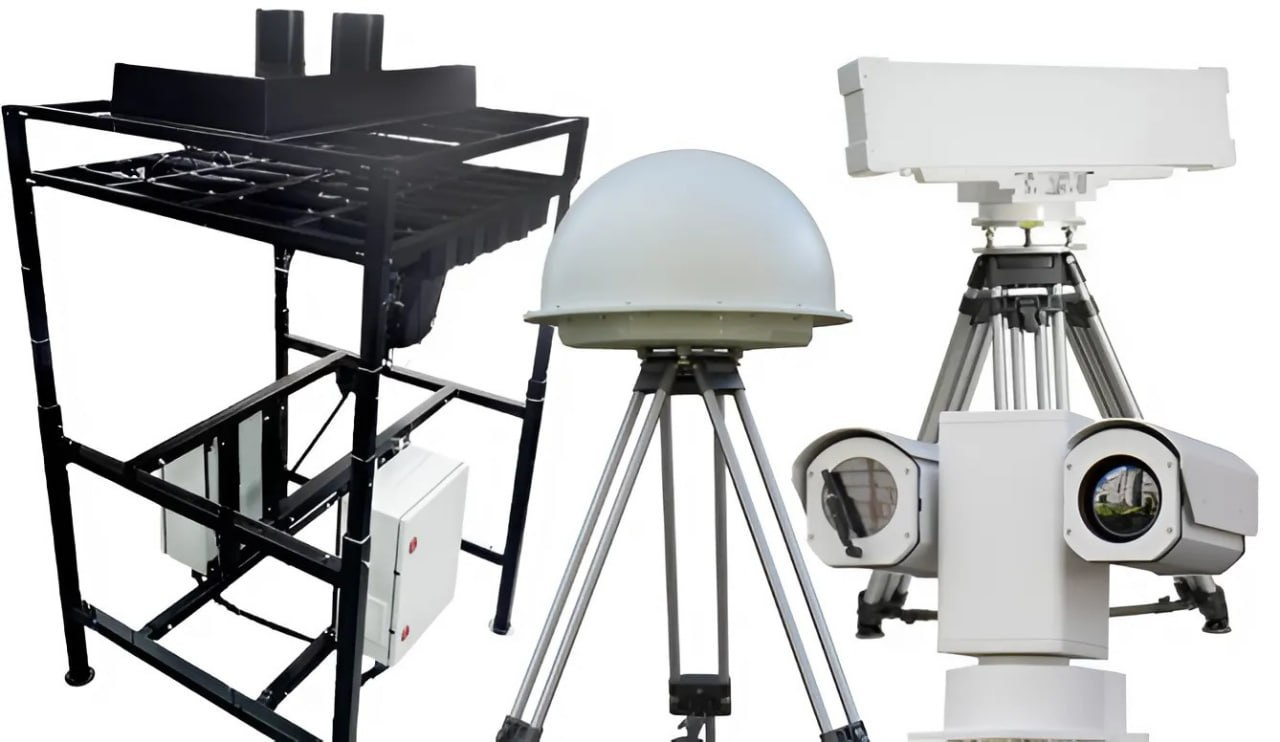
The system successfully passed a series of tests, during which it learned to detect threats in advance, accurately track targets, and promptly neutralize them even under conditions of intense electronic warfare.
The operation of the complex begins with the Bug radar station: it detects small-sized targets at extremely low altitudes, where conventional radars often "go blind." At the same time, the Terney-M module monitors the airwaves, determining the frequencies on which the operator controls the drone. As soon as the target is detected, the Neman electro-optical system comes into play: it identifies the type of aircraft by visual features and keeps it in sight, transmitting a clear image to the operator.
Dvina-50 is responsible for the physical interruption of the flight: it jams satellite navigation signals and breaks control channels, forcing the drone to land or return to the launch point. All modules are coordinated by the Don system — its software collects data streams, analyzes them, and displays a unified digital map on the operator's screen with a dynamic assessment of the threat level.
Read more materials on the topic:
- Detects and destroys dozens of drones at once: the Domovoi anti-drone protection system was presented in St. Petersburg
- It was proposed to deploy combat lasers and Tor-M2 air defense systems on lattice towers to protect oil refineries from drones
- Russian electronic warfare systems cover up to 70% of the need to protect military equipment from drones
Never miss our newsAdd this site to your preferred sources to see us more oftenAdd on Google

















