Scientists from Novgorod State University have developed an innovative energy source for emergency lighting in coastal areas, powered by magnesium, air, and salt water. Unlike solar panels, it does not depend on the weather, and unlike lithium batteries, it is safe for the environment, according to the project's author, Arina Tokhtabaeva.
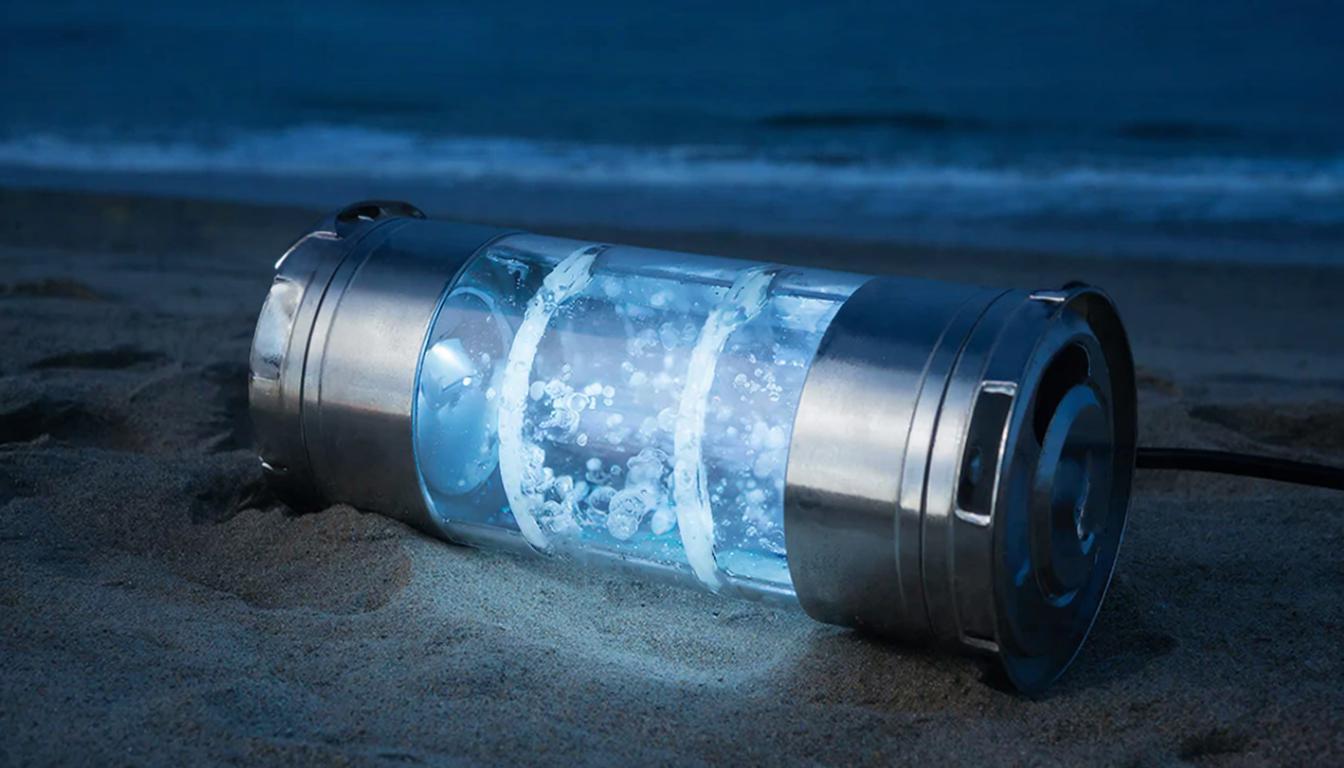
Our task was to select a source that has a minimal impact on nature. This means that in the event of any accident, such as an electrolyte spill or battery disposal, the environment will remain clean. Our development does not contain heavy metals, toxic lithium compounds, or dioxins. Another important condition is a long service life. Until the battery is filled with saline solution, it can be stored dry for many years without losing its properties.
The device's operating principle is based on a simple chemical reaction: a magnesium anode interacts with oxygen from the air in a saline solution. In the process of controlled dissolution of magnesium, electrons are released, producing current. The only byproduct is harmless magnesium hydroxide.
As noted by the project's co-author, Andrey Rosanov, solar panels and wind generators are unstable in Russian conditions, and accumulators for them are expensive. The new element is free from these drawbacks: it is safe, energy-intensive, and can be stored in an inactive state for years.
The development will be useful for emergency lighting of piers, sensors, ocean monitoring systems, and nature conservation areas — wherever autonomy and environmental safety are important.
Read more materials on the topic:
- "Subsidiary" of UAV manufacturer "Transport of the Future" to invest 900 million in battery production
- MSU scientists increase the stability of perovskite solar batteries by 4 times
- Russian scientists create a graphene "sandwich" for new generation batteries
Never miss our newsAdd this site to your preferred sources to see us more oftenAdd on Google

















