Local anesthetics whose action is "turned on" and "turned off" under ultraviolet light have been developed at the Russian Technological University. The new compounds make it possible to precisely control pain relief and reduce the risk of side effects, RTU MIREA told www1.ru.
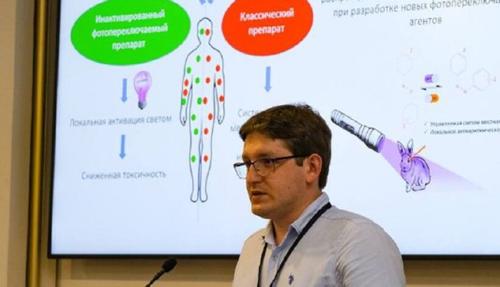
The drugs are based on the anesthetic ethercaine, into whose structure a light-sensitive "switch" has been built. In darkness, the molecule is active and blocks pain; when exposed to light, it changes shape and loses its analgesic properties. The process is fully reversible. Rapid "switching off" of local anesthesia is necessary, for example, when an allergic reaction is detected.
The scientists found that even small changes in the chemical structure affect the efficiency and safety of the compounds. For example, if fluorine is added to the molecule, it remains in the "off" state longer, which is safer for the patient. And if one of the fragments is replaced, the drug dissolves better and becomes less toxic. Understanding how the structure of such molecules is related to their properties will make it possible to create new generations of painkillers and antiarrhythmic drugs with highly precise action, RTU MIREA emphasized.
In the future, such drugs may be used in dentistry, surgery, and chronic pain therapy. Scientists are now preparing for preclinical trials.
Read more materials on the topic:
- New safe painkillers created at PNIPU
- An analogue of a foreign drug for the treatment of thrombosis created at SibGMU
- A biotechnology for producing diabetes drugs was created by Russian scientists
Never miss our newsAdd this site to your preferred sources to see us more oftenAdd on Google










![Growth Point: After 5G Launch, Mobile Internet in Russia Accelerated by 20%","subtitle":"TelecomDaily recorded an upload speed increase of 19.7%, and download speed of almost 14%","announce":""}[]}],](https://media.ixbt.site/fit-in/320x/ixbt-data/1727896/ai-image-nvgq0a0v5cjnyxwoc8xpelva.webp)