Scientists from GosNIIAS (State Research Institute of Aviation Systems) are developing a new smart system that helps drones avoid collisions.
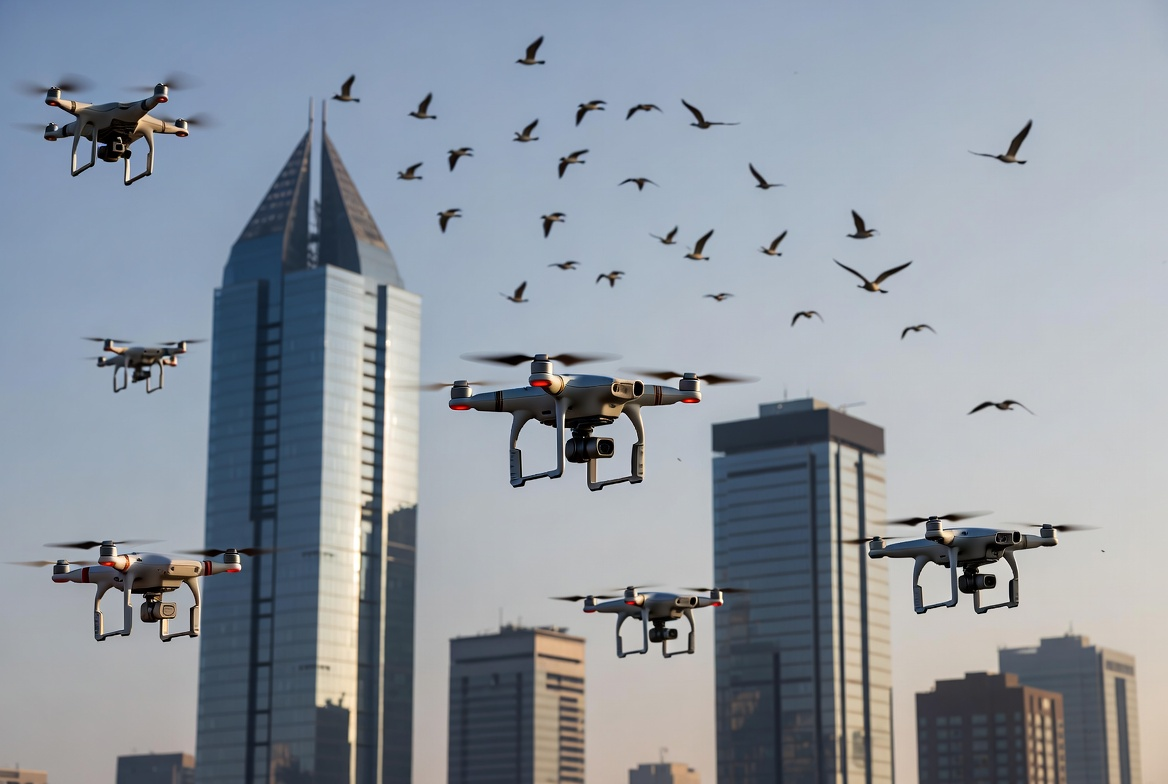
The onboard collision avoidance system is built on bionic principles. Scientists were inspired by the workings of the human nervous system, which acts as the \"brain.\" It combines data about the external world, predicts possible scenarios, and makes decisions even with limited information.
The structure consists of three levels. It collects data from various sensors, communications, and cameras, and then independently:
- finds a possible danger,
- assesses how serious it is,
- gives the drone a command on how to avoid a collision.
It is especially important that the algorithm can work autonomously: it protects against collisions not only with other drones or airplanes (which transmit their data), but also with ordinary stationary or unpredictable objects — buildings, wires, birds, etc.
This development will help create a new generation of drones — more independent, safer, and ready for complex tasks in real life.
Read more materials on the topic:
- Million accident scenarios: unique protection for aircraft created in Russia
- From automation to intellectualization: GosNIIAS will change Russian aviation
- Own operating system JetOS developed for liners MC-21-310 and SJ-100
Never miss our newsAdd this site to your preferred sources to see us more oftenAdd on Google








![Growth Point: After 5G Launch, Mobile Internet in Russia Accelerated by 20%","subtitle":"TelecomDaily recorded an upload speed increase of 19.7%, and download speed of almost 14%","announce":""}[]}],](https://media.ixbt.site/fit-in/320x/ixbt-data/1727896/ai-image-nvgq0a0v5cjnyxwoc8xpelva.webp)