Scientists at Tomsk Polytechnic University (TPU), together with Russian colleagues, have developed biomedical frameworks - gyroid-structured scaffolds that exhibit a shape-memory effect at physiological temperature. This property makes the material promising for bone tissue engineering, enabling minimally invasive implantation and potentially improving its integration with bone.
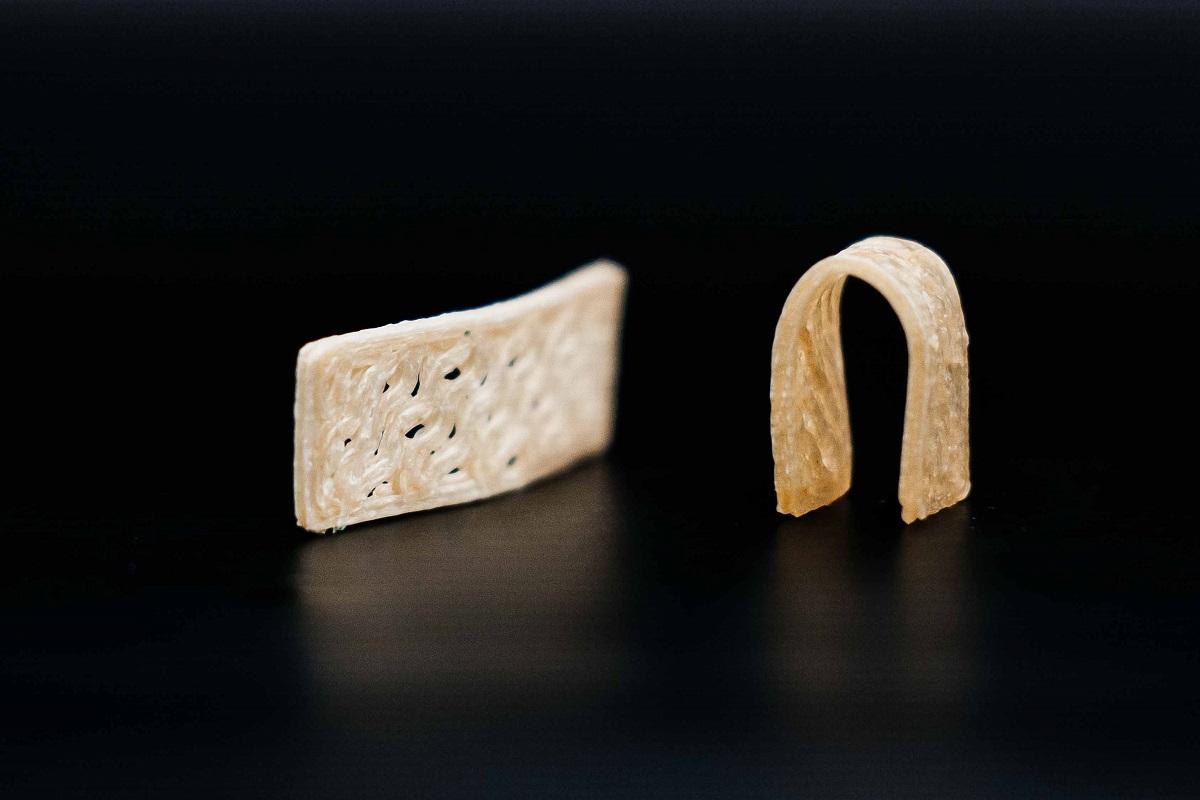
The scaffolds are created using 3D printing from biodegradable polylactide plasticized with polyethylene glycol. The addition of 10 wt.% polyethylene glycol lowered the glass transition temperature of polylactide to 36-39 °C, allowing it to \"remember\" its shape when heated to body temperature. According to laboratory data, the scaffolds recover 97% of their original shape in 6 minutes at 40 °C thanks to the porous gyroid structure, which ensures uniform heat exchange and fluid penetration.
The operating principle of the scaffold is as follows: the biodegradable scaffold is formed to match the shape of the bone defect, then compressed and cooled to obtain a temporary compact shape. During surgery, the surgeon inserts the implant through a small incision, and when heated to body temperature, the scaffold expands, accurately filling the defect without mechanical adjustment. If necessary, additional local gentle heating may be used in clinical settings.
Previously, similar studies were conducted at higher temperatures (above 60 °C), which was unacceptable for living tissues. The new development makes it possible to safely use the shape-memory effect directly inside the human body.
Read more materials on the topic:
- Scientists from MFTI created flexible sensors for \"smart\" prostheses
- Roskosmos is developing unique Aktiv-2 prostheses with microprocessor control
- The first robotized foot prosthesis in Russia is being created by Siberian scientists
Never miss our newsAdd this site to your preferred sources to see us more oftenAdd on Google










![Growth Point: After 5G Launch, Mobile Internet in Russia Accelerated by 20%","subtitle":"TelecomDaily recorded an upload speed increase of 19.7%, and download speed of almost 14%","announce":""}[]}],](https://media.ixbt.site/fit-in/320x/ixbt-data/1727896/ai-image-nvgq0a0v5cjnyxwoc8xpelva.webp)