Translated with AI from the Russian original.
Engineers from the Institute of Advanced Technologies and Industrial Programming at RTU MIREA have developed a compact device to assist people with complete or partial vision loss, "Pervy Tekhnichesky" was informed by the university's press service. The device helps users navigate in space, recognize objects and faces, and vocalize texts.
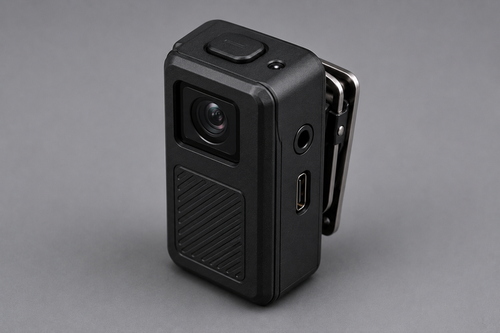
Today, existing solutions on the market are either limited in functionality or require regular paid subscriptions. The new development combines GPS navigation, computer vision, and machine learning in one accessible device. The prototype's cost is about 10,900 rubles.
The device is a small block with a clip that attaches to glasses, a cap, or a collar. Inside, there's a Raspberry Pi 4 mini-computer, a GPS module, an ultrasonic distance sensor, a video camera, and an audio output. The device operates in real-time: the camera analyzes the space, computer vision algorithms recognize objects (doors, curbs, steps) and familiar faces using the FaceRecognition library, and if necessary, can vocalize text – for example, a book page or a menu in a cafe.
GPS tracks location and helps build routes. The ultrasonic sensor, upon user request, measures the distance to the nearest obstacle. All information is converted into voice prompts transmitted through an earphone. The device can be controlled via large buttons on the body or through a mobile application with an intuitive interface.
The RTU MIREA development is cheaper and more functional than many analogues, according to the developers. For comparison, a Sunu Band with limited capabilities costs about 15,000 rubles, and a video assistance service requires a monthly subscription starting from 1,700 rubles.
Read more on the topic:
Never miss our newsAdd this site to your preferred sources to see us more oftenAdd on Google

















