India has begun updating its fleet of tanker aircraft in service with the Air Force (IAF). The republic's government has approved the purchase of six new aircraft to replace the outdated Russian Il-78s.
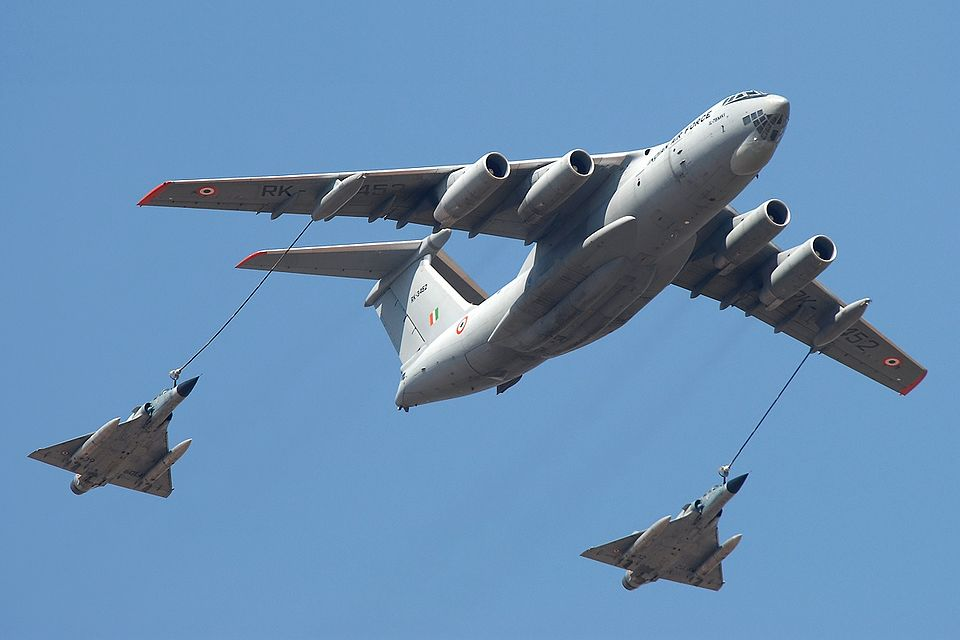
India's choice fell on used American Boeing 767 passenger liners. The conversion of the aircraft into multi-purpose transport/tankers will be carried out by the Israeli company IAI with the participation of the Indian aviation giant HAL.
It is worth recalling that the Republic of India purchased a fleet of six Il-78s from Russia in the early 2000s. According to ADN, the Indian military has long faced operational and technical difficulties in maintaining the aircraft, which leads to problems with maintaining combat readiness.
In addition to the Il-78, India purchased Su-30MKI fighters from Russia. Ivan Grachev, a research fellow at the Central Economics and Mathematics Institute of the Russian Academy of Sciences, noted that Russia earned about $15 billion from this.
Previously, the United Aircraft Corporation also admitted the possibility of localizing the production of short-haul "Superjets" in India. Aviation expert Roman Gusarov explained to "Pervyi Technicheskiy" what difficulties the Indian side may face in implementing this plan.
Read also materials on the topic:
- India and Russia will start cooperating in aircraft construction
- Su-57E Deal: Russia Helps India Accelerate Fifth Generation Fighter Project
- The direct benefit of Russia from the production of "Superjets" in India has been named: to remain competitive
Never miss our newsAdd this site to your preferred sources to see us more oftenAdd on Google

















