Specialists from the United Engine Corporation (ODK) explained how aircraft engines undergo the strictest multi-level inspection before release: even a deviation of 10 micrometers — just one tenth of the thickness of a human hair — is considered critical. Such minimal inaccuracies can reduce engine efficiency by 1–2% and cause dangerous vibrations, which is why each unit undergoes detailed diagnostics at all stages of production.
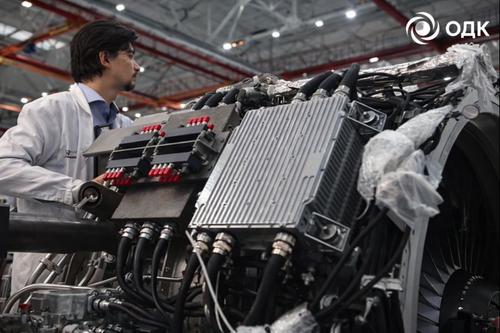
The verification process is divided into three key stages.
1. Micron-level geometry control
Before assembly, each part undergoes a visual inspection for scratches, traces of corrosion, and the condition of connections. Laser scanners and coordinate measuring machines are then used to record deviations in geometry with micron-level accuracy. Without confirmation of compliance with these parameters, the engine is not allowed to proceed to further testing.
2. Non-destructive testing: "X-ray for metal"
To identify internal defects, methods invisible to the naked eye are used:
— eddy current testing — for analyzing the surface of blades;
— radiography — for detecting voids or foreign inclusions inside parts;
— ultrasonic and magnetic particle flaw detection — for finding hidden cracks.
3. Bench testing: a full flight simulation cycle.
At the test bench, the engine undergoes comprehensive validation:
— warm-up and adjustment of all systems;
— start-up and operation across the entire range of modes — from idle to takeoff thrust;
— simulation of takeoff, climb, and cruise flight;
— prolonged operation in various modes to confirm the declared service life and power;
— monitoring of vibrations, temperature fields, pressure in assemblies, fuel consumption, and fuel parameters;
— oil analysis for the presence of metal shavings as a sign of internal wear.
ODK noted that in engine building there are no secondary parts — every element undergoes the strictest control, since flight safety depends on precision measured in microns.
Read more materials on the topic:
- ODK experts revealed the principles of designing engines for passenger airliners
- Who is behind the production of the PD-8 and GTD-110M engines?
- An experienced aircraft assembly fitter revealed the secrets of the appeal of his profession
Never miss our newsAdd this site to your preferred sources to see us more oftenAdd on Google