Translated with AI from the Russian original.
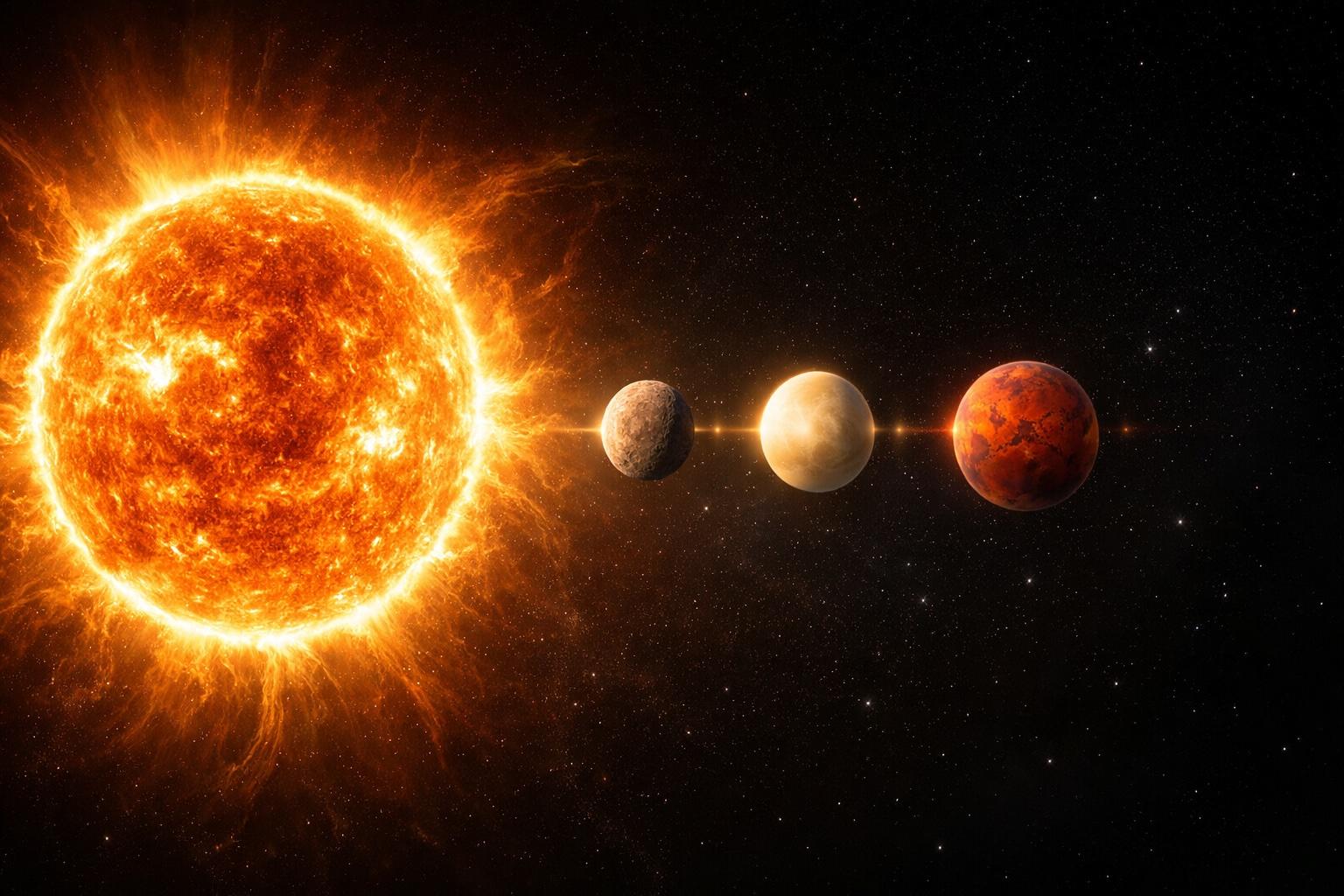
By January 22, a unique astronomical event will occur in the sky — a full parade of the planets closest to Earth: Mercury, Venus, and Mars, according to the Solar Astronomy Laboratory of the Space Research Institute of the Russian Academy of Sciences. The planets will line up near the Sun in an almost regular rhombus or cross, with a side length of 2–3 degrees, after which the configuration will begin to break apart.
Venus and Mars already approached the Sun during the past Christmas, forming a rare conjunction which, according to astronomers, will not repeat in the next two centuries. Venus is now shifting to the left of the Sun, while Mars is moving to the right. Mercury appears in the latest space images as a bright \"star\" on the right and is moving toward the center of the frame, toward the solar disk. Venus and Mars are still hidden behind the coronagraph, which blocks the bright sunlight for observations.
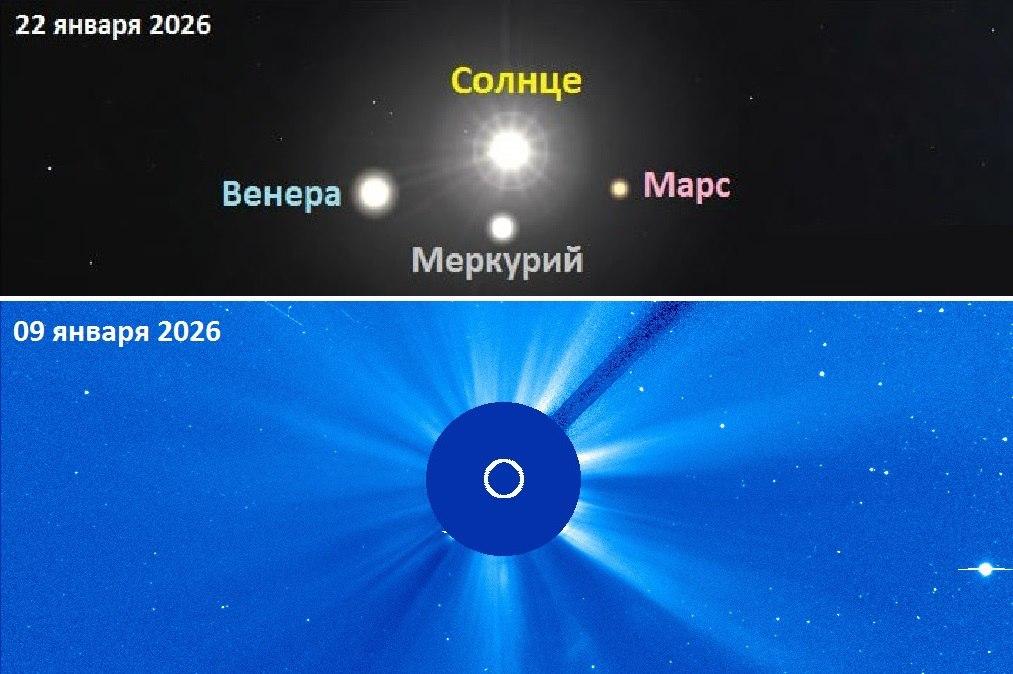
According to specialists, in a few days both planets will emerge from behind the blockage and become visible in new images. After January 22, the fastest planet — Mercury — will leave the parade before the end of the month. In February, Venus and Mars will follow, and their symmetrical configuration will come to an end. The next notable convergence of all three planets near the Sun will occur only in September 2038.
Read more materials on the topic:
- Planetary parade on February 28, 2025: where to watch and what can be seen in Russia
- A truly great planetary parade: when it is best to observe the astronomical phenomenon in Russia
- A rare astronomical phenomenon: on the morning of June 3, a parade of all the planets of the Solar System will take place
Never miss our newsAdd this site to your preferred sources to see us more oftenAdd on Google

















