Translated with AI from the Russian original.
During the 71st Russian Antarctic Expedition at the "Mirny" station, an unprecedented project of remote control of an unmanned aerial vehicle (UAV) over an intercontinental distance was implemented. The ZALA T-16 unmanned complex, while in the airspace of Antarctica, came under the direct control of operators from the Flight Control Center in Izhevsk - thousands of kilometers from the launch site.
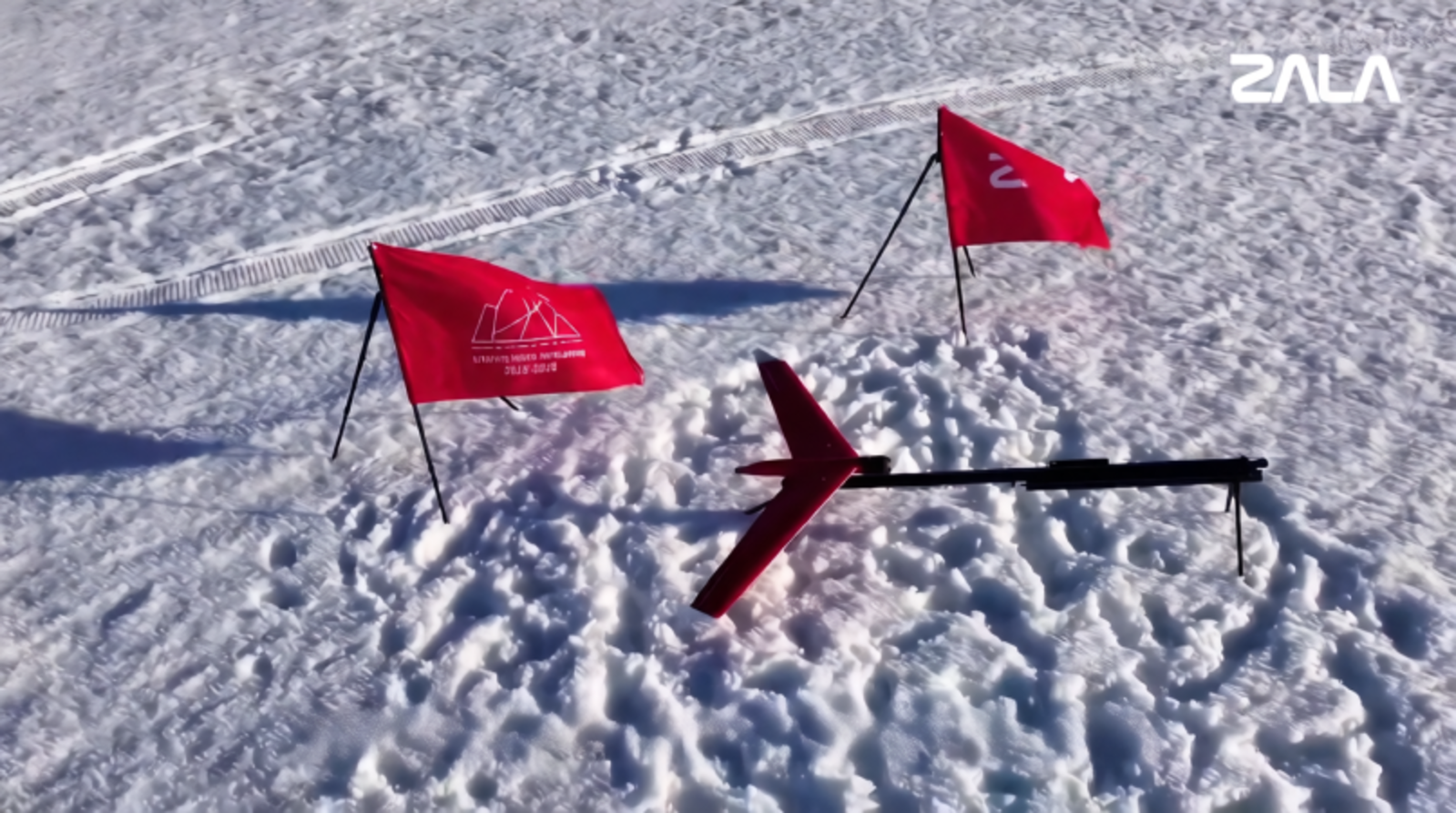
The technological breakthrough was made possible thanks to an innovative over-the-horizon control system developed by specialists from ZALA Aero Group. This system provided a stable and secure C2 (Command & Control) communication line, allowing not only the transmission of telemetry in real time, but also the broadcasting of high-resolution video from the aircraft.
Operators in Izhevsk were able to control the flight as if they were directly in Antarctica. The main tasks of the mission included aerial visual monitoring of ice cracks and faults, as well as observation of penguin colonies as part of biological research.
Integration with the ZALA 4Z1x digital platform made it possible to provide real-time data access not only for the team in Izhevsk, but also for experts in Moscow.
Read more materials on the topic:
- ZALA T-16 Withstood the Magnetic Storms of the Arctic - Resistance to Solar Activity Confirmed
- Spent More Than 4 Hours in the Air: ZALA T-16 Unmanned System Tested at the Vostochny Cosmodrome
- Modernized ZALA T-16 Drone Transmitted Video from Onboard Cameras Taken in Anadyr to the Ministry of Internal Affairs of Moscow
Never miss our newsAdd this site to your preferred sources to see us more oftenAdd on Google

















