Scientists at the Moscow Pedagogical State University have created hybrid nanostructures using DNA origami technology for the first time in Russia, according to Andrei Naumov, Corresponding Member of the Russian Academy of Sciences, Head of the Department at Moscow Pedagogical State University, and Head of the Troitsk Branch of the P. N. Lebedev Physical Institute of the Russian Academy of Sciences (FIAN).
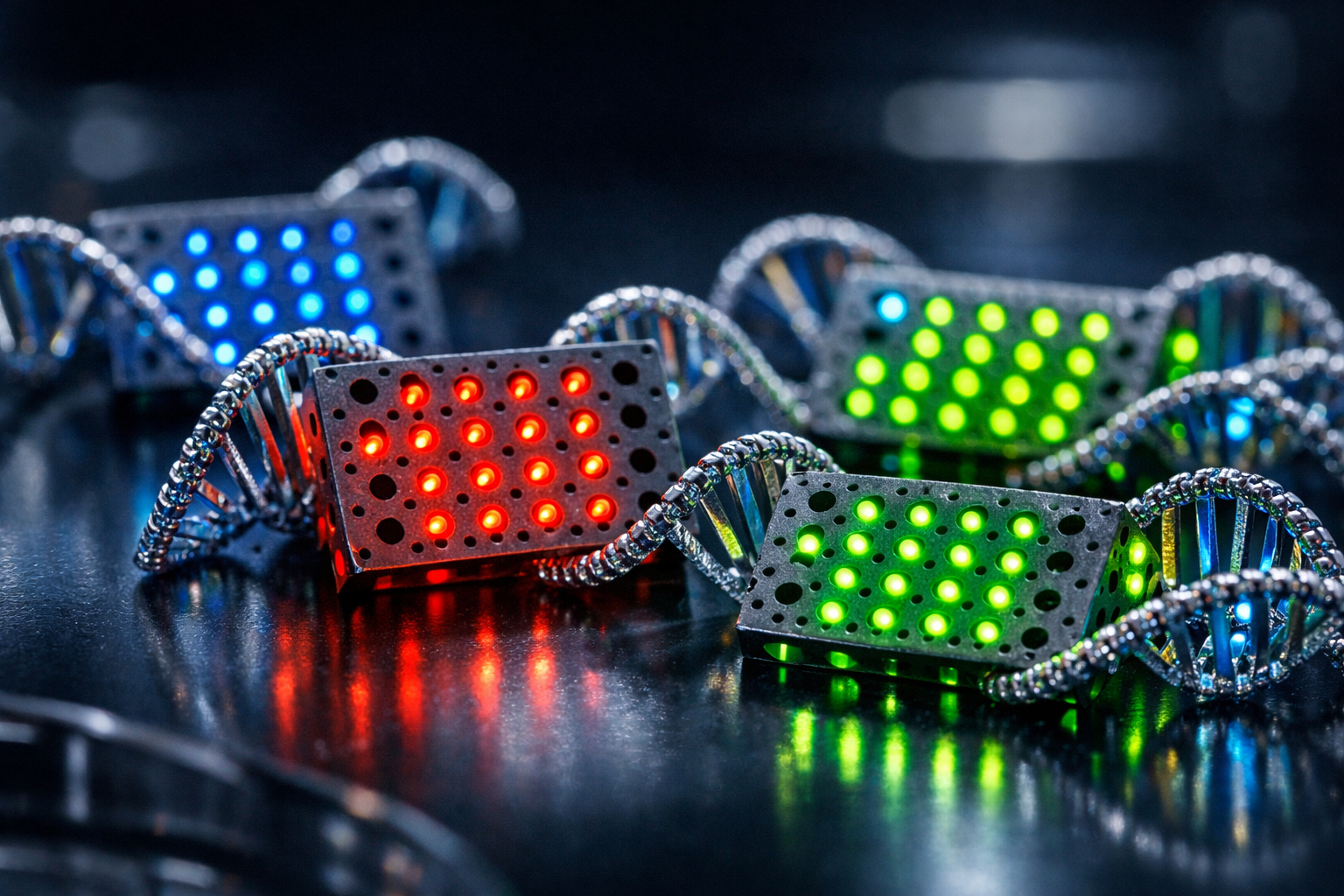
DNA origami technology uses DNA molecules to form nanometer-sized structures with specific properties, which in the future will improve electronics and photonics devices, and in medicine, such elements can be used as sensors for diagnostics or nanocontainers for targeted drug delivery.
Naumov noted that he and his colleagues were the first in Russia to carry out precision molecular assembly of "DNA-semiconductor" hybrid nanostructures, using the ability of DNA molecule nucleotides to combine in pairs (adenine-thymine, cytosine-guanine), which allows programming the self-assembly of complex nanostructures with an accuracy of up to single nanometers.
Researchers at Moscow Pedagogical State University created nanoplates in the form of perforated bricks with rectangular holes, to which luminescent semiconductor quantum dots were attached. To evaluate the resulting hybrid structures, they used a method based on atomic force microscopy with deep mathematical data processing.
Naumov emphasized that, in the future, the method opens the way to mass and relatively inexpensive production of hybrid materials with a complex, predetermined structure and morphology, which will provide new functional properties.
Read more materials on the topic:
- For Aviation and Mechanical Engineering: TSU Develops a New Method for Protecting Magnesium Alloys with Rare Earth Metals
- Nanotechnology Against Overheating: Physicists from SSU Find a Safe Mode for Passing Extreme Currents
- Russian Scientists Create a Graphene "Sandwich" for New Generation Batteries
Never miss our newsAdd this site to your preferred sources to see us more oftenAdd on Google

















