Engineers from the Advanced Engineering School of Integrated Aviation Engineering (AES KAI) at Kazan Aviation University named after N.A. Tupolev have successfully conducted flight tests of a new unmanned aerial vehicle called "KHAN" - a hybrid VTOL drone capable of vertical takeoff and landing, as well as smoothly transitioning to horizontal flight and back.
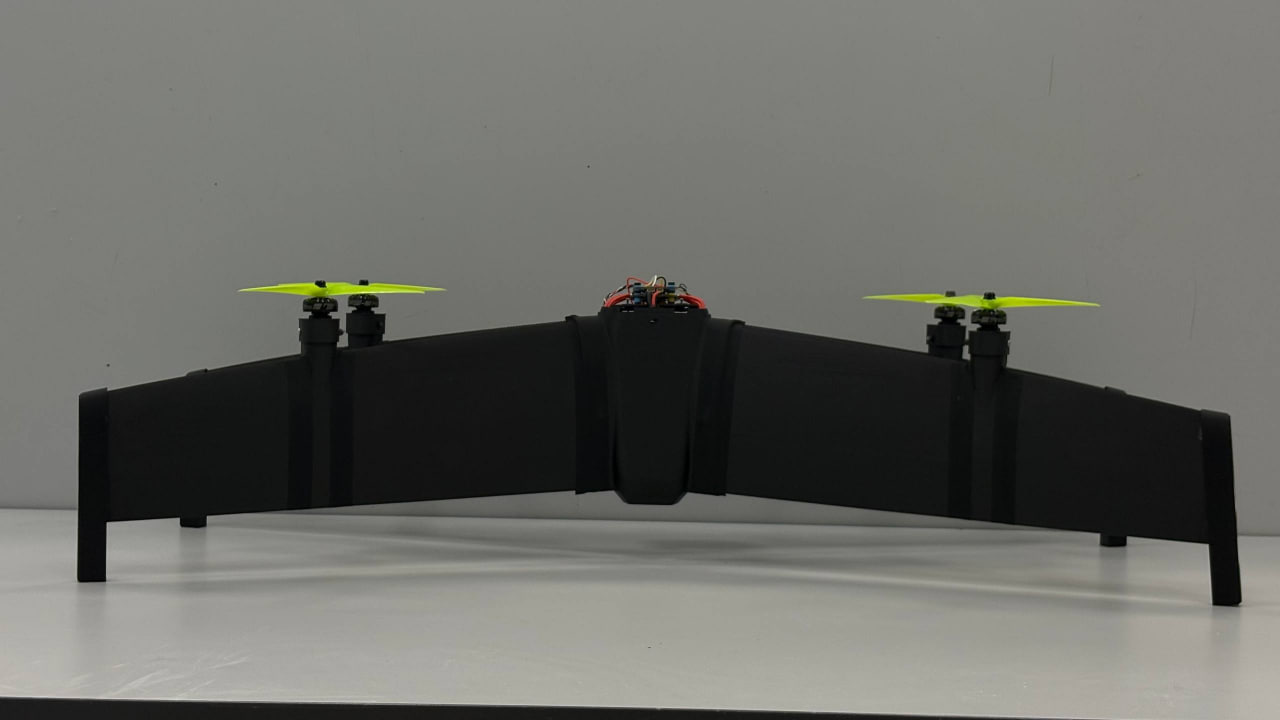
A key feature of the development is the complete rejection of traditional servos and rotary mechanical components. Instead, a software package is used that independently regulates the speed of each engine, providing vector thrust control and stabilizing the aircraft in all flight modes.
This approach has resulted in high stability, improved maneuverability, and a reduction in the overall weight of the structure.
Eliminating complex kinematics not only simplified the assembly and maintenance of the drone but also significantly increased its reliability and manufacturability.
During the current tests, specialists are working on flight transition modes, the behavior of the aircraft in wind conditions, energy consumption, and automatic stabilization algorithms. Simultaneously, the core of the control system is being refined to ensure maximum autonomy.
In the next stage, the developers plan to create a line of drones based on the "KHAN" technology - from compact ones to aircraft with a wingspan of about two meters. The latter are intended for use in geodesy, industrial monitoring, infrastructure inspection, and aerial photography.