Translated with AI from the Russian original.
The mass production of Tu-214, which Kazan relied on in 2022, will not begin even by 2030. The actual pace is only a few aircraft per year. The MC-21 program comes to the forefront, where the situation is noticeably better, and the plans seem achievable.
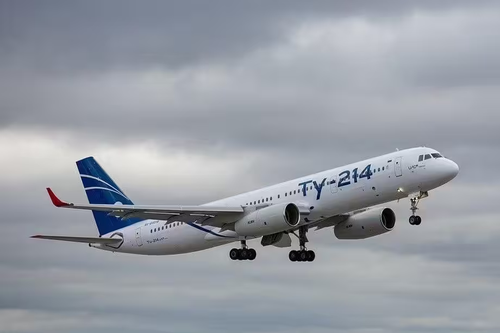
Kazan Tu-214: Promises and Reality
Information about the disruption of plans for the Tu-214 is no longer surprising. According to industry sources, even by the end of the decade, the Kazan Aviation Plant will not be able to reach the promised volumes of mass production.
So far, we are talking about a maximum of 10 aircraft per year for the next five years. But even these figures look optimistic: in the fall of 2025, local media reported that the plant cannot yet reach even more modest rates.
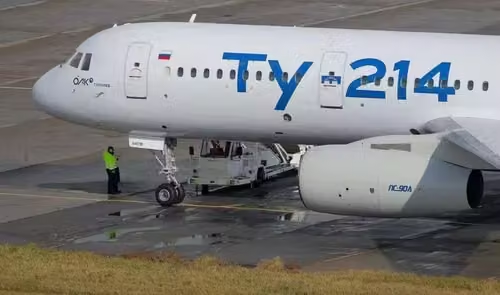
Local media rightly note: six aircraft per year is the first real milestone that can be reached in three years. This requires restructuring production processes and implementing a modern management system.
In fact, today the plantproduces one Tu-214 per year - and even that with difficulty. If Kazan can really produce ten by 2030, it will already be a success.
MC-21: Focus on Irkutsk and Real Pace
While discussions continue around the Tu-214, theMC-21 project comes to the forefront. Key stages of import substitution have already been completed in Irkutsk, the aircraft is undergoing certification tests, and the plant's capacity allows us to talk about increasing production.
The completion of all tests and the production of two more serial aircraft are planned for 2026. 2027 will be the start of full-scale mass production, after which deliveries to customers will begin.
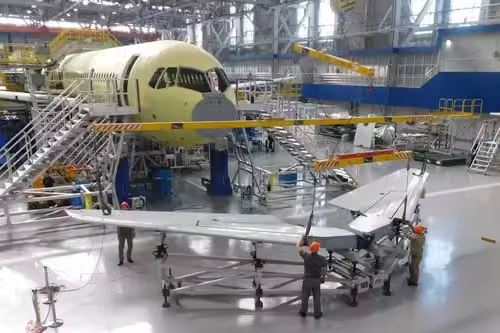
As Deputy Prime Minister Vitaly Savelyev recalled, Aeroflot ordered 200 MC-21-310 aircraft, and it is this project that is now considered a priority.
Industry Prepares for Series Production
Irkutsk is actively preparing to launch a large production: in the fall of 2025, new milling centers weighing 33 tons were installed there - they will make large parts of the wing and fuselage.
Nizhny Novgorod also joined the program: the first domestic equipment for automatic riveting of aircraft panels was delivered to theSokol plant. Four more similar machines will arrive in the next two years.
Here, the assembly of the first under-keel compartment of the MC-21-310 began - it is planned to produce 24 such products per year, part of the work will be taken over by Ulyanovsk. All components will go to final assembly in Irkutsk.
Result - MC-21 Becomes the Main Project of Civil Aviation
The industry is gradually betting on the new aircraft. Kazan is still fighting for the survival of the old model, while Irkutsk is gradually building a modern mass production.
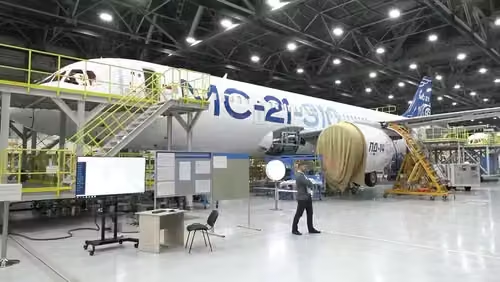
If the schedule is maintained, the MC-21 will become the main force of the Russian aircraft industry by 2030, while the Tu-214 will remain a niche solution for individual airlines.
Earlier,www1.ru reported that Russia will earn billions of dollars for the aviation industry by producing SJ-100 abroad.
Read more materials:
- Enforcement Proceedings Initiated Against the Manufacturer of PS-90A and PD-14: The Plant Was Planned to Be Bankrupted
- Aeroflot Increased the Order for MC-21 to 200 Aircraft: Only Two Aircraft Are Flying So Far
Never miss our newsAdd this site to your preferred sources to see us more oftenAdd on Google

















