A lunar base will need an energy source that can operate for years without frequent refueling. One option is a small nuclear power plant. Such power units have been in operation for a long time, and several countries are showing interest in using them on the Moon, said Vice-President of the Russian Academy of Sciences, Academician Stepan Kalmykov at the SKIF-2026 conference in Novosibirsk. What are the prospects for a lunar NPP and what will it be used for on Earth's satellite — in the article by "Pervy Tekhnichesky".
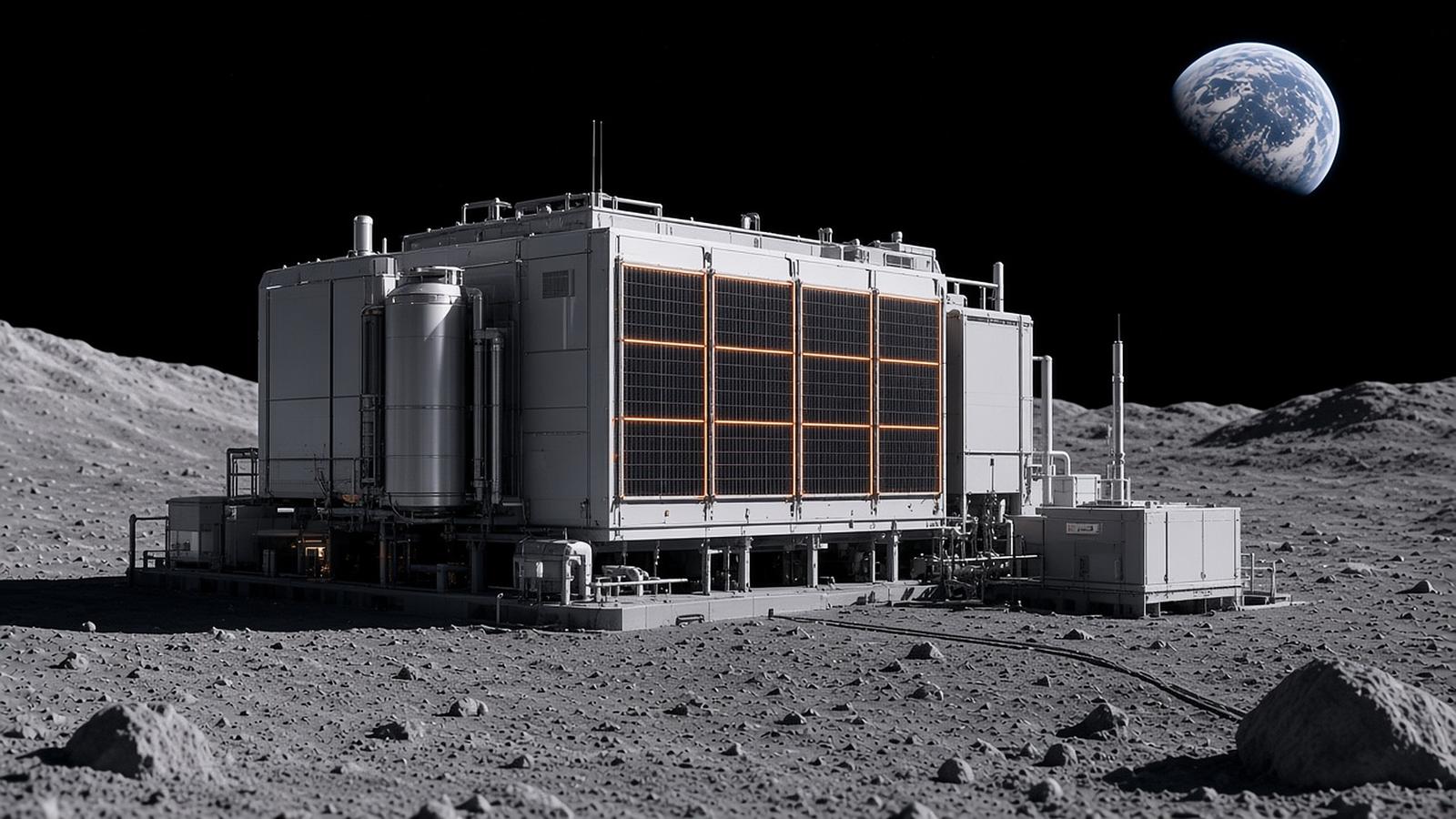
Small power units are something that has been in operation for a long time, does not require frequent replacement of energy-generating material. Therefore, I think this is what is needed now, and not only we are considering this possibility.
What the lunar NPP will be like and who is creating it
Rosatom CEO Alexey Likhachev, speaking earlier to foreign specialists in Moscow, stated that by the middle of the next decade, the state corporation plans to create a nuclear power unit for a lunar station. The project is being developed by Rosatom and the Kurchatov Institute.
In March 2026, at a seminar at the Ministry of Energy, Likhachev emphasized that the unit's power should be at least 5 kW, and its operational life on the Moon should reach 10 years. The design of the future station is being determined by Rosatom, the Kurchatov Institute, and Roscosmos.
In December 2025, Roscosmos and NPO Lavochkin signed a contract for the development of a Russian lunar power plant. The project is designed for 2025–2036. During this time, spacecraft will be developed, ground testing and flight tests will be conducted, and infrastructure will be deployed on the Moon. The power plant should supply energy to the Russian lunar program and the facilities of the International Lunar Research Station (ILRS), including foreign partners.
What does China have to do with it
The International Lunar Research Station (ILRS) is a Russian-Chinese project to create a complex of research facilities on the lunar surface and in its orbit. The station is designed for long-term scientific work, including resource exploration, astronomical observations, and technology testing. More than a dozen other countries have joined the project, including Azerbaijan, Belarus, Venezuela, South Africa, Pakistan, Egypt, Thailand, and Serbia.
In March 2021, Roscosmos and the China National Space Administration (CNSA) signed a memorandum of understanding on the creation of the ILRS. In June of the same year, the parties presented a roadmap for the project.
China is actively promoting its Chang'e lunar program. China has completed the Chang'e-4 and Chang'e-6 missions, including bringing back soil from the far side of the Moon.
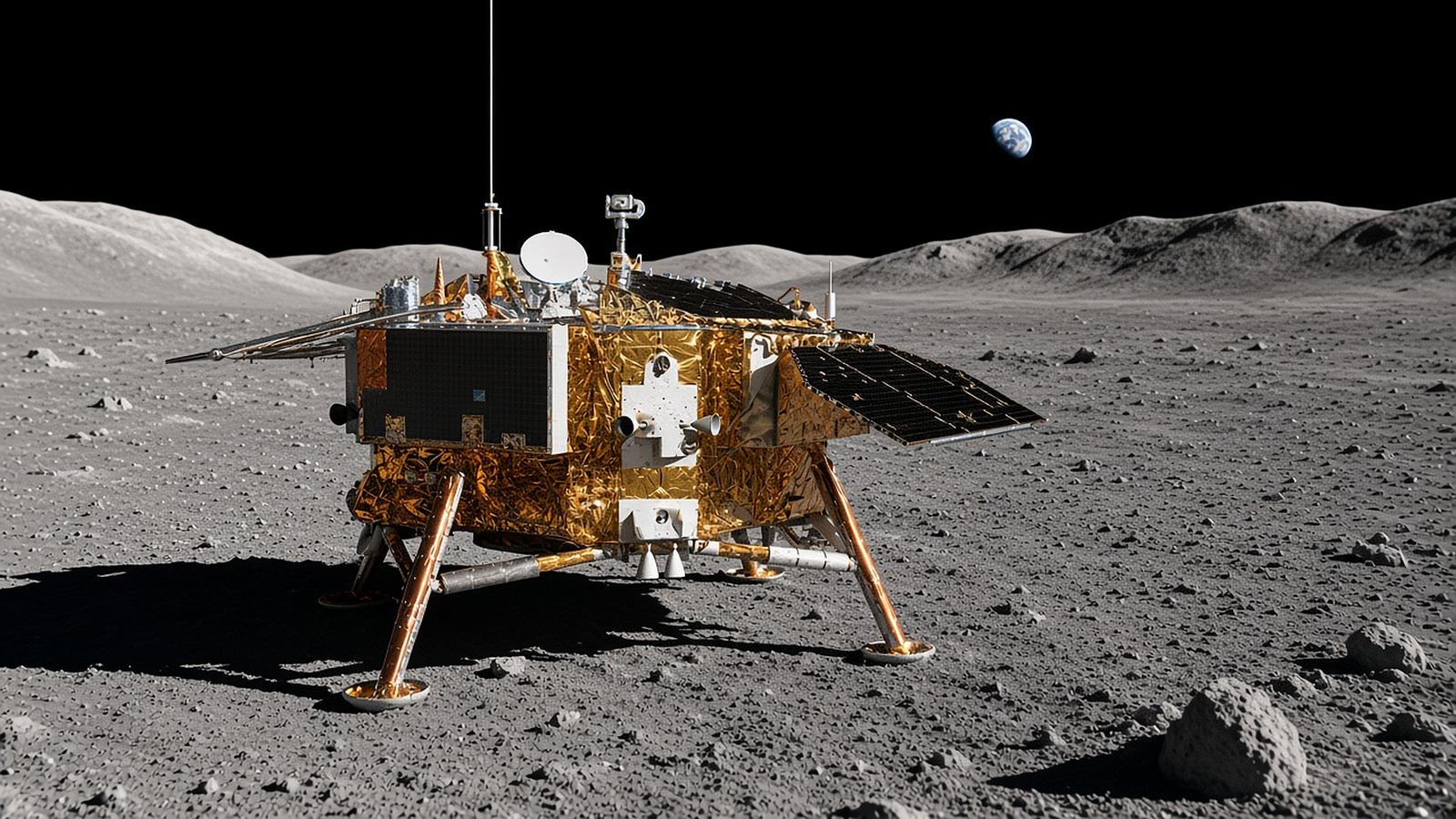
Ahead are Chang'e-7 and Chang'e-8, which are to conduct reconnaissance of the south pole, test technologies for using local resources, and prepare a site for the station. China also plans to land astronauts by 2030 and form the basic configuration of the ILRS by the mid-2030s.
Plans for expanding the station on the Moon
Future scales were also discussed. In addition to the basic unit, a lunar station an order of magnitude more powerful is being developed — about 10 kW for scientific tasks and over 100 kW for extracting rare earth metals and obtaining oxygen from lunar ice.
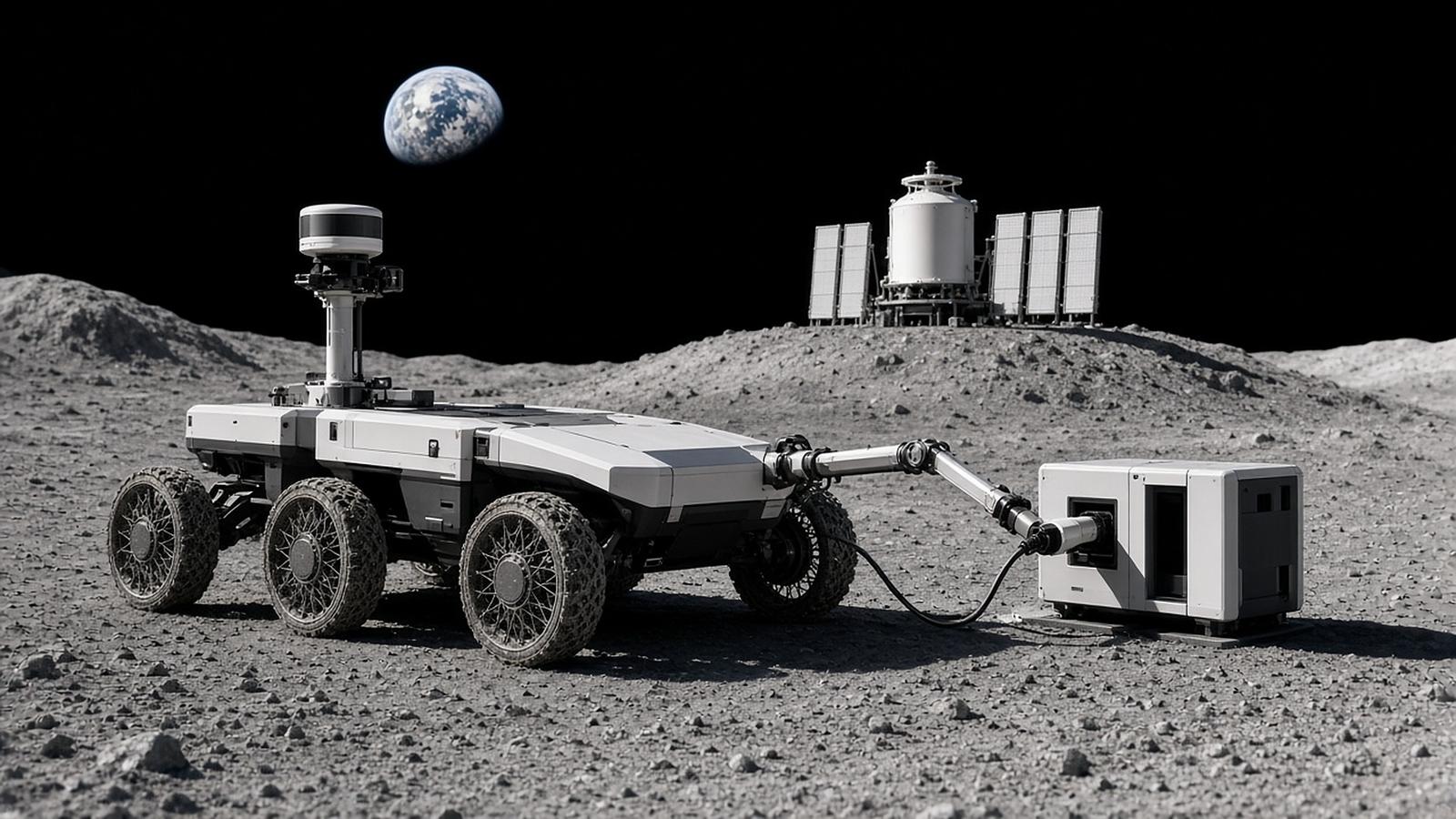
It was also clarified that the Russian NPP on the Moon will become operational after three launches. First, a service lunar rover and a charging and distribution station will be delivered to the satellite, and then the nuclear unit itself, which will be connected by cable.
Read more on the topic:
Never miss our newsAdd this site to your preferred sources to see us more oftenAdd on Google