CubeSat "Geoscan-2" continues to execute the program for receiving data using Automatic Dependent Surveillance-Broadcast (ADS-B) technology. This was reported in the press service of the "Geoscan" company.
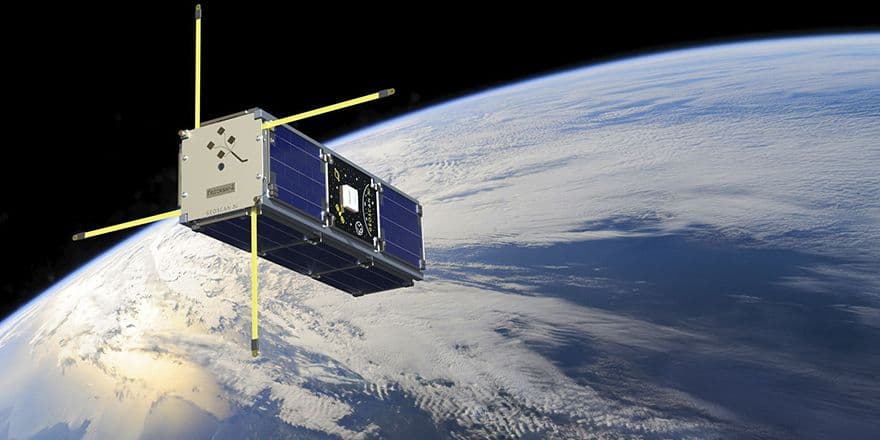
The experiment confirmed that the small satellite is capable of capturing signals from manned aircraft at altitudes from 76 to 13,100 meters. In one orbit, the CubeSat receives and transmits several hundred messages to Earth for further analysis.
According to the company, on October 10, over four orbits, the satellite received and processed 2,203 messages from 114 aircraft from 32 countries. The largest amount of data was recorded during flights over Central Africa, Eastern Australia, and the Pacific Ocean. The maximum speed of the registered aircraft was 1,110 km/h.
Alexander Khokhlov, Head of the Small Spacecraft Projects Department at GC "Geoscan", noted that the experiment confirmed the potential of small satellites for global aviation monitoring. In the near future, it is planned to introduce functions for pinpoint tracking of individual aircraft, data filtering, and receiving signals from drones, as well as to conduct tests on ADS-B information retransmission in real-time.
The "Geoscan-2" satellite was launched into orbit on July 25, 2025, and began its targeted work in August. It became the first Russian CubeSat to track the location, speed, and direction of movement of aircraft.
Read more on the topic:
- Спутник "Геоскан-2" начал принимать данные о воздушных судах: за первые два витка аппарат принял более 1700 сообщений
- Геоскан представил "Пионер Мини 2" - первый российский образовательный дрон с бортовым ИИ для школ и вузов
- Новый дрон "Геоскан 801" с привязной станцией: 6 часов непрерывного видеонаблюдения с воздуха
Now on home

Start of deliveries scheduled for 2027

Over 51,000 new motorcycles were sold in Russia in 2025

The car will take at least a year to assemble

The application's audience has reached 20 million users

The model will be included in the list of cars for taxis, price - from 2.25 million rubles

All parking lots of the "Administrator of the Moscow Parking Space" are connected to the service

The cars will be supplied to the Moscow Transport Service Directorate
Deliveries to India may begin in 2028
The technology provides automated search for all types of defects in power units
The plane flew 500 km, accelerating to 425 km/h

The plant stated that the information about the termination of purchases for models 6 and 8 is not true
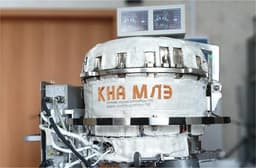
Scientists are using the "Ekran-M" installation