The Russian companies "Ampertex" and "Carbontex" are developing a high-tech stealth material that is integrated with an anti-icing system. This was reported by the Fund for Supporting Projects of the National Technology Initiative (NTI).
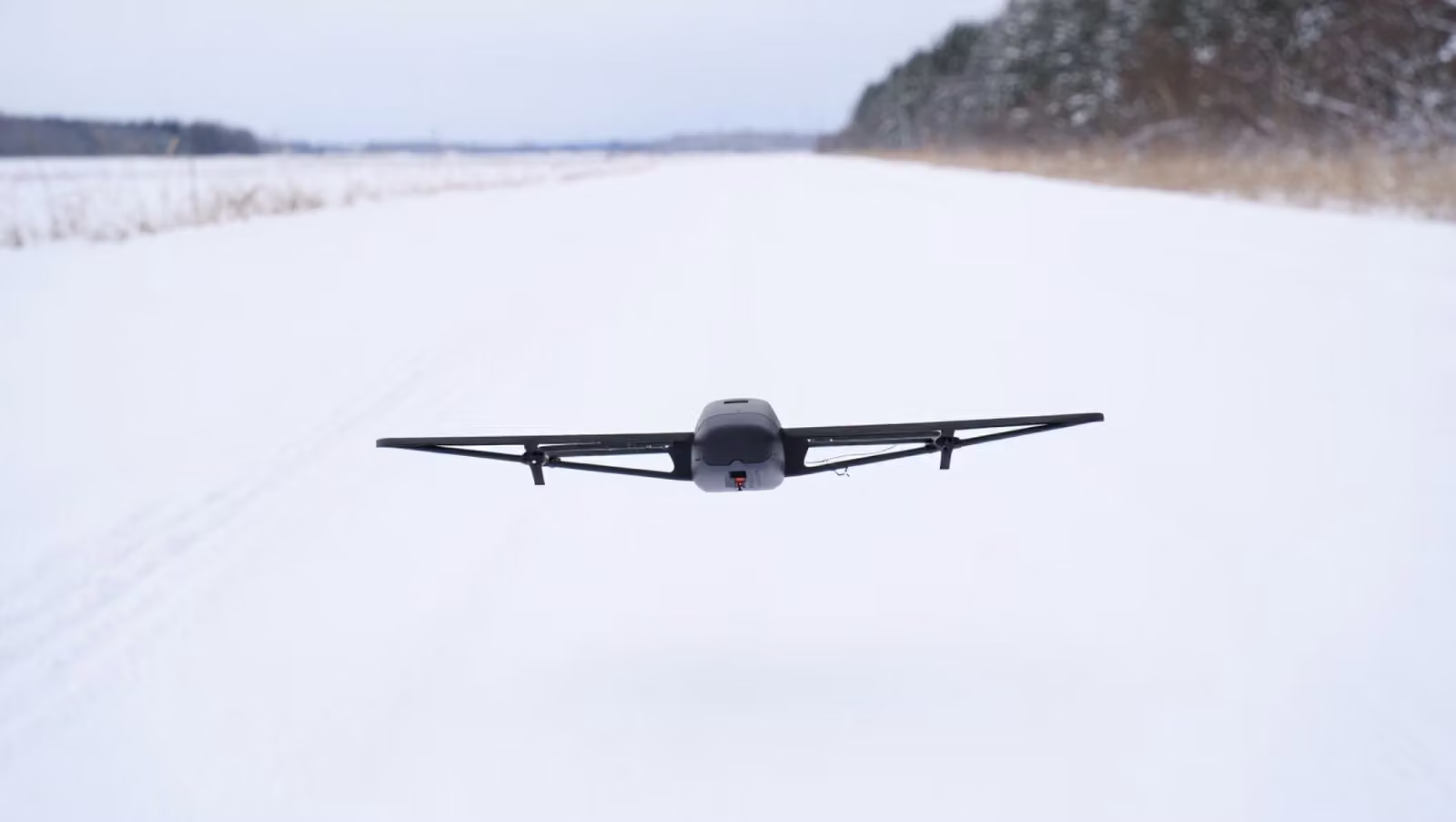
The new product is based on a synthesis of three-dimensional (3D) weaving technology and polymeric conductive threads. These threads provide protection against icing through controlled heating. In combination with 3D weaving, they increase the strength of the material and its resistance to radio interference.
Among the main advantages of the developed material is increased resistance to sudden temperature changes and high humidity. This is necessary for the reliable operation of equipment in conditions of negative temperatures and active electronic warfare. The use of this material in the hulls of unmanned aerial systems (UAS) will ensure stable take-off and landing in the harsh climatic conditions of the Arctic and the North.
The development has no direct global analogues and has export potential. The new material can be used in the transport industry, aviation, electronics and other strategically important areas.
Earlier, www1.ru reported that a heat-resistant material for protecting drones was developed in Russia.
Read also:
- Weaving machines for creating drone parts developed in Russia
- Titanium alloys, aluminum and composite polymer materials: experts talk about promising materials for drone construction
- New types of carbon fiber for satellites are being developed in Russia
Never miss our newsAdd this site to your preferred sources to see us more oftenAdd on Google

















