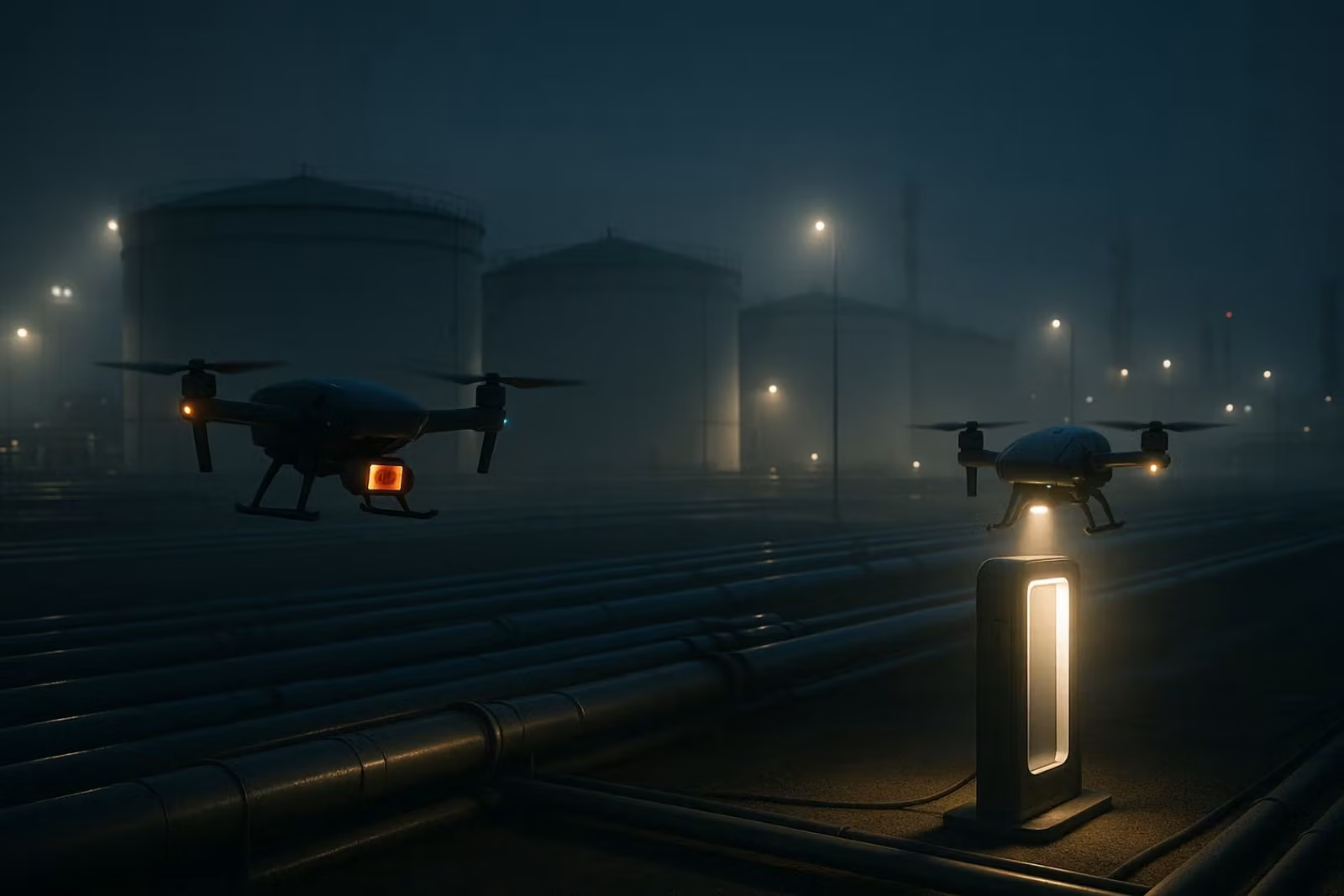
Students of the Moscow Aviation Institute (MAI) have developed an innovative drone system capable of automatically tracking fires and emergencies at oil depots, pipelines, industrial enterprises, and even cosmodromes. The main feature of the complex is round-the-clock operation without human intervention, thanks to the use of several drones and a network of autonomous charging stations.
According to Olga Yaroslavtseva, a student at the MAI Aerospace Institute, the main problem with traditional unmanned systems is the limited flight time and the need for a constant operator.
Our complex solves this problem by ensuring uninterrupted operation of the devices. This reduces risks for personnel, speeds up response to emergency situations, and makes monitoring economically viable - the system pays for itself in a year compared to maintaining a full-time security team.
The complex consists of two light multi-rotor drones and a network of charging stations installed around the perimeter of the protected area. The devices operate alternately: while one is patrolling, the second is recharging. Landing occurs automatically - the drone, using a thermal imager, finds the station, which opens the hatch, after which the device lands on magnetic contacts. The stations can be powered by either the mains or solar panels or wind generators, which makes the system independent and environmentally friendly.
Data transmission between drones and stations is carried out via radio channel. Each device uses its own frequency, and the system recognizes "its own" devices and ensures correct landing. Drones fly along a pre-calculated route, eliminating collisions and "blind spots". They are equipped with thermal imagers, smoke and leak sensors, and also use lidars and navigation via GPS and GLONASS.
Currently, students have created simplified prototypes and proved the concept's viability. The development of a full-size model will be completed within a year and a half. In the future, the system can be used in other areas as well - for example, to protect forests and reserves.
Read more materials on the topic:
- Drones help large enterprises monitor hard-to-reach infrastructure
- Innovative drone "OMDJET" received an engineering "Oscar"
- Budget UAV system for monitoring territories developed in Novosibirsk
Never miss our newsAdd this site to your preferred sources to see us more oftenAdd on Google

















