Russian President Vladimir Putin participated via video link in the opening ceremony of the Pacific Railway.
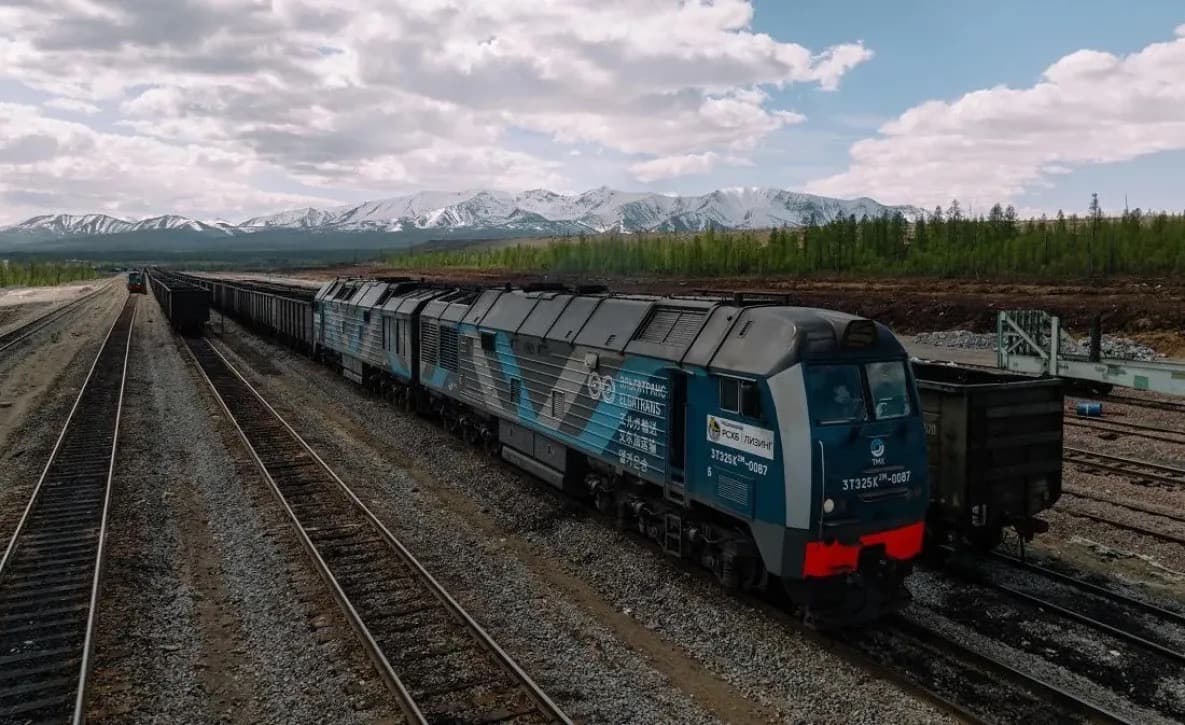
The construction of the магистраль, stretching over 500 kilometers, took less than three years. Investments in the project amounted to 146 billion rubles, entirely from private capital. The road was built by the coal mining company «Эльга», which connects the Elga deposit in Yakutia with the export terminal on the coast of the Sea of Okhotsk in the Khabarovsk Territory.
The railway began operating in test mode at the end of 2024. Currently, design work is underway for the construction of the second line. By 2026, «Эльга» plans to increase coal transportation capacity to 30 million tons per year.
The Pacific магистраль stretches through hard-to-reach taiga and became the first private railway of such scale in the Far East. Its throughput capacity is estimated at 50 million tons of coal annually in the future.
The ТЖД has become the third key transport artery of the region, along with the Trans-Siberian Railway and the BAM. The new route forms part of the Russia-Asia-Pacific region logistics corridor, opens up opportunities for diversifying cargo flows, and supports the development of the metallurgical, machine-building, construction, and related industries.
Read materials on the topic:
Now on home

Start of deliveries scheduled for 2027

Over 51,000 new motorcycles were sold in Russia in 2025

The car will take at least a year to assemble

The application's audience has reached 20 million users

The model will be included in the list of cars for taxis, price - from 2.25 million rubles

All parking lots of the "Administrator of the Moscow Parking Space" are connected to the service

The cars will be supplied to the Moscow Transport Service Directorate

Deliveries to India may begin in 2028

The technology provides automated search for all types of defects in power units

The plane flew 500 km, accelerating to 425 km/h

The plant stated that the information about the termination of purchases for models 6 and 8 is not true

Scientists are using the "Ekran-M" installation