A mockup of the first Russian unmanned amphibious aircraft "Meridian" was presented at the "Unmanned Systems: Technologies of the Future" forum, held from August 14 to 17 in Skolkovo.
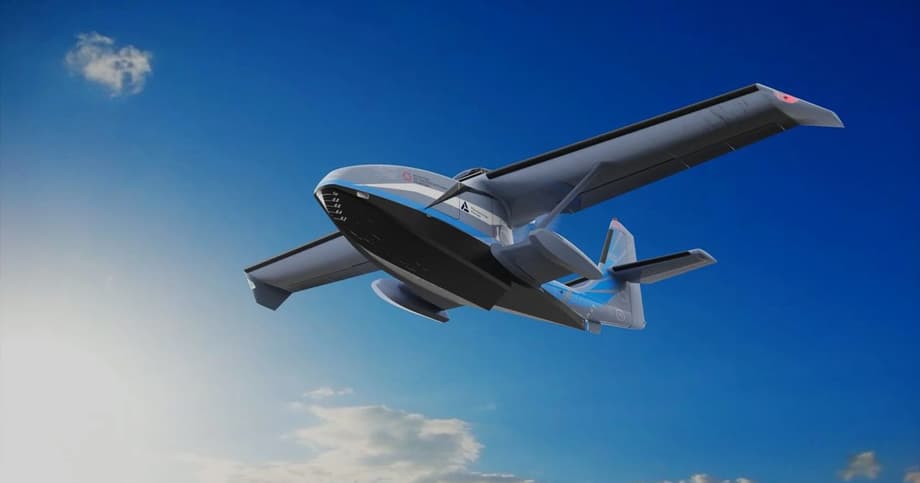
The aircraft does not require a runway and can land on both water and land thanks to its streamlined hull, resembling a boat.
The project is at the stage of experimental design work. The drone is designed to carry cargo weighing up to 700 kg and is intended for operation in regions with limited infrastructure.
"Meridian" is the only Russian amphibious system in the class of unmanned aerial vehicles. It is being created to transport cargo weighing up to 700 kg to remote regions, including the Arctic and the Far East, where there is no developed infrastructure.
The drone provides environmental monitoring and forecasting of changes in the natural environment. The aircraft is capable of monitoring the condition of land, water bodies and glaciers all year round. It can withstand temperatures from -45°C to +35°C, performs flights lasting up to eleven hours, covers up to 1200 kilometers and rises to a height of up to 4000 meters. In addition, the device can operate without the use of satellite navigation.
"Meridian" is being developed by the Center for Autonomous Robotic Systems (CARS) in conjunction with the Center of Competencies of Unmanned Aviation Systems of the Bauman Moscow State Technical University. All aerodynamic and strength calculations have been completed, and the manufacture of the first parts has begun.
Read also on the topic:
Mockup of the heavy Meridian unmanned amphibious aircraft shown at Innoprom in Yekaterinburg
Russian cars topped the list of floating all-terrain vehicles
Now on home

Start of deliveries scheduled for 2027

Over 51,000 new motorcycles were sold in Russia in 2025

The car will take at least a year to assemble

The application's audience has reached 20 million users

The model will be included in the list of cars for taxis, price - from 2.25 million rubles

All parking lots of the "Administrator of the Moscow Parking Space" are connected to the service

The cars will be supplied to the Moscow Transport Service Directorate

Deliveries to India may begin in 2028

The technology provides automated search for all types of defects in power units

The plane flew 500 km, accelerating to 425 km/h

The plant stated that the information about the termination of purchases for models 6 and 8 is not true

Scientists are using the "Ekran-M" installation