At the Moscow Aviation Institute (MAI), a "Skufik" drone has been developed to check the condition of industrial, transport, and hazardous objects. This unmanned aerial vehicle (UAV) is capable of conducting inspections and collecting data without human intervention.
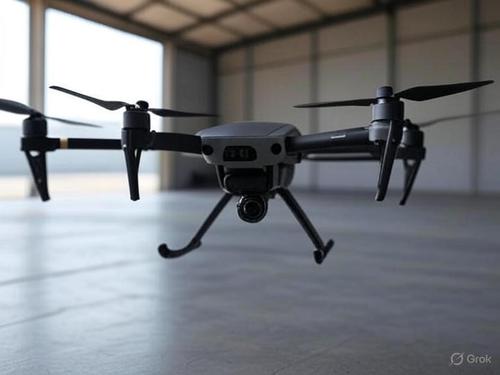
Our drone makes it possible to carry out full diagnostics even in hard-to-reach places - at height, inside structures, or in conditions where human presence may be dangerous. The creation of a 3D prototype of the drone has now been completed, software has been developed, and a basic configuration has been selected in two versions: with and without a flaw detector. The next step is the assembly of a physical sample, patenting and field testing.
The drone, called "Skufik", is equipped with a built-in ultrasonic flaw detector and cameras. It generates acoustic waves, records their reflections from the surfaces of objects, and transmits data to a computer for complete analysis. This approach allows you to quickly identify hidden damage that cannot be detected during a normal visual inspection.
The device can operate in autonomous mode, following a given route, or under the control of an operator. It is also possible to record the flight path for subsequent repetition.
"Skufik" is one of the first drones in Russia to combine visual and structural control. In the future, this may become the standard in the industrial diagnostics system. This will allow it to be used in industries such as aviation, metallurgy, shipbuilding and energy, where accurate and safe diagnostics of equipment and facilities is important.
Earlierwww1.ru reported that a "tireless" drone for monitoring objects with limited access wascreated at MAI.
Read materials on the topic:
Fighter-bombers Su-24M, Su-30SM and Su-30SM2 destroyed sea targets in the Baltic
Never miss our newsAdd this site to your preferred sources to see us more oftenAdd on Google

















