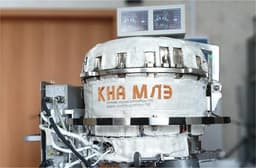
Samara State Medical University (SamSMU) presented four medical simulators at the rehabilitation industry and universal design forum "Hope for Technology."
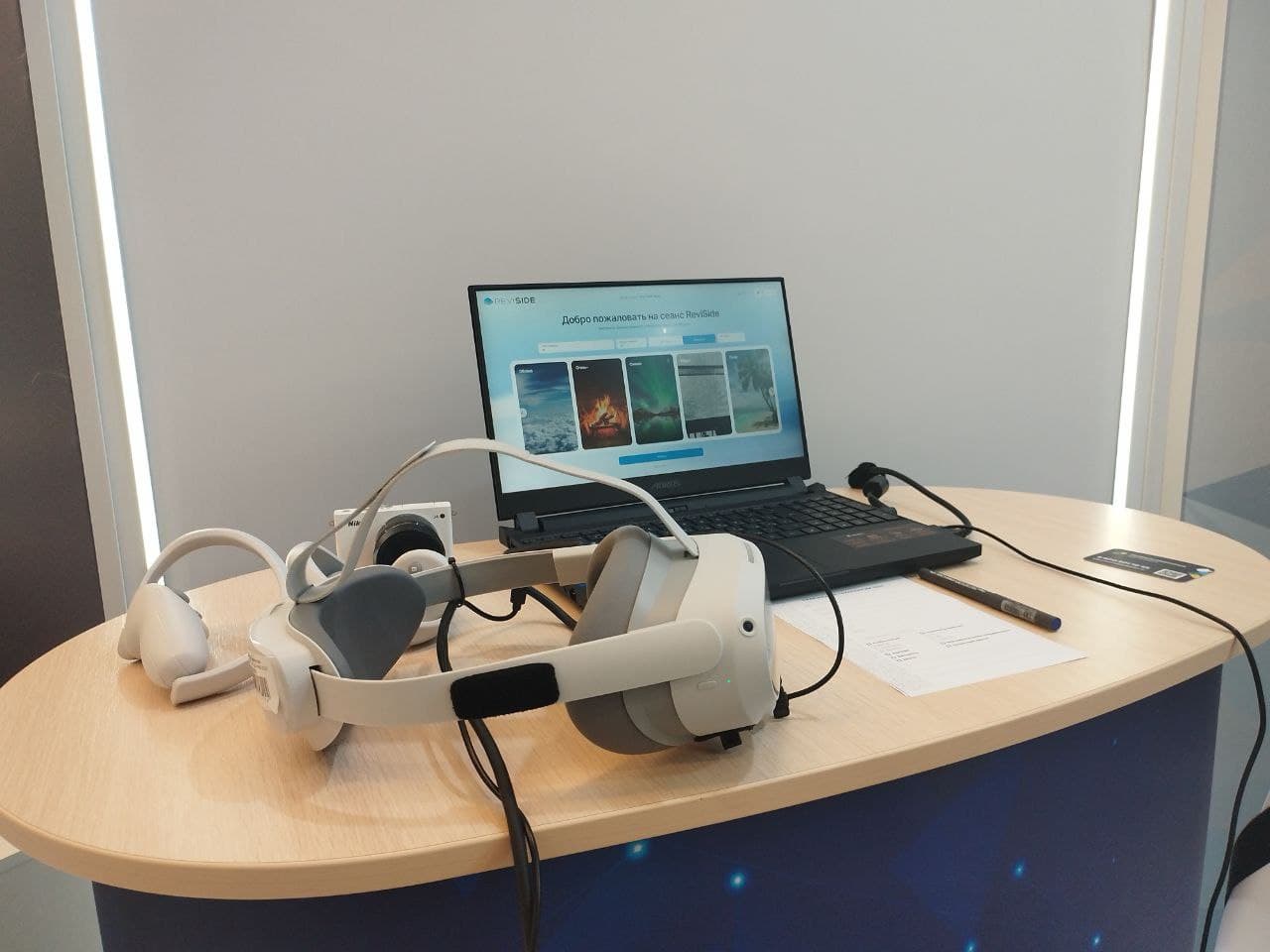
A laptop simulator with special software for restoring psycho-emotional state. No special rooms or spaces are required to use the simulator.
A sensor of own design is attached to the VR headset. It connects to the computer via Bluetooth. Thus, the patient is immersed in a virtual environment and offered to do slow breathing practices under the control of the program.
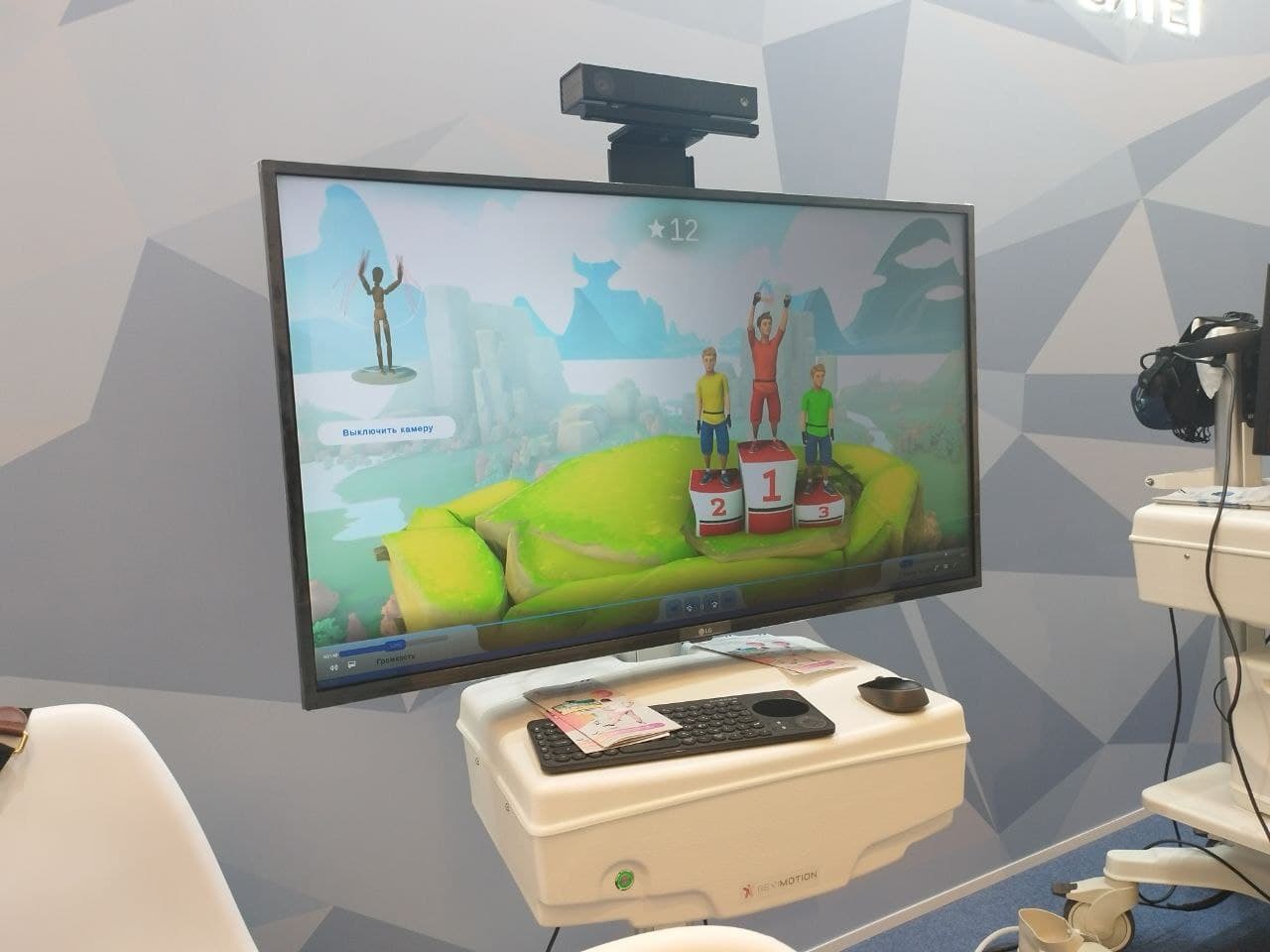
The second ReviMotion simulator is designed for active rehabilitation of patients with pathologies of the neurological profile and musculoskeletal system.
With its help, we offer to do physiotherapy exercises in a playful, intuitive form. Twenty-two classic physiotherapy exercises are programmed here, and 15 game scenes. The doctor has a unique opportunity to create individual programs for the patient due to the fact that he can mix all the scenes and all the exercises.
The simulator uses an optical system for tracking patient movements based on artificial intelligence (it is also possible to use a regular webcam). Movement processing is done using a neural network of own design. It takes only 3-5 minutes to create a program.
Our simulator makes it possible to diagnose the nodes of large joints, diagnose flexion and extension before starting classes. Then the doctor determines the problems and gives exercises for these joints.
The doctor can also perform diagnostics at the end of the rehabilitation course, all this will be displayed in one diagnostic protocol.
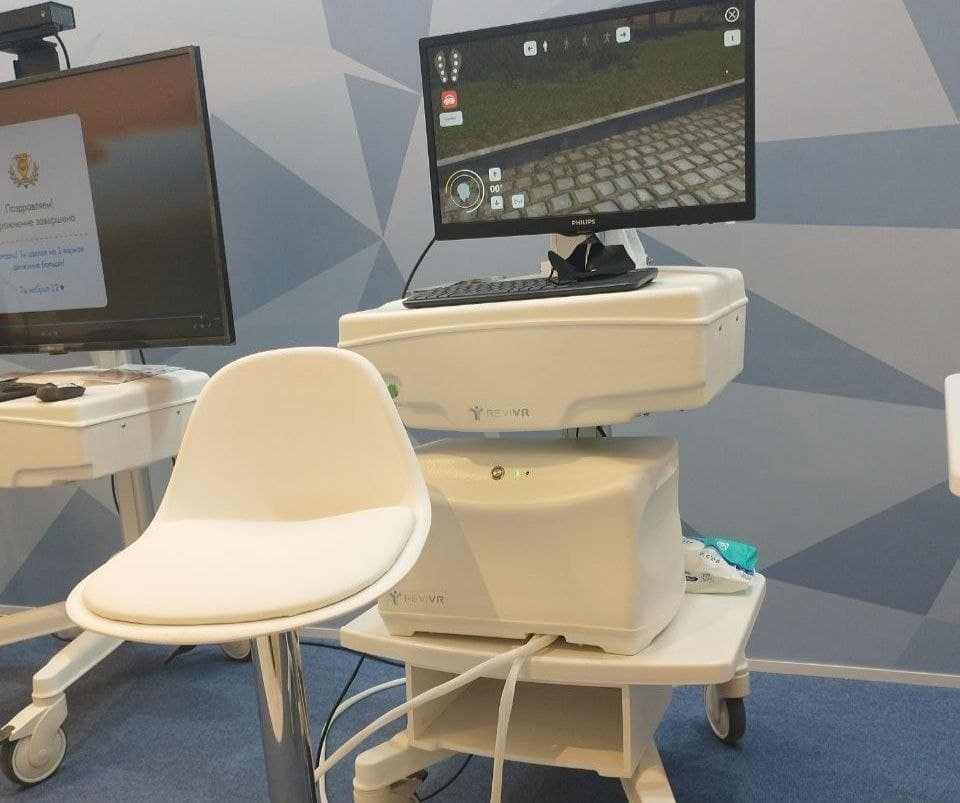
The third ReviVR simulator is designed for passive restoration of the stepping reflex. The patient is immersed in a virtual environment. He is put on sandals with special pneumatic chambers that create a proprioceptive effect on the plantar receptors.
Thus, we get a simulation of the impact on the foot, a simulation of walking. This is synchronized with the avatar's steps in the game itself. All three sensory stimuli are synchronized.
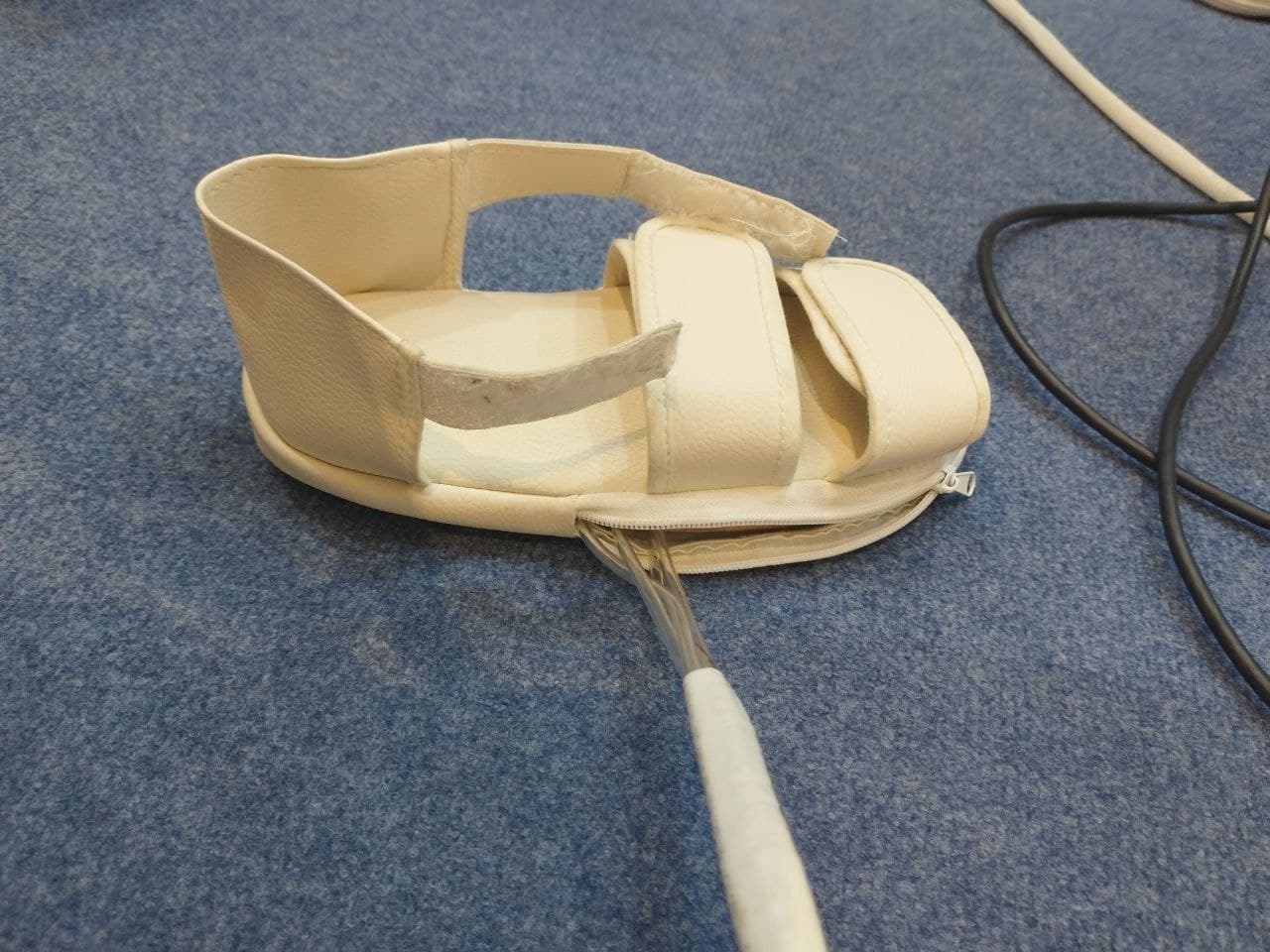
The rehabilitated person sees his digital avatar and a dynamically changing environment. Due to this, the plasticity of neural connections is activated in the patient's brain.
The simulator is compact and operates from a 220 volt outlet. The device interface does not require special training, it is intuitive.
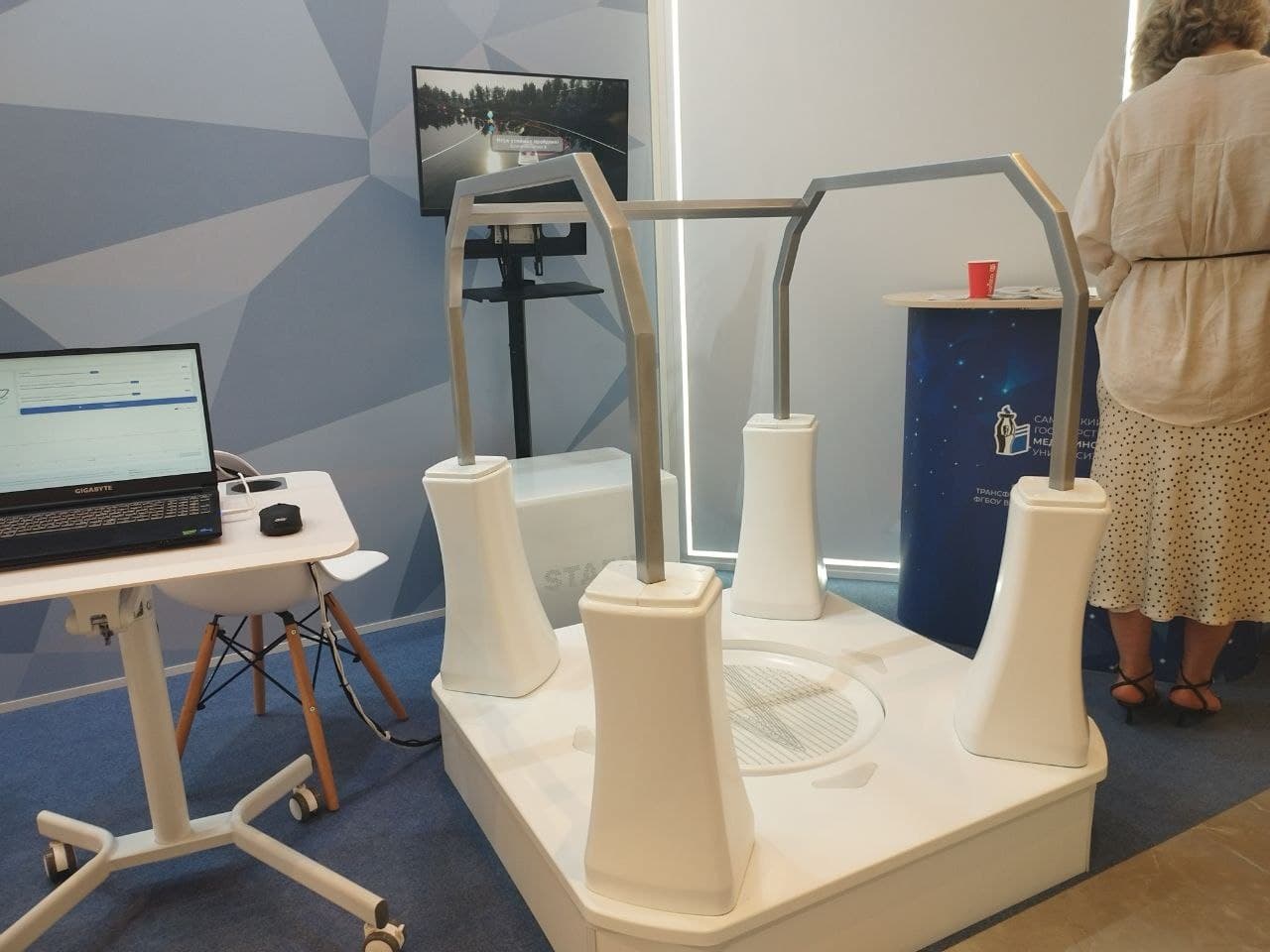
The fourth simulator is the first active dynamic platform for neurophysiological diagnostics and rehabilitation in Russia. The device operates in three modes of mobility.
The first mode is static, when the platform is fixed. The patient stands on the platform and, at the direction of the doctor, shifts the center of gravity of his body in a given direction.
The second and third modes are dynamic. The platform swings to the center and then returns to the vertical position. In the third mode, the platform, under the influence of the algorithm, unbalances the patient. Rehabilitation scenarios are created for each mode, which the doctor chooses.
The platform processes movements using special sensors, sending information to the monitor. Then the system analyzes the data and builds a rehabilitation program.
The presented medical simulators are already used in more than 200 medical institutions in the country.
In 2025, the National Forum of the Rehabilitation Industry and Universal Design "Hope for Technology" takes place on July 10-11 in the Lomonosov Cluster. "Первый технический" is an information partner of the forum.
Earlier www1.ru reported that «Ортокосмос» показала modern prostheses at the exhibition "Hope for Technology".
Read materials on the topic:
The company "Металлист" named the difference between bionic and traction prostheses