The first Molecular Engineering Laboratory beyond the Urals has been established at Novosibirsk State University. It is designed to accelerate the development of pharmaceutical preparations, introduce new technologies, and produce biopharmaceuticals. One of its tasks will be to search for new viruses, according to the university's press service.
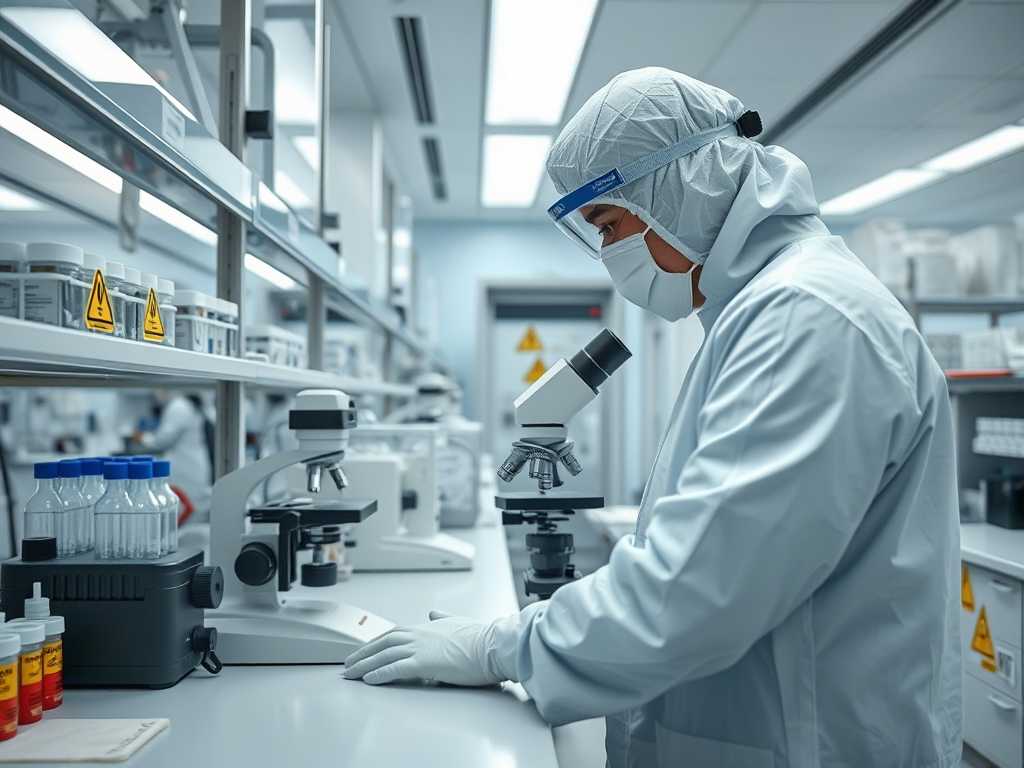
One of the promising areas for the laboratory is the analysis of viromes (the totality of viruses) using metagenomic and bioinformatics analysis in partnership with research institutes of the SB RAS. The analysis is based on methods that allow reading several sections of different genomes in various samples simultaneously.
According to her, the main task today is to analyze billions of sequences, the number of which is growing exponentially every year. Modern technologies help to find new viruses faster, using already known data.
The new division cooperates with scientific institutes of the Siberian Branch of the Russian Academy of Sciences and the State Research Center "Vector" of Rospotrebnadzor. In addition, the laboratory actively works with foreign partners, including Tsinghua University and East China Normal University in China, as well as with the RSE "Institute of Genetics and Physiology" in Kazakhstan.
The laboratory focuses on solving urgent problems in the field of pharmaceuticals and biomedicine. This includes the introduction of new drug development methods, the development of interdisciplinary research, the application of artificial intelligence and big data analysis in biology and medicine. Special attention is paid to creating a modern educational environment for training future specialists, including students from different countries.
The laboratory will be located in the new campus. Its team includes specialists from leading scientific centers in Novosibirsk and Tomsk.
The laboratory plans to use machine learning to analyze biomedical data - genomic, transcriptomic and proteomic. These methods help to find complex patterns and relationships in large multidimensional data sets.
Earlier, the laboratory "Neuromorphic Electronics and Computing in Memory" opened at St. Petersburg State Electrotechnical University "LETI". Its task is to develop energy-efficient computing systems based on the principles of biological neurons.
Read more materials on the topic:
TPU proposed using scaffolds to prevent adhesions after surgery