Researchers at the Scientific and Educational Center "Field Chemistry" of Gubkin University presented a revolutionary composition based on reverse emulsion. Unlike traditional reagents, the development contains a gelling agent in the aqueous phase and a solution of stabilizers in the hydrocarbon medium.
When injected into the reservoir, the emulsion breaks down at a distance from the well. The surfactant stabilizer is adsorbed on the rock, and the gelling agent comes into contact with the mineralized reservoir water, forming a plugging material. The key advantage is selectivity: the composition blocks water but does not impede the movement of hydrocarbons.
Physicochemical methods of limiting water inflow have been studied for a long time. Compositions that create an insulating screen differ in their properties and, in particular, in their chemical nature: the components of the reagents in the compositions interact differently with each other, with reservoir fluids, and with the rock. Our composition is a reverse emulsion - a dispersed system in which water droplets are distributed in a dispersion medium: a hydrocarbon solution of emulsifiers. Unlike traditional compositions based on this basis, a gelling agent is present as the aqueous phase, and a solution of various stabilizers is present as the hydrocarbon phase.
Scientists are working on adapting the composition to various geological conditions, studying the mechanism of stabilizer adsorption in a porous medium.
The composition of reservoir waters varies, and it is important for us to understand how the gelling agent itself and the emulsion as a whole interact with reservoir water of various mineralizations. We are also interested in the temperature range: we tested the system at temperatures up to 90°C, and we will conduct research at higher and lower temperatures. In addition, it is necessary to thoroughly study the process of surfactant stabilizer adsorption in a porous medium.
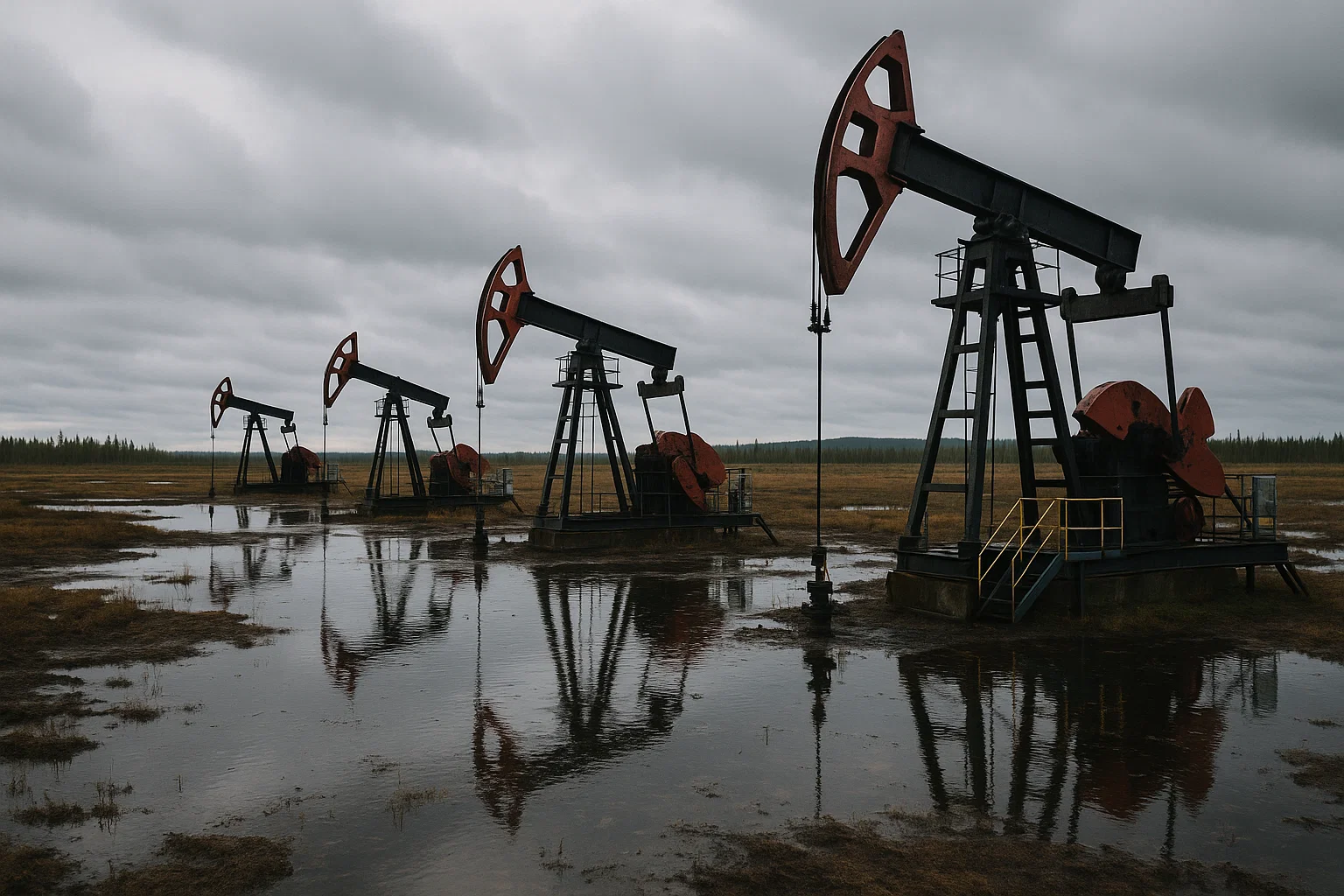
The technology is particularly promising for fields with hard-to-recover reserves, where standard methods are limited. The average water cut of oil wells in Russia has reached 86%, and in some fields it is approaching a critical 92-98%.
Read more materials on the topic: