Tomsk State University (TSU) is developing an advanced hardware and software complex designed to detect mines and unexploded ordnance. The technology is based on the use of unmanned aerial vehicles equipped with multispectral sensors and artificial intelligence algorithms. The project, initiated by Academician of the Russian Academy of Sciences Yuri Mikhailov, is designed to make the process of reconnaissance of dangerous areas safer and more efficient.
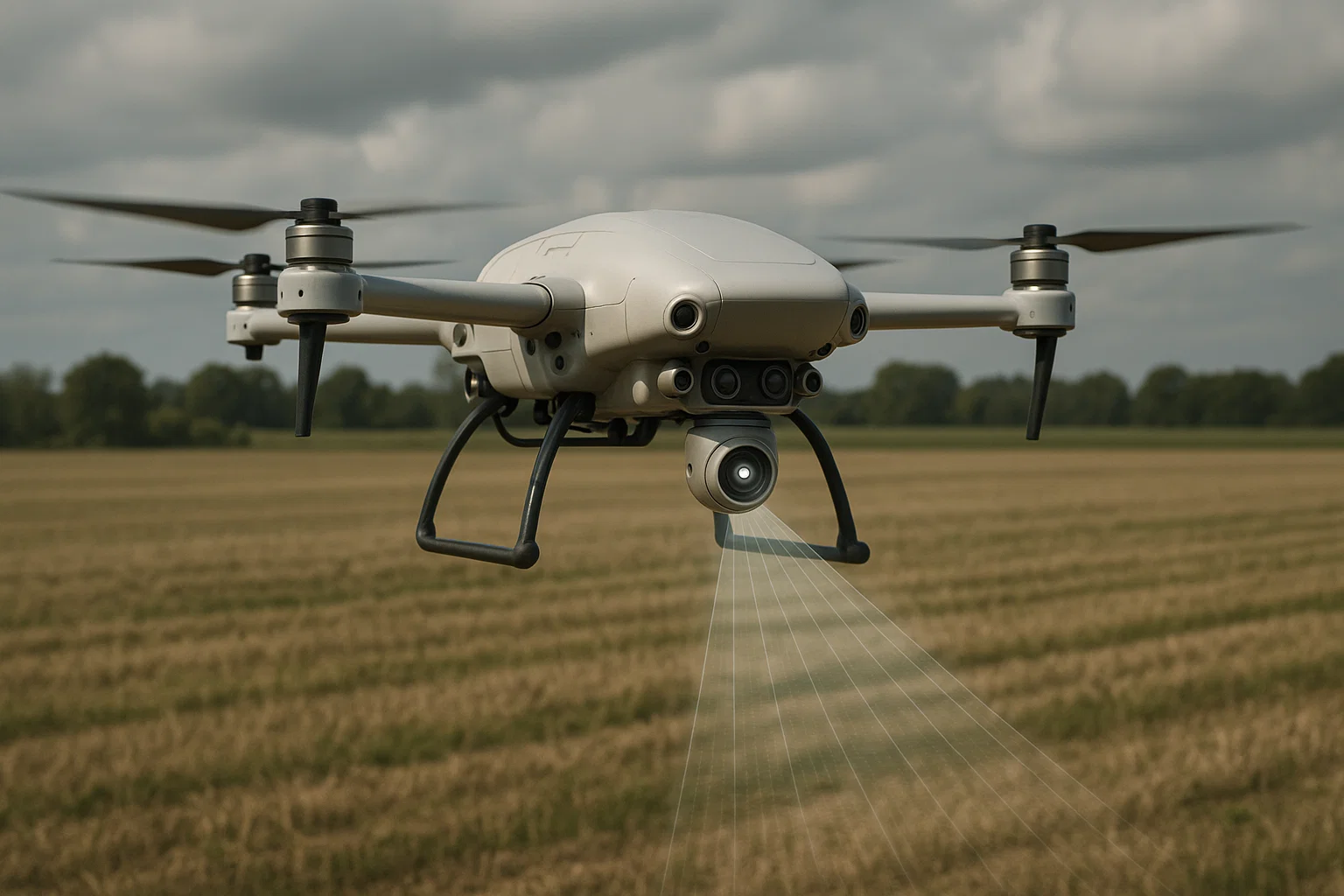
The system combines several detection methods that complement each other. It includes microwave radars capable of scanning objects beneath the surface of the earth, infrared and terahertz sensors, including TSU's own lidars, as well as optical cameras and thermal imagers. The data obtained is processed using machine learning, which allows not only to find potentially dangerous objects, but also to minimize the number of false positives.
The concept of development is to combine various methods for detecting explosive devices based on an open platform using machine learning methods. The fusion of heterogeneous data will improve the accuracy of detection of explosive objects. To ensure safety of use, technical solutions are selected for the design that allow the system to be placed on one or more drones that will fly along a certain trajectory. As a result of data collection and analysis, an area of interest is identified, the exact location of objects is determined, and their classification is performed.
Unmanned aerial vehicles, created under the leadership of Professor of the Radio Physics Faculty of TSU Sergey Shipilov, will make it possible to survey large areas without the direct participation of sappers, which will significantly reduce the risks for specialists.
Scientists have already created and tested several prototypes of the future complex modules. In the near future, work will focus on refining the technical part and data analysis methods. The finished hardware and software complex will be able to automatically create electronic maps of the area indicating dangerous areas, quickly adapt to new types of threats and work in various weather conditions.
The project is funded by a federal grant, as well as with the support of the Tomsk Region Administration.
Humanitarian demining is the process of searching for and neutralizing mines, ammunition and other explosive objects left over from military operations. Its goal is to ensure the safety of people and create conditions for a normal life.
Read more materials on the topic:
A fiber-optic UAV control system with a range of 25 km has been developed by Perm scientists