Shale gas remains a promising but difficult-to-extract resource due to the characteristics of the rocks. Traditional methods require expensive laboratory research, but scientists from Perm Polytechnic and the China University of Petroleum have proposed an innovative solution — digital modeling of shale structure with subsequent prediction of optimal zones for hydraulic fracturing.
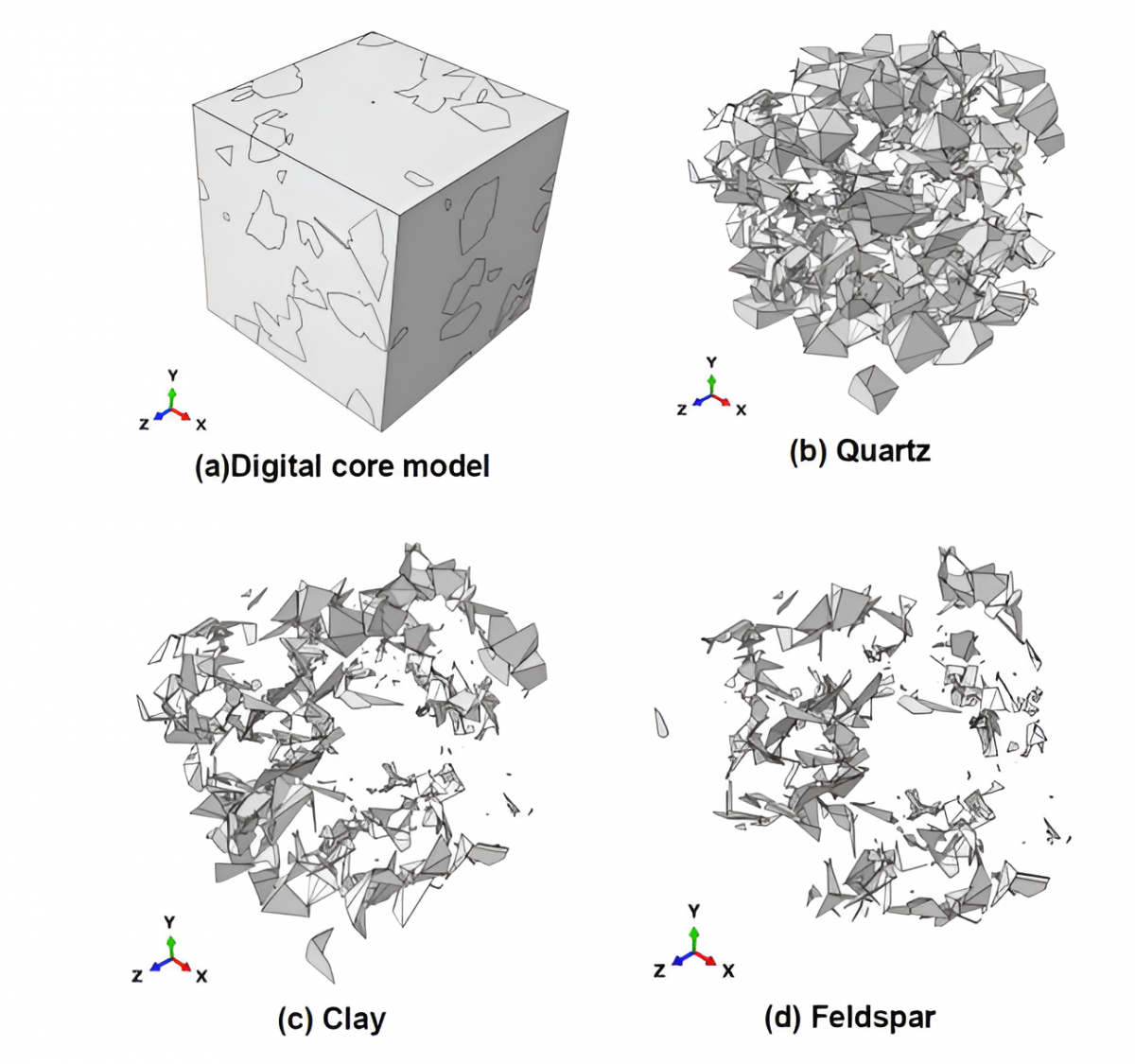
The researchers created a 3D model of the core (rock sample) based on computed tomography and electron microscopy data. This allowed studying porosity, microcracks, and mineral composition with an accuracy of up to 90%.
By scanning rock with computed tomography and processing electron microscopy images, we created a real three-dimensional digital twin of the core, with which we learned accurate structural information about the rock — porosity, microcracks, and mineral composition of shale, including clay, quartz, feldspar, and pyrite. Comparison with real samples proved the correctness of the created 3D sample. The error was only 3-9%
Then the scientists simulated the hydraulic fracturing process and identified key factors affecting the efficiency of the operation: crack angle, density, hardness, and mineral composition. Testing at a Chinese field confirmed the accuracy of the forecast.
We evaluated the accuracy of the model's prediction in practice in the conditions of a shale gas field in China. Based on the model results, a suitable operation scenario was developed and hydraulic fracturing was carried out in two areas of different depths (3580-3640 and 3660-3730 meters). In the first zone, the initial gas production was high, but the recovery factor was low. In contrast, the second zone is characterized by high initial production and a high recovery factor. Our development accurately predicted these differences, which confirms the reliability of fracture modeling using digital technology.
According to the researchers, in Russia this technology can be applied to the extraction of hydrocarbons from the Bazhenov and Domanik formations in the Urals and Western Siberia — complexes of oil source rocks that are characterized by low reservoir permeability.
The study is published in the journal "Society of Petroleum Engineers", 2025.
Читайте ещё материалы по теме:
Производство запорно-регулирующей арматуры налажено в Курской области при поддержке ФРП











