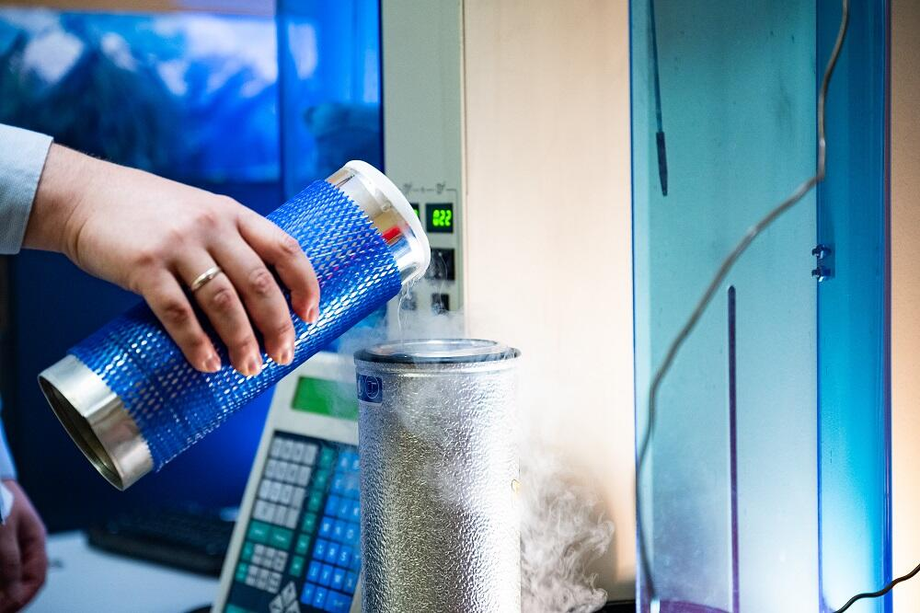
A group of Russian scientists has developed a catalyst based on plant waste, which solves the problem of the "dead metal" - a phenomenon that reduces the efficiency of traditional palladium catalysts based on carbon supports. Researchers from the University of MISIS, the N.D. Zelinsky Institute of Organic Chemistry, Skoltech and other leading research centers used liquid humins - a by-product of the production of furan compounds from plant biomass.
We have proposed not just a solution to one of the problems of heterogeneous catalysis, but an approach that turns industrial waste into valuable renewable raw materials. This is another step towards sustainable development and a circular economy.
By mixing humins with nitrogen-containing melamine and conducting heat treatment, the scientists obtained a carbon material with low porosity and high nitrogen content. This structure ensured a uniform distribution of palladium nanoparticles, preventing them from being blocked in the pores of the support, which ensured the availability of the active metal and increased efficiency. As a result, the new catalyst showed high activity and stability in reactions that are critical for the pharmaceutical and chemical industries.
Читайте ещё материалы по теме:
Производство углеродных гранул из промышленных отходов запускается компанией «Эл 6» в Челябинске
Технологию распознавания устройств на основе «радиогенома» разработали учёные РТУ МИРЭА
Now on home

Start of deliveries scheduled for 2027

Over 51,000 new motorcycles were sold in Russia in 2025

The car will take at least a year to assemble

The application's audience has reached 20 million users

The model will be included in the list of cars for taxis, price - from 2.25 million rubles

All parking lots of the "Administrator of the Moscow Parking Space" are connected to the service

The cars will be supplied to the Moscow Transport Service Directorate

Deliveries to India may begin in 2028

The technology provides automated search for all types of defects in power units

The plane flew 500 km, accelerating to 425 km/h

The plant stated that the information about the termination of purchases for models 6 and 8 is not true
Scientists are using the "Ekran-M" installation