Scientists from RTU MIREA have developed an innovative method for identifying electronic devices based on their "radio genome" - a unique electromagnetic radiation generated by any electronic device. This technology allows contactless determination of the type, condition, and even hidden defects of gadgets, opening up new opportunities in testing, repair, and protection against counterfeiting.
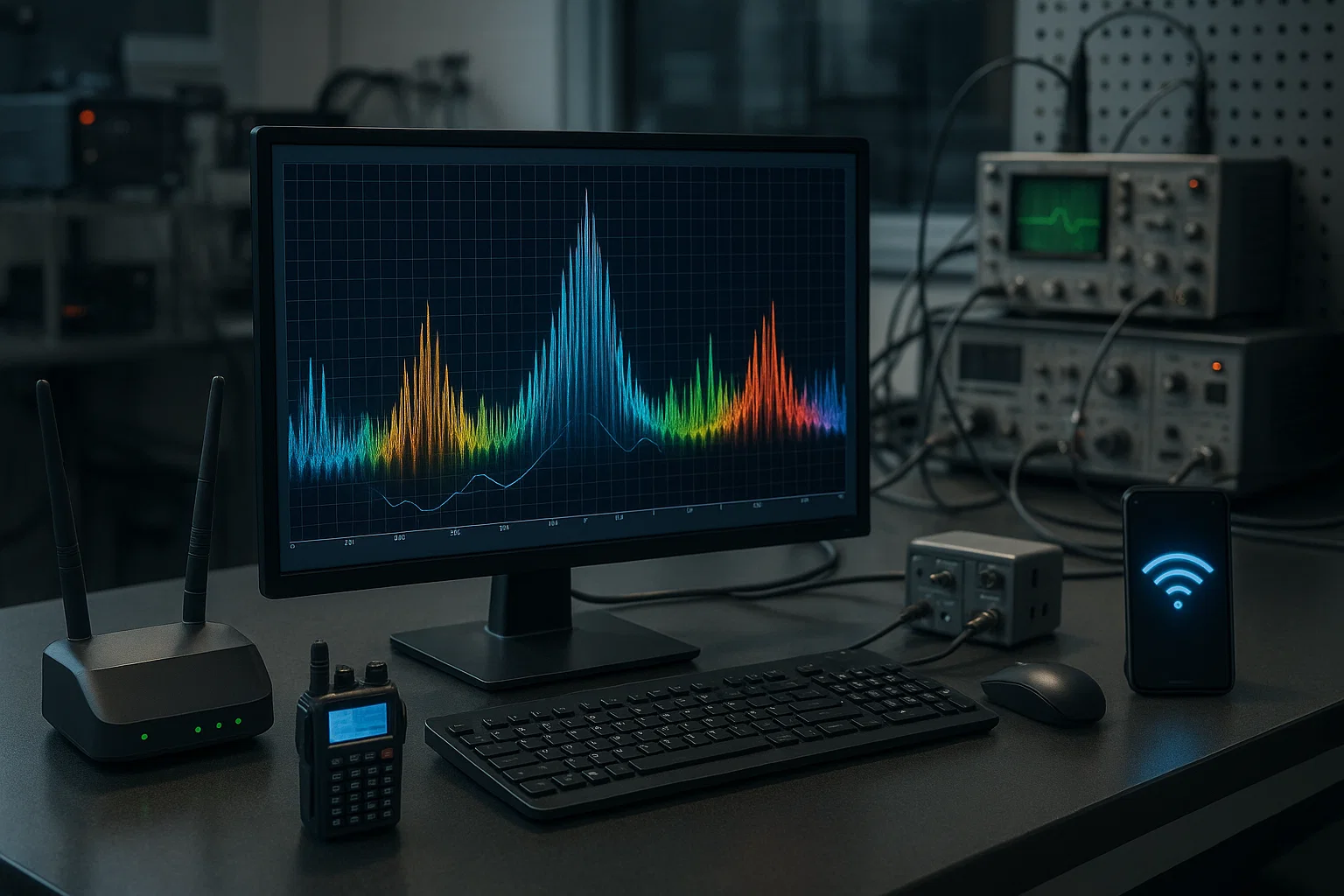
Every electronic device, whether it's a smartphone, laptop, or microcontroller, creates characteristic fluctuations in the electromagnetic field, depending on its circuit design architecture. Researchers used methods of statistical radiophysics, frequency-time analysis, and neural network algorithms to transform these signals into unique "radio portraits."
Indeed, the electromagnetic field induced by digital gadgets, such as a smartphone, laptop, or Embedded device, can be represented by a set of reference identifiers - radio genomes, i.e., a superposition of physically unclonable functions in the form of a system of spectral-temporal radio portraits. The radio genome, by analogy with the biometrics of a fingerprint pattern or the iris of a human eye, is exactly the same unique, but "radio wave fingerprint" - a secondary radio signal of low power, emitted by the circuit design architecture of an electronic gadget, with which it is possible to remotely recognize one of a thousand identical smart devices at a given distance, using software and hardware solutions based on a convolutional neural vision network.
The development of RTU MIREA scientists opens up wide opportunities for practical use. In service centers, the method can speed up the diagnosis of electronic malfunctions, identifying hidden defects at an early stage. Manufacturers of electronic components will be able to use the technology to protect their products from counterfeiting, verifying the authenticity of microchips by their unique electromagnetic fingerprints.
In the telecommunications sector, the radio genome will improve the monitoring of network equipment status, and in wireless technologies - increase the accuracy of short-range radio detection systems. A promising direction also looks like the integration of the method into industrial Internet of Things (IoT) systems, where reliable device identification is critical for security.
However, the introduction of technology requires solving technical difficulties associated with the accuracy of signal analysis.
The main difficulties arise in the frequency-time decomposition of radio images into components and the extraction of the physical and code parameters of interest from them. There are objective reasons why it is impossible to simultaneously obtain reliable values of all the parameters of a given device. To increase reliability, it is necessary to additionally resort to statistical analysis methods, which increases the conversion time and increases the resource intensity of the neural vision system.
According to researchers, the existing limitations of frequency-time resolution do not yet allow achieving instant recognition without additional data processing.
Read more materials on the topic:
Method for controlling terahertz waves using a magnetic field developed by RTU MIREA scientists
New type of reactor for producing synthesis gas created by scientists from Perm Polytechnic