Translated with AI from the Russian original.
Russian scientists from MIPT have taken an important step towards unraveling the nature of noctilucent clouds - the highest clouds on Earth, which appear at an altitude of about 80-85 km and glow against the background of dawn. Although such clouds have been observed for more than a century, their origin has not been fully understood.
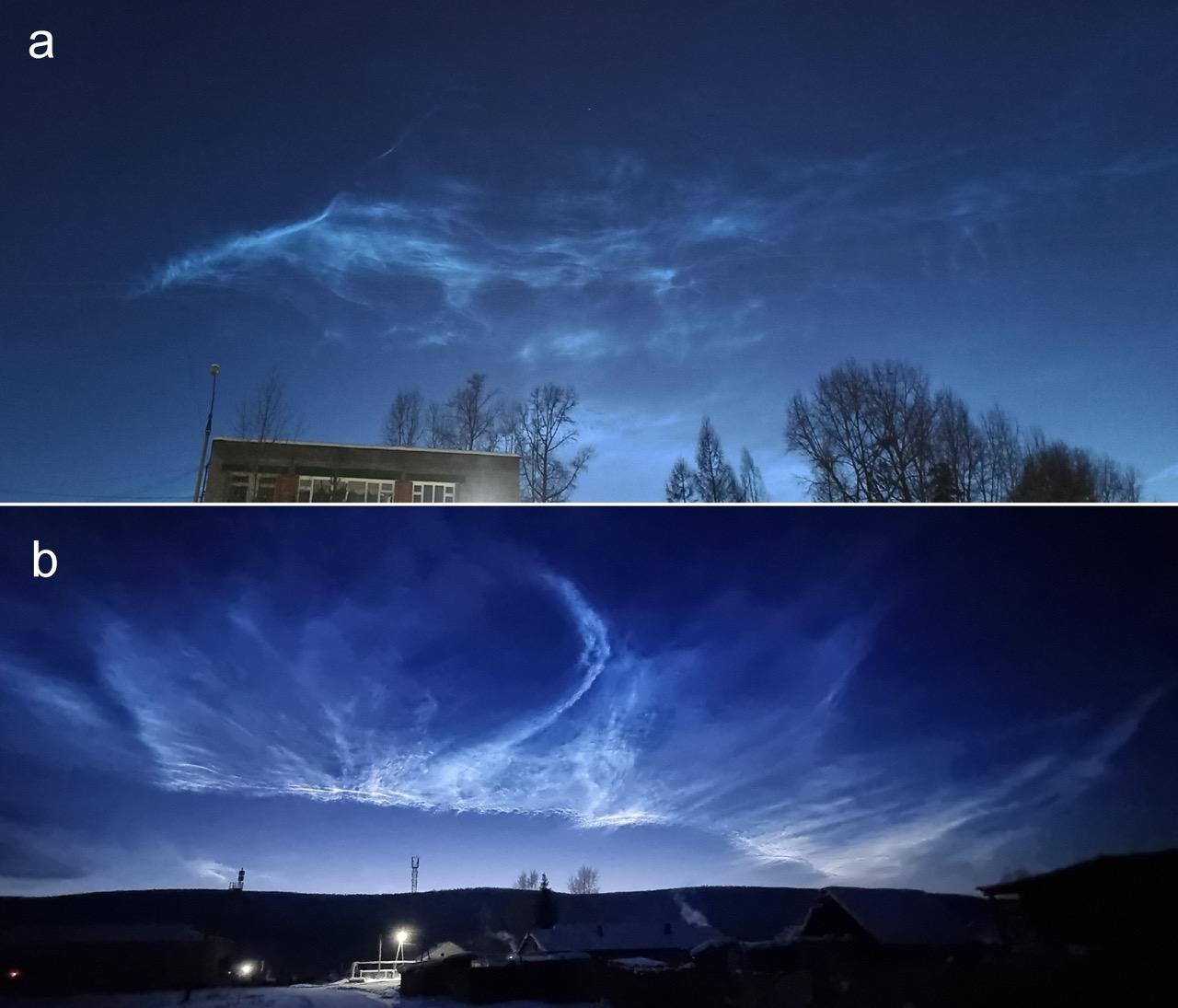
Research led by climatologist Olga Zolina made it possible to put forward and analyze several key hypotheses explaining where the water vapor necessary for their formation comes from at such a height.
One hypothesis suggests that in summer in mid-latitudes, ascending air currents raise moisture from a height of 25-30 km to the level of the mesopause, where, at a temperature of −120 °C, the vapor turns into ice crystals. Another hypothesis - the so-called "solar rain" - suggests that water vapor is formed by the interaction of solar hydrogen atoms with oxygen in the atmosphere. The version about the role of methane is also being considered, which can rise into the upper layers of the atmosphere and, interacting with cosmic dust, form ice particles.
Scientists emphasize the importance of studying noctilucent clouds: they help to better understand the processes in the Earth's upper atmosphere and the influence of external factors - from climate to space. The discovery of Russian specialists allows us to get closer to answering one of the long-standing mysteries of atmospheric science.
Read more materials on the topic:
Russian scientists have for the first time recorded "runaway" electrons in a laboratory sprite
The secret of the origin of lightning revealed by Russian scientists: a new model explains the key stage in the formation of a discharge
Cosmonauts conduct another stage of the Terminator scientific experiment
Never miss our newsAdd this site to your preferred sources to see us more oftenAdd on Google

















