Translated with AI from the Russian original.
Scientists from Perm National Research Polytechnic University (PNRPU) conducted an experiment, studying the impact of oil pollution on various types of soils in Russia. The results of the study,published in the collection "Chemistry. Ecology. Urbanistics," showed that not all soils react the same way to hydrocarbons - some are even able to use them to stimulate the growth of beneficial microorganisms.
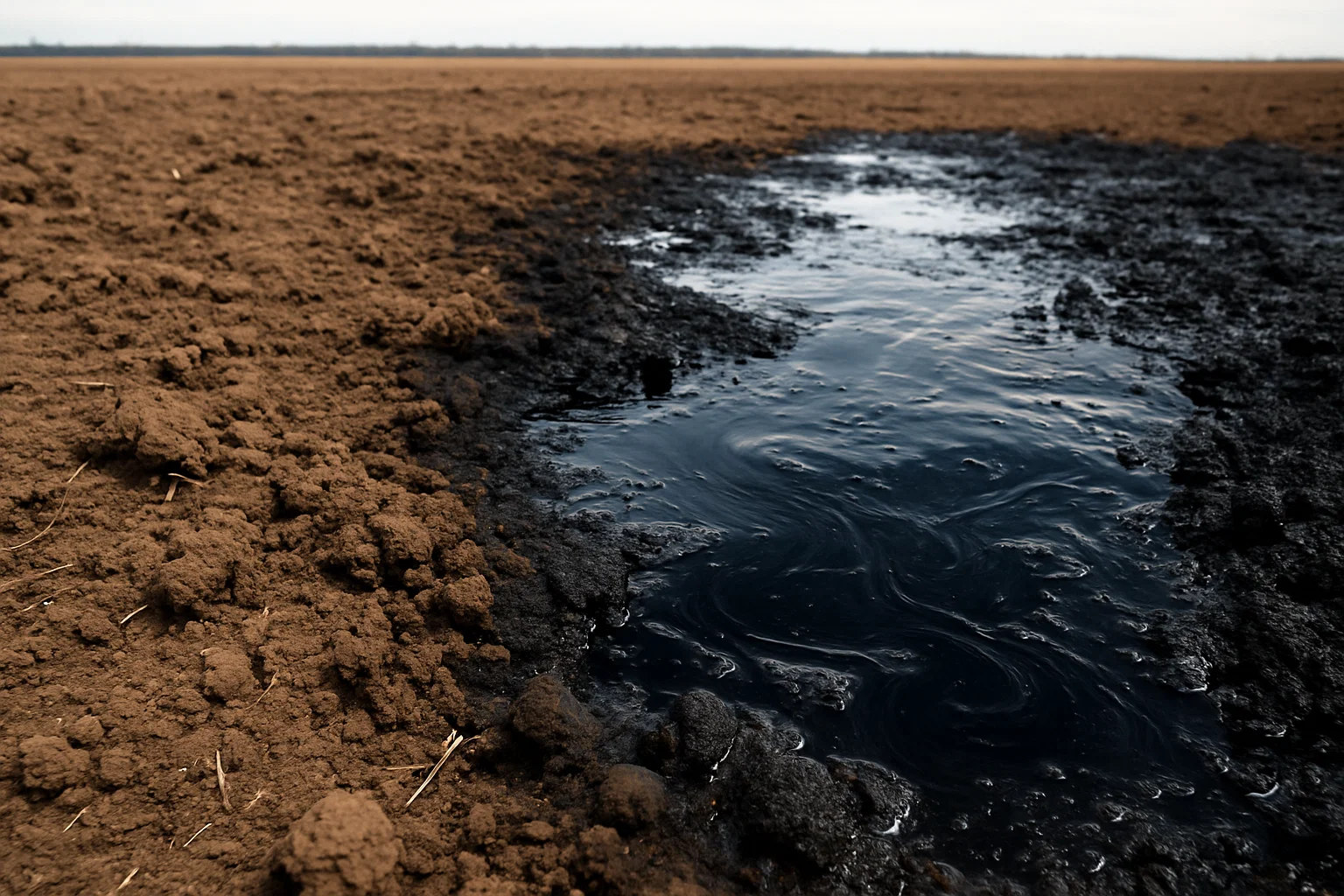
The key element of the study was saprophytic microorganisms, which play an important role in the decomposition of organic matter and maintaining soil fertility. It turned out that when contaminated with oil, their number decreases sharply, but in humus-carbonate soils (common in the Stavropol Territory, Rostov Region, and the North Caucasus), small doses of oil, on the contrary, activated the growth of bacteria.
We carried out artificial contamination of samples with oil, and took clean soil as a control sample, against which we compared the results. Studies have shown that the most toxic oil content is 50 g/kg, that is, when it is added to all samples, the number of saprophytes decreases. However, for bacteria in humus-carbonate soils, oil, on the contrary, became a growth activator, especially in concentrations of five and 20 g/kg. This suggests that in small doses, it is possible to stimulate the development of beneficial bacteria, since they use hydrocarbons as food. This mechanism of action applies to the Stavropol Territory, Rostov and other regions with this type of soil.
The study will help develop targeted methods for cleaning contaminated areas. For example, in regions with humus-carbonate soils, bioremediation can be used - a cleaning technology using microorganisms. In other cases, where oil has a toxic effect, physical and chemical methods will be required, such as washing or sorbents.
Read more materials on the topic:
A new remedy for combating oil spills has been developed in Russia
Skopa-20 UAVs involved in combating oil spills on the Northern Sea Route
Improving touch screens: PNRPU scientists have developed a highly accurate touch recognition model
Never miss our newsAdd this site to your preferred sources to see us more oftenAdd on Google

















