A group of Russian scientific organizations, including the M.V. Keldysh Institute of Applied Mathematics of the Russian Academy of Sciences and the M.V. Keldysh Research Center, has begun creating ultra-precise three-dimensional models of the Moon and Mars. According to the developers, these will be the most detailed digital copies of these celestial bodies available to date. The project is based on advanced domestic technologies using plasma rocket engines, high-precision optical navigation systems, ultra-high-resolution cameras, and 3D modeling algorithms based on supercomputers.
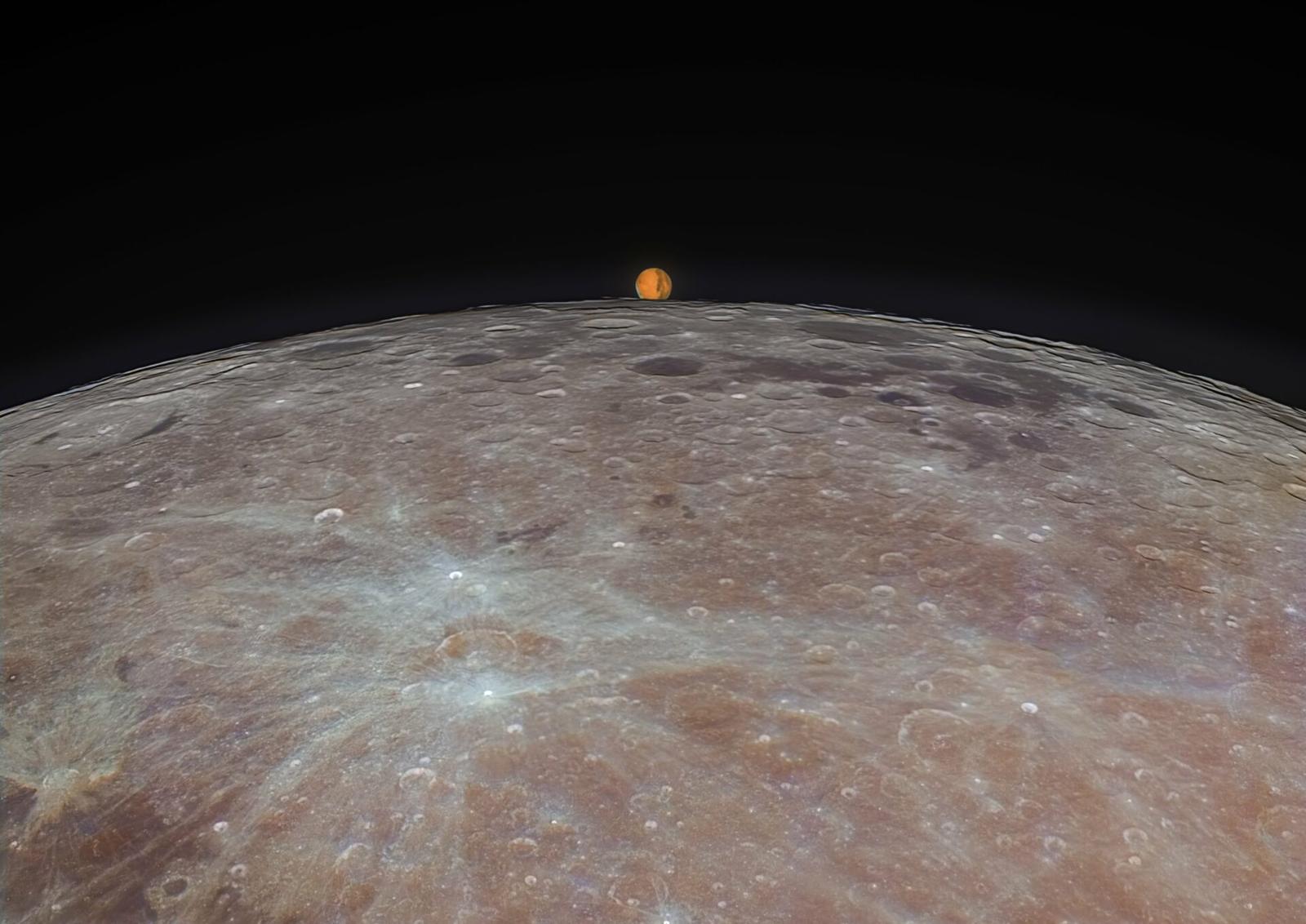
The specialists plan to develop detailed images of the Moon with a resolution of 0.3 meters per pixel and Mars with a resolution of 2.5 meters per pixel. The data obtained from Russian spacecraft, which are still under development, will be used to create these maps.
The 3D maps will be used in mission planning, will assist in the analysis of the geology and relief of celestial bodies, as well as in infrastructure development projects for future extraterrestrial bases.
Special attention is paid to the compatibility of the models with autonomous navigation systems of spacecraft. This approach opens up prospects for creating "digital twins" of celestial bodies that can be used to simulate various scenarios.
However, there is a nuance. Sergei Zhukov, head of the Moscow Space Club, believes that at present the proposed plan can only be partially implemented. According to him, it is possible to get to the Moon with the help of small spacecraft equipped with compact tugs or their own engines, but as for Mars, it is necessary to be careful in forecasts, since Russia does not yet have a module for flights to this planet.
Read more on the topic:
Mars or Moon?: space history expert tells when Russia will be able to conquer Mars
2GIS presents 3D models of public transport in Russia: they move on the map
Never miss our newsAdd this site to your preferred sources to see us more oftenAdd on Google