Specialists from the Tomsk Scientific Center and the Institute of High-Current Electronics of the Siberian Branch of the Russian Academy of Sciences have developed an innovative "Pulsar" machine. This was reported by the press service of the Ministry of Education and Science.
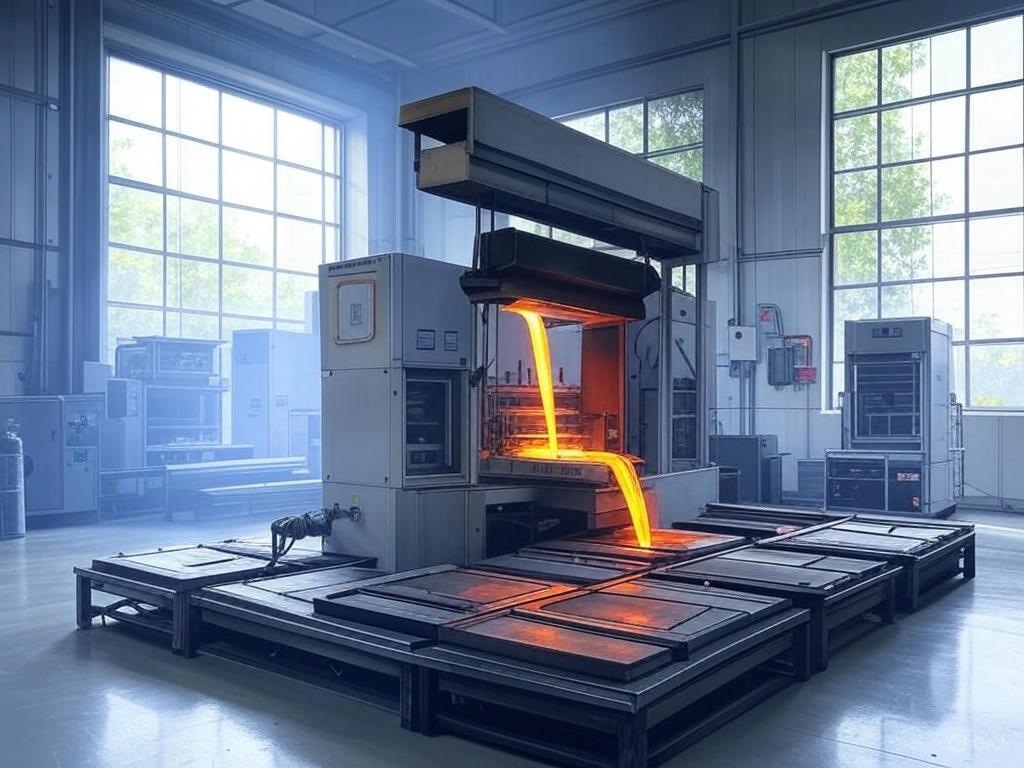
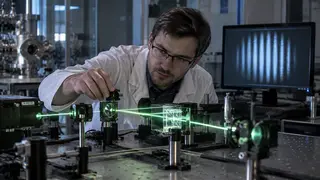
The device combines three material processing technologies - electron and ion beams, as well as magnetron sputtering. This invention will become an indispensable tool for aircraft and mechanical engineering.
All three processes are integrated into one production cycle. This opens up new opportunities for creating surfaces of complex alloys with pre-defined properties. The device operates inside a vacuum chamber, where samples are placed on a rotating table resembling a music record. The developers compare the processing to recording music, but instead of sounds, a material modification is "applied" to the surface.
The "Pulsar" machine can change surface properties, apply films, and mix them with a substrate, creating unique coatings for tools and parts. It is equipped with an electron gun and a power source, and all processes in the installation are fully automated.
Due to its compactness and speed, "Pulsar" surpasses larger counterparts.
The advantages of the new installation are its compactness, speed of sample processing, and control of all parameters of the processes taking place. Its application will allow us to offer many different technologies for modifying the surface of materials, including brittle and non-conductive ones. The resulting samples are immediately ready for further research using an electron microscope, which is very important for advanced materials science research.
Earlier,www1.ru reported that Rosatom helpedcreate the world's largest and most powerful pulsed magnetic system for ITER.
Read materials on the topic:
Russia has developed a super-light aluminum-scandium alloy for civilian vessels
A Russian high-strength welding wire has been developed for airplanes, ships and rockets
Never miss our newsAdd this site to your preferred sources to see us more oftenAdd on Google