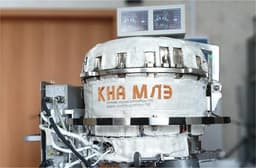
The University of Dubna, the Moscow Institute of Electronic Technology (MIET), and the Institute of Physical Chemistry and Electrochemistry (IPCE RAS) have developed innovative batteries capable of operating at temperatures below minus 50°C, according to the Ministry of Education and Science press service.
.jpg)
The development team at the Electrochemical Engineering Center of the University of Dubna, together with scientists from MIET and IPCE RAS, is creating lithium-ion batteries capable of maintaining efficiency even at extremely low temperatures. They will be able to do this thanks to anodes made of nanostructured germanium.
Prototypes of the new batteries are already undergoing testing. They can be used in the extreme conditions of the Arctic or space, in communication and navigation systems, as well as in transport and satellites.
One of the key problems with using germanium in batteries was its changing structure and volume during operation. This would lead to rapid battery failure.
The problem was solved by using germanium nanofibers. They have a high specific capacity, 3.5 times higher than that of traditional anode materials such as graphite. Nanofibers have demonstrated excellent test results at a temperature of minus 40°C.
The next step will be to establish production, scale up the technology, and confirm its effectiveness on a pilot batch of 1,000 units.
Earlier, www1.ru reported that new generation batteries are being developed in Moscow.
Read materials on the topic:
New frost-resistant materials for Russian batteries are being tested in Siberia
Engines for a research nuclear reactor were manufactured in Novosibirsk