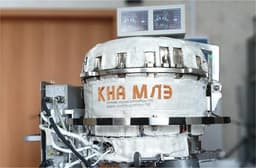
Reshetnev University in Krasnoyarsk (SibGU) is developing braking propulsion systems for deorbiting small spacecraft (SCA) into the dense layers of the atmosphere, where they will burn up. This will help reduce the amount of space debris.

Most spacecraft last 3–5 years and, after their service life, remain in orbit, posing a threat to other spacecraft, including the ISS. The new engine, which runs on environmentally friendly gaseous fuel (oxygen and methane), will reduce the speed of satellites and transfer them to lower orbits for safe disposal.
To solve this problem, we have begun developing small-sized braking propulsion systems of a special type, which reduce the speed of the SCA, transfer them to low orbits, where, under the influence of the Earth's gravity, they will enter the dense layers of the atmosphere with subsequent combustion
The engine is manufactured using 3D printing from a heat-resistant alloy.
Read materials on the topic:
Мусор не забудь! Как российские космонавты утилизируют старую аппаратуру и отходы МКС
Учёные из ЛЭТИ разработали систему контроля за космическим мусором
В Самаре предложили «сдувать» космический мусор для защиты МКС