The first backup diesel power plant (BDPP) was successfully launched at the first power unit of the Akkuyu NPP, which is being built by Rosatom in Turkey.
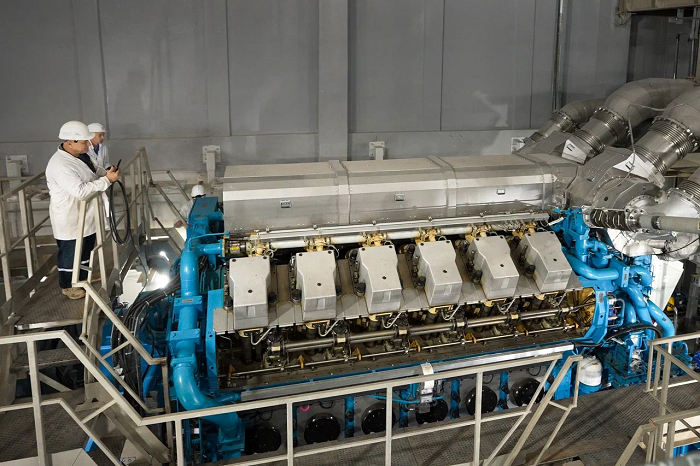
Specialists carried out a no-load start-up of the unit and began preparing it for testing under load. In total, each power unit will have three backup diesel generator sets (DGUs) designed for autonomous power supply to the station in the event of a main power source failure.
After switching on, the DGU will undergo about 50 control operations in various operating modes. The unit will be transferred to the "standby" mode after confirming the reliability of all systems at nominal power. In this mode, it will remain throughout the entire operation of the NPP, and its readiness to accept the load is no more than 15 seconds from the moment of the start signal. All processes are fully automated.
Backup diesel power plants are an important element of the nuclear power plant safety system. Three diesel generators at each power unit will be able to provide power to all necessary systems for 72 hours without refueling. Putting the DGU on duty is a mandatory step before starting the cold and hot run-in of the reactor plant.
Read materials on the topic:
New record: the Vostochny cargo terminal at the Akkuyu NPP site received its hundredth vessel
Now on home

Start of deliveries scheduled for 2027

Over 51,000 new motorcycles were sold in Russia in 2025

The car will take at least a year to assemble

The application's audience has reached 20 million users

The model will be included in the list of cars for taxis, price - from 2.25 million rubles

All parking lots of the "Administrator of the Moscow Parking Space" are connected to the service

The cars will be supplied to the Moscow Transport Service Directorate

Deliveries to India may begin in 2028

The technology provides automated search for all types of defects in power units

The plane flew 500 km, accelerating to 425 km/h

The plant stated that the information about the termination of purchases for models 6 and 8 is not true
Scientists are using the "Ekran-M" installation