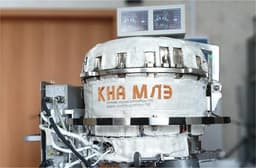
Employees of the Renewable Energy Sources (RES) laboratory of Adygea State University (ASU) have developed a new software module for predicting the volume of energy production from renewable sources. The prediction accuracy reaches 95%. The program has already been registered with Rospatent.

Using experimental data, a mathematical model was created and tested, providing high prediction accuracy, which varies from 91% to 95% depending on the model used.
Recurrent neural networks were used to create the module. They are designed to process sequential data, such as text or time series. These neural networks provide increased accuracy - they take into account not only current data, but also retrospective information about humidity, atmospheric pressure, temperature, wind speed and direction.
This scientific development is particularly relevant for Adygea. The republic has significant potential for using geothermal resources, wind energy, solar power plants and creating small hydroelectric power plants. The region is recognized as one of the sunniest in Russia, with more than 250 sunny days a year.
Renewable energy sources (RES) are natural resources that can be restored in a short time and are not depleted during use. These include solar, wind, hydro, geothermal energy, biomass, as well as tidal and wave energy.
The RES laboratory was founded at ASU in December 2022 with the support of the Ministry of Education and Science of Russia as part of the national project "Science and Universities".
Read more on the topic:
Rosatom to Launch Wind Farm Project for Green Energy Development in Kyrgyzstan
Animal Behavior Algorithms Applied in Russia to Solve Energy Problems
Testing of New Aviation Fuel with Bio-Additives Begins in Russia