Scientists are concerned about the rapid growth of space debris around the Earth, which could lead to catastrophic consequences for satellites and space research.
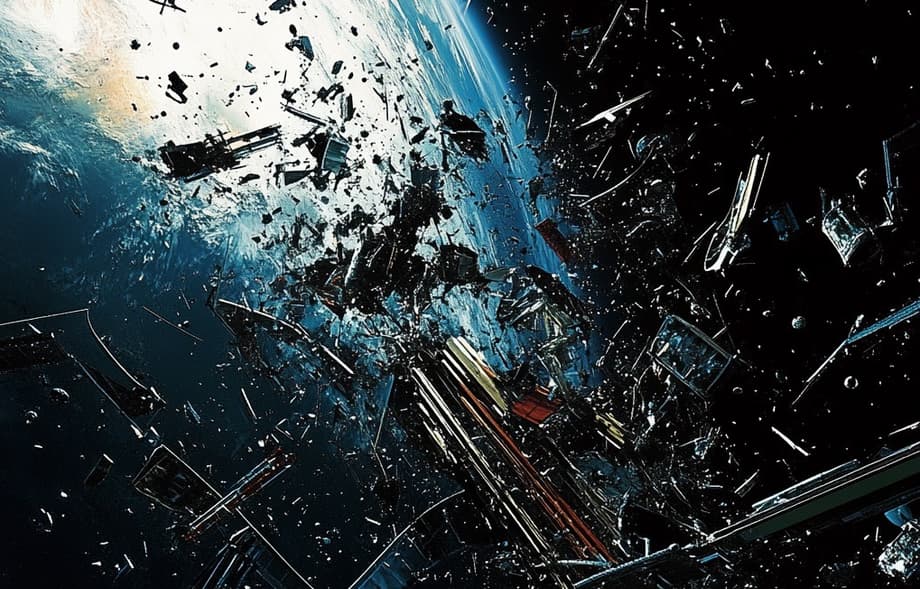
University of Arizona Professor Vishnu Reddy said in an interview with CNN that the number of objects launched into space in the past four years has increased exponentially. This creates a real threat to the realization of the Kessler syndrome.
The Kessler syndrome is a hypothetical process in which collisions of space objects generate fragments, causing a chain reaction of new collisions. This effect could make near-Earth space unusable for satellites and space activities. Debris poses a particular danger to geostationary orbit, where important telecommunications satellites are located at an altitude of about 35 thousand kilometers from Earth.
Professor Reddy noted that humanity does not yet have a quick way to clean up geostationary orbit.
In November, the Russian cargo ship "Progress MS-28" changed the orbit of the ISS twice in a month to avoid a collision with space debris. According to Roscosmos, the ISS orbit has to be adjusted 16-20 times a year to prevent such incidents.
Read more on the topic:
Don't forget the trash! How Russian cosmonauts dispose of old equipment and ISS waste
Russian cargo ship "Progress MS-28" saved the ISS from space debris
Now on home

Start of deliveries scheduled for 2027

Over 51,000 new motorcycles were sold in Russia in 2025

The car will take at least a year to assemble

The application's audience has reached 20 million users

The model will be included in the list of cars for taxis, price - from 2.25 million rubles

All parking lots of the "Administrator of the Moscow Parking Space" are connected to the service

The cars will be supplied to the Moscow Transport Service Directorate
Deliveries to India may begin in 2028

The technology provides automated search for all types of defects in power units
The plane flew 500 km, accelerating to 425 km/h

The plant stated that the information about the termination of purchases for models 6 and 8 is not true
Scientists are using the "Ekran-M" installation