St. Petersburg State University has created a concept for a new detector system for research at the Russian NICA collider and other similar facilities.
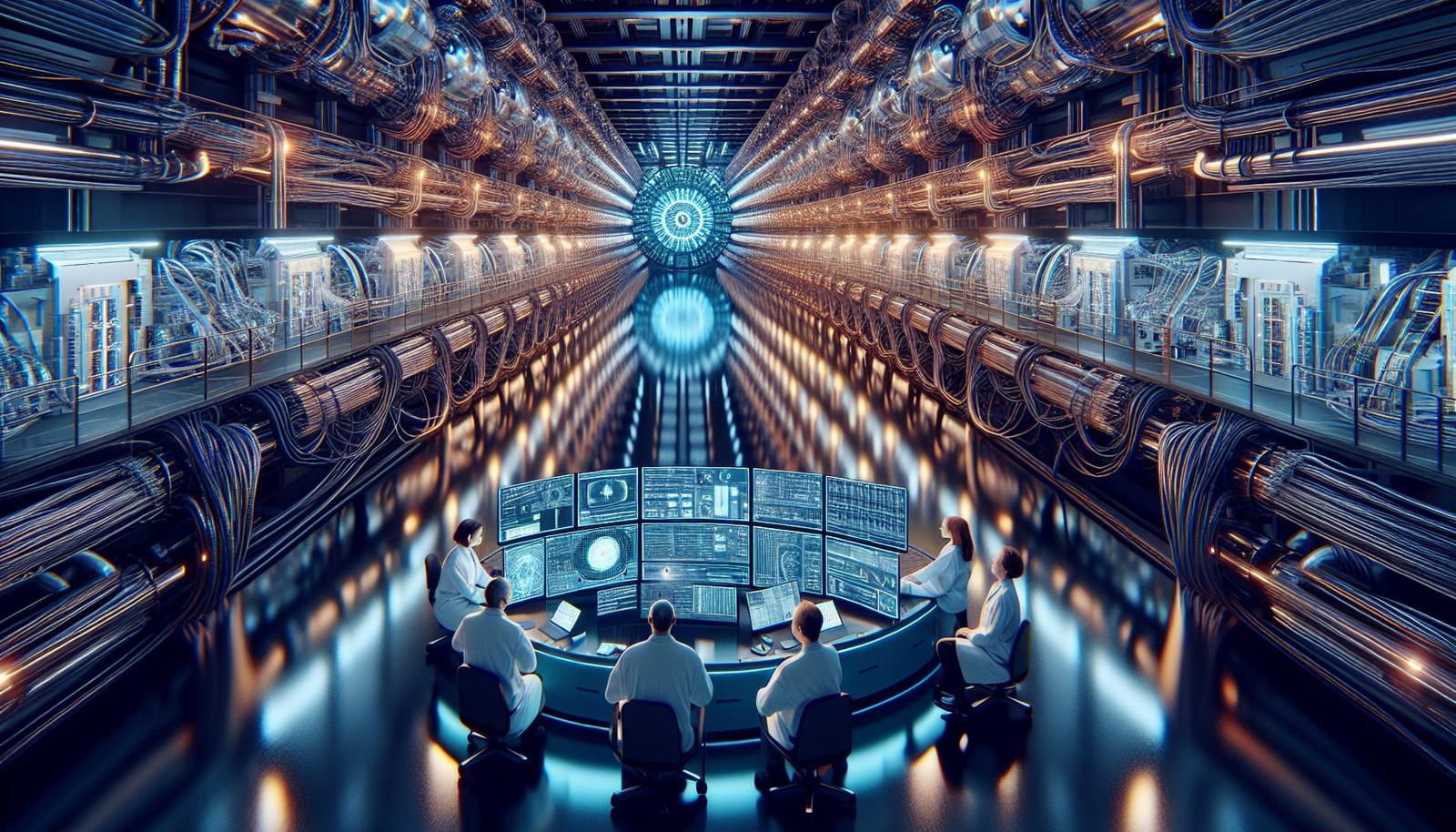
It is about the precision registration of the trajectories of charged particles that arise during the formation of superdense nuclear matter. The technology is similar to a digital camera's pixel array that registers visible light.
Many layers of these pixels are created, located on thousands of silicon platforms. Thanks to the abundance of such pixels, any particle trajectory can be registered with high accuracy. This is the cutting edge of science; such devices are now being made by world leaders in the field of nuclear physics.
The results of the work have been published in the scientific journal "Izvestiya Rossiiskoi akademii nauk. Seriya fizicheskaya", and after the launch of NICA in Dubna at the Joint Institute for Nuclear Research, the technology is hoped to be successfully applied. The detectors will work when the smallest particles and nuclei collide in the collider at high speeds, simulating conditions in the Universe after the Big Bang.
Read materials on the topic:
St. Petersburg comes up with a way to defeat icicles on multi-story buildings
Astronauts will have limited manned flights to the Russian Orbital Station (ROS) due to radiation
The first Russian station in Central Antarctica has started operating
Never miss our newsAdd this site to your preferred sources to see us more oftenAdd on Google

















