These plans were announced by Alexey Dub, First Deputy Director of the Private Institution "Science and Innovation," which is part of the scientific division of Rosatom State Corporation, and a professor, at the XXII Mendeleev Congress on General and Applied Chemistry. According to him, heat-resistant materials are needed in space for the development ofspace nuclear power, and metal-oxide composites are needed for IV generation reactors on Earth - a new generation of VVER and fast neutron reactors.
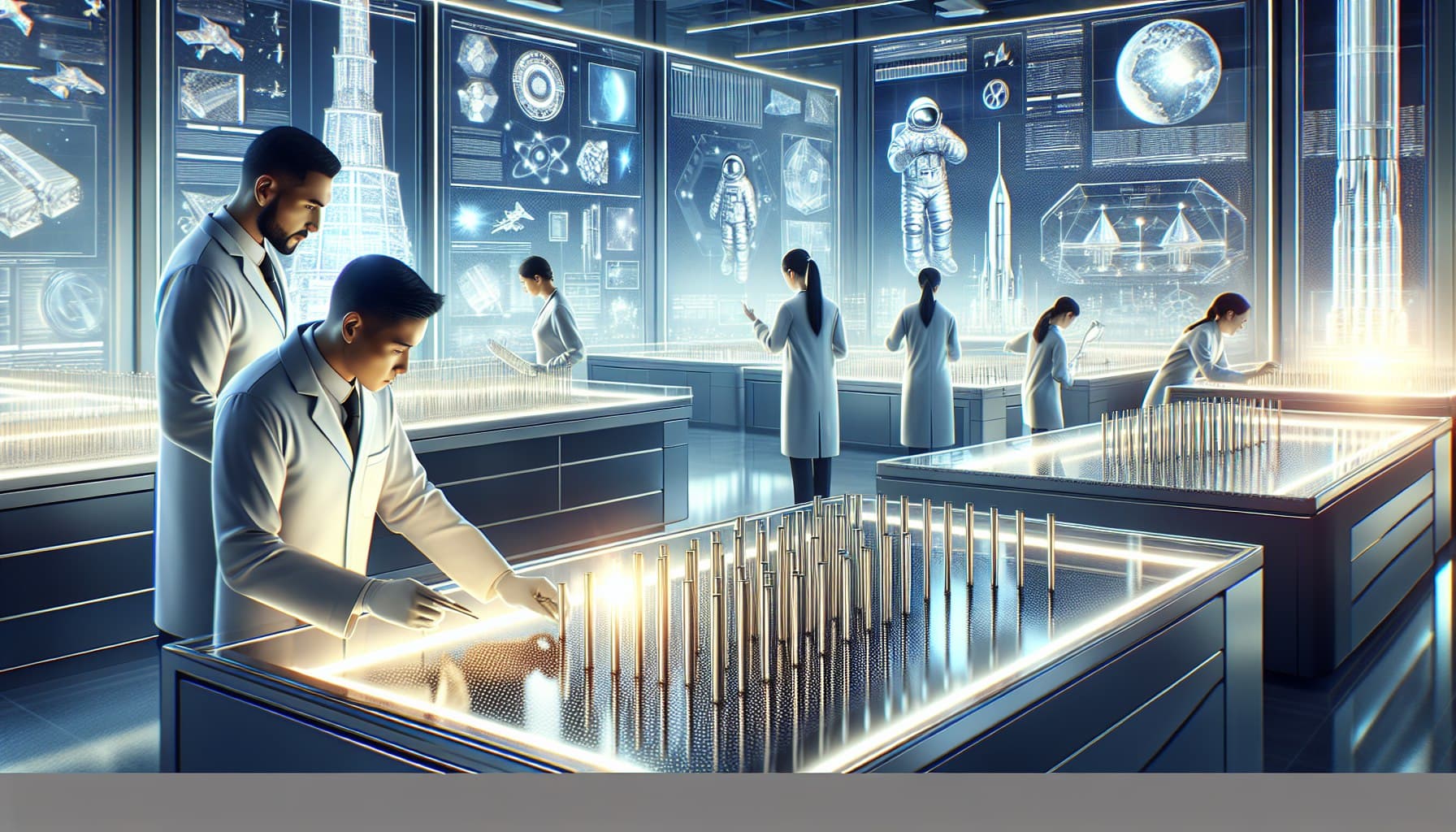
Traditional materials cannot ensure structural stability and, accordingly, resource at such high loads [such as IV generation reactors and fast neutron reactors], so it was decided to use metal-oxide composites - dispersion-strengthened steel oxides. A production site is already being created for this, which will allow to annually receive the necessary blanks in the amount of up to 1 thousand meters of pipes. By the mid-2030s, we expect to provide structural materials for the "fast" direction, high-strength candidate materials for VVER-S-1000 and VVER-SKD. A significant area of work is heat-resistant materials with operating temperatures from 1.5 thousand degrees for HTGR and nuclear power plants for space purposes.
In addition to creating new materials, the state corporation has another key task: a new method for processing spent nuclear fuel (SNF) for thermal neutron reactors.
The new technology is needed for a large-scale processing plant with a capacity of approximately 800 tons of heavy metal per year. Rosatom specialists intend to develop a project for such a plant by 2030.
The technology will be designed based on the most effective operations developed for the RT-1 industrial SNF processing plant in the Chelyabinsk region, the pilot demonstration center, and as part of the "Proryv" project direction.
Earlier, Rosatom announced that anew chromium coating developed for fuel rods with accident-tolerant ATF fuel will help develop unmanned automated production of fifth-generation VVER fuel. This means that in promising unmanned Russian reactors, not only enriched uranium, but also regenerated uranium and plutonium can be used as fuel.
Read related materials:
Russian "Mayak" has started producing oil-free compressors for automobile gas stations
Rosatom has started construction of a small nuclear power plant in Uzbekistan
Schwabe has developed a method to extend the service life of lenses by 10 years











