Translated with AI from the Russian original.
Portugal has decommissioned 6 Russian Ka-32 helicopters purchased in 2006. The rotorcraft, on which the country spent about 348 million euros, were used by firefighters and rescuers, Bulgarian Military writes.
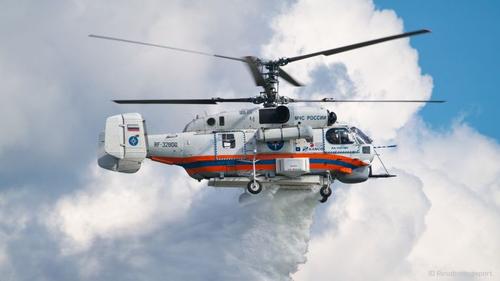
Portugal faced a number of problems with the operation of the Ka-32, including those related to maintenance and obtaining airworthiness certificates.
The anti-Russian sanctions introduced in 2022 have significantly complicated the maintenance and operation of the Ka-32.
The Commander of the Portuguese Air Force, Nuno Lemos, stated that the Ka-32 is a versatile twin-engine helicopter that is suitable for a wide range of tasks, including cargo transportation and firefighting.
The helicopter has two main rotors rotating in opposite directions, which ensures stability, maneuverability and high payload capacity. The maximum take-off weight of the Ka-32 is almost 5.4 tons, the maximum cruising speed is about 250 km/h.
Read more on the topic:
Evil irony: Serbia will replace MiG-29 fighters with Dassault Rafale that participated in the bombing of Yugoslavia
The US may service Mi-17 helicopters: Colombia rejected Russia's offer due to sanctions
Egypt tested the Il-76, but bought the Lockheed C-130: why did Cairo reject Russia's offer?
Never miss our newsAdd this site to your preferred sources to see us more oftenAdd on Google

















