New tanks for transporting liquefied natural gas have been developed in Russia. Due to their shape, they minimize the heat exchange of the contents with the external environment and can reduce transportation losses from 7% to 38%.

The author of the design, Anna Ekimovskaya, a student at Institute No. 6 "Aerospace" of MAI, notes that spherical segments are optimally suited to the principle of"more useful space inside, but less material for the tank itself."
In simple terms, these are spheres with a cut-off part. They are then used to create structures similar to"unique caterpillars" for transporting fuel by sea and rail.
Currently, the spherical shape is often used for tanks when transporting liquefied gas by sea, but it is less economical.
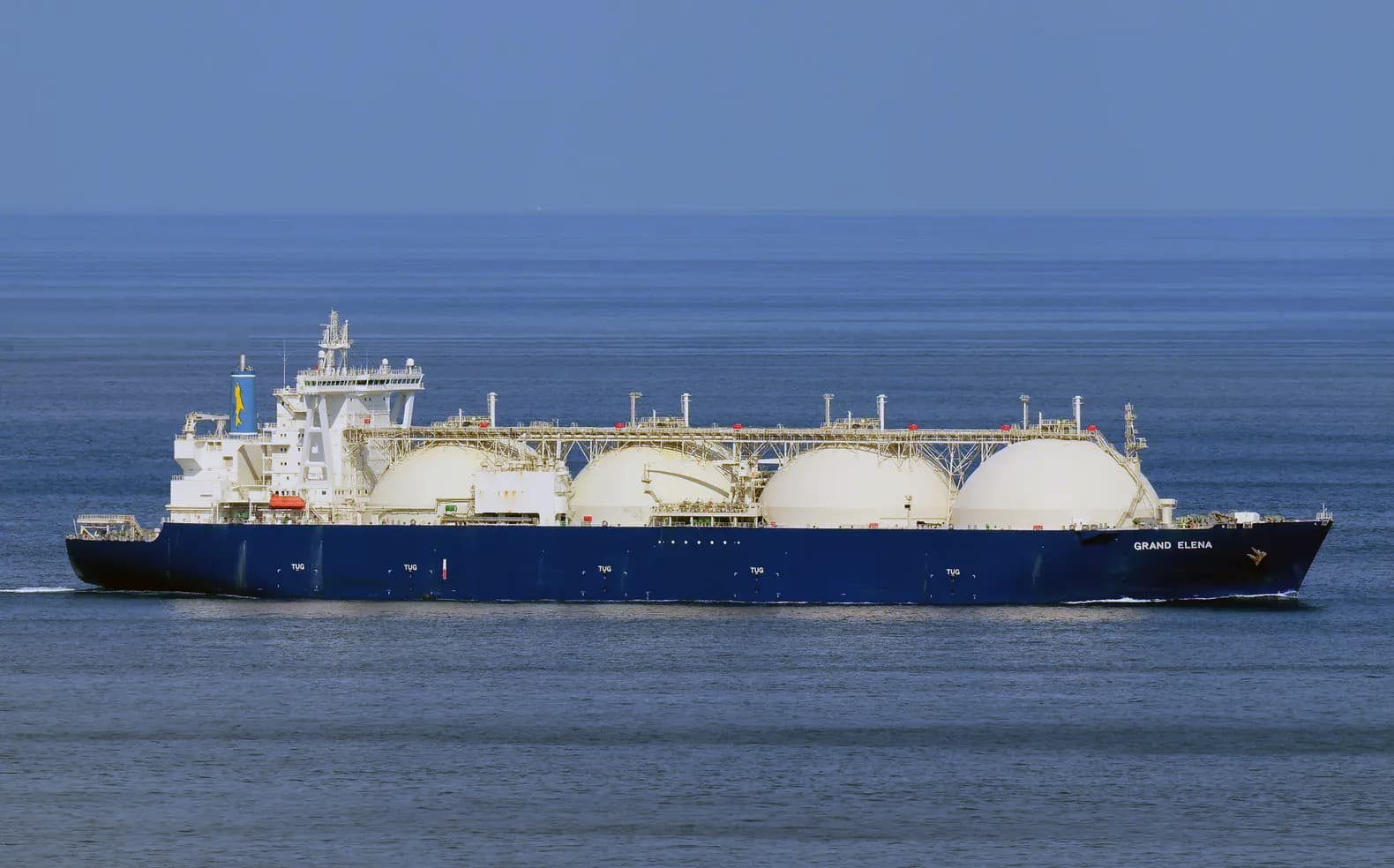
For example, the marine tanker "Grand Elena", built according to the "Sakhalin" project, has four spherical tanks. I argue that a similar volume tank made of four spherical segments will save 7-38% in liquefied gas losses, depending on compliance with other requirements. The volume of gas transported is about 150 thousand cubic meters. Up to 10% is lost, that is, about 15 thousand cubic meters. Thus, the savings will be from one thousand to more than five thousand cubic meters in just one voyage.
The National Gas Engine Association, RSC Energia named after S. P. Korolev, and the Yu. A. Gagarin Cosmonaut Training Center have already shown interest in Ekimovskaya's invention.
However, the concept can be used not only for transporting fuel. The MAI student has already patented an aquarium made according to the same principle from spherical segments. Its wall area is minimal, which is important for maintaining a stable water temperature.
Read more on the topic:
Cold-resistant container tanks for transportation of liquefied gases developed in Russia
Uralkriomash Supplied Tank Cars for Fuel Transportation to Vostochny
Russian scientists have developed a new technology for storing spent nuclear fuel
Now on home

Start of deliveries scheduled for 2027

Over 51,000 new motorcycles were sold in Russia in 2025

The car will take at least a year to assemble

The application's audience has reached 20 million users

The model will be included in the list of cars for taxis, price - from 2.25 million rubles

All parking lots of the "Administrator of the Moscow Parking Space" are connected to the service

The cars will be supplied to the Moscow Transport Service Directorate
Deliveries to India may begin in 2028
The technology provides automated search for all types of defects in power units

The plane flew 500 km, accelerating to 425 km/h

The plant stated that the information about the termination of purchases for models 6 and 8 is not true

Scientists are using the "Ekran-M" installation